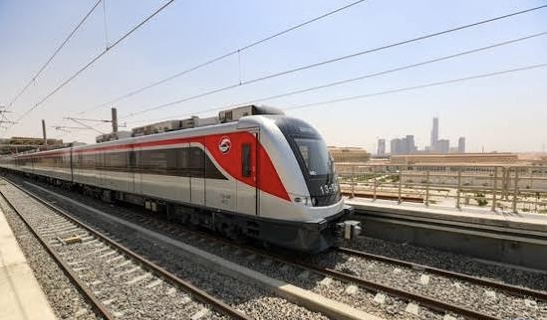
The Egyptian presidency has approved a financing arrangement involving a Chinese concessional loan valued at nearly 1.47 billion yuan, equivalent to approximately 204 million United States dollars, aimed at advancing the next phase of a light rail expansion linking key urban and industrial zones east of Cairo.
The approval, issued under Presidential Decree No 652 and published in the official gazette, formalises an agreement between Egypt and China for the third phase of the Light Rail Transit development serving 10th of Ramadan City, one of Egypt’s rapidly expanding industrial and residential corridors. The financing will be channelled through the Export Import Bank of China, with the National Authority for Tunnels acting on behalf of Egypt in implementing the agreement.
The project forms part of a broader pattern of infrastructure collaboration between Egypt and China, reflecting sustained engagement in transport and urban mobility systems that connect new and existing settlements. The Light Rail Transit network is intended to improve connectivity between Cairo and emerging urban extensions, including 10th of Ramadan City, a strategically significant hub for manufacturing and population growth.




The financing structure, routed through the Export Import Bank of China, underscores the continued use of concessional lending instruments in large scale infrastructure development across parts of Africa and the Middle East. While such arrangements are often presented as vehicles for accelerating infrastructure delivery, they also sit within wider debates about debt sustainability, local capacity building, and the long term distribution of economic benefits within recipient states.
From a broader African perspective, projects of this nature illustrate the evolving geography of infrastructure partnerships, where African states increasingly engage multiple global actors to finance urban transformation. The Egyptian case reflects a pragmatic approach to addressing rapid urbanisation pressures, though it also raises questions about how transport systems are integrated into local industrial strategy and whether such developments generate inclusive economic spillovers across different regions of society.
The Light Rail Transit expansion remains positioned as part of Egypt’s longer term effort to modernise transport corridors and support new urban settlements, particularly those designed to ease congestion in the capital region while enabling industrial decentralisation.