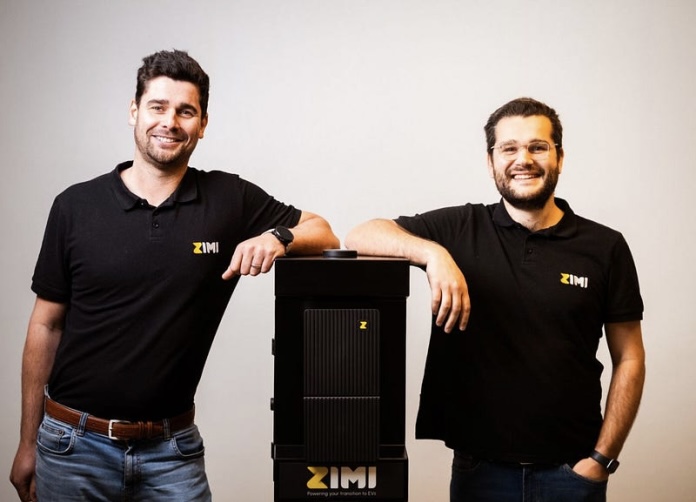
The transition towards electric mobility across Africa received a notable boost this month after South African electric vehicle infrastructure company Zimi secured a R50 million funding round led by the Development Bank of Southern Africa (DBSA), with participation from Keyo Ventures and a consortium of angel investors.
The investment comes at a time when governments, development finance institutions and private sector players across the continent are increasingly exploring how electric mobility can be integrated into Africa’s transport systems in ways that reflect local economic realities, energy constraints and development priorities.
Founded in 2021 by Michael Maas and Stefan Nel, Zimi has developed an integrated platform that combines electric vehicles, charging infrastructure, solar energy systems and fleet management technologies for commercial operators. The company’s approach seeks to address one of the principal barriers to electric vehicle adoption in Africa, namely the substantial upfront costs associated with vehicles and charging infrastructure.



According to the company, the new capital will be used to accelerate the deployment of charging infrastructure across South Africa, with plans to install approximately 200 commercial fleet charging stations and facilitate the rollout of around 2,000 electric vehicles over the next eighteen months.
The investment reflects growing institutional confidence in the commercial fleet electrification sector, particularly as logistics operators and businesses seek ways to reduce operating costs while improving environmental performance. Reports from the company indicate that its model enables fleet operators to convert large capital expenditures into more predictable operational costs through bundled vehicle, charging and energy management services.
The DBSA’s participation also aligns with its broader infrastructure development mandate. In recent years, the institution has expanded its support for projects linked to sustainable transport and energy infrastructure, including investments in electric vehicle charging networks and renewable energy powered transport solutions across South Africa.

South Africa remains the continent’s largest automotive market and is increasingly emerging as a testing ground for electric mobility solutions. However, adoption of fully electric vehicles has remained relatively modest when compared with major global markets. Industry participants have consistently identified charging infrastructure availability, vehicle affordability and energy reliability as among the key factors influencing uptake.
Recent industry data indicate that South Africa’s new energy vehicle market continued to expand during 2025, recording growth despite broader economic headwinds. While fully electric vehicles still represent a relatively small proportion of total vehicle sales, analysts suggest that commercial fleets may become one of the earliest large scale adopters because of the potential savings associated with lower fuel and maintenance costs.
The growth of companies such as Zimi also reflects a wider trend unfolding across the continent. From battery swapping networks in East Africa to electric motorcycle deployments in West Africa and charging infrastructure investments in Southern Africa, a diverse range of mobility solutions is emerging in response to different local conditions.
Rather than replicating mobility models developed elsewhere, many African firms are increasingly designing systems around the continent’s own realities, including abundant solar resources, evolving urban transport patterns and the need for cost efficient logistics networks.
South Africa’s charging infrastructure landscape has also expanded steadily in recent years. Public and private sector investment has supported the development of charging corridors connecting major economic centres, while newer projects are exploring off grid and solar powered charging solutions aimed at overcoming electricity supply constraints.
For policymakers, investors and transport operators, the significance of developments such as Zimi’s latest funding round extends beyond vehicle adoption alone. Electric mobility is increasingly being viewed as part of a broader industrial opportunity that intersects with renewable energy deployment, mineral beneficiation, battery value chains and advanced manufacturing.
As African countries seek to position themselves within emerging global clean technology markets, investments in charging infrastructure and fleet electrification may become an increasingly important component of efforts to strengthen economic resilience, improve energy efficiency and support sustainable industrial development.
Whether the pace of adoption accelerates sufficiently to transform the region’s transport sector remains to be seen. Nevertheless, the latest investment into Zimi suggests that confidence in the long term potential of electric mobility in Southern Africa continues to grow, supported by a combination of development finance, private capital and technological innovation.