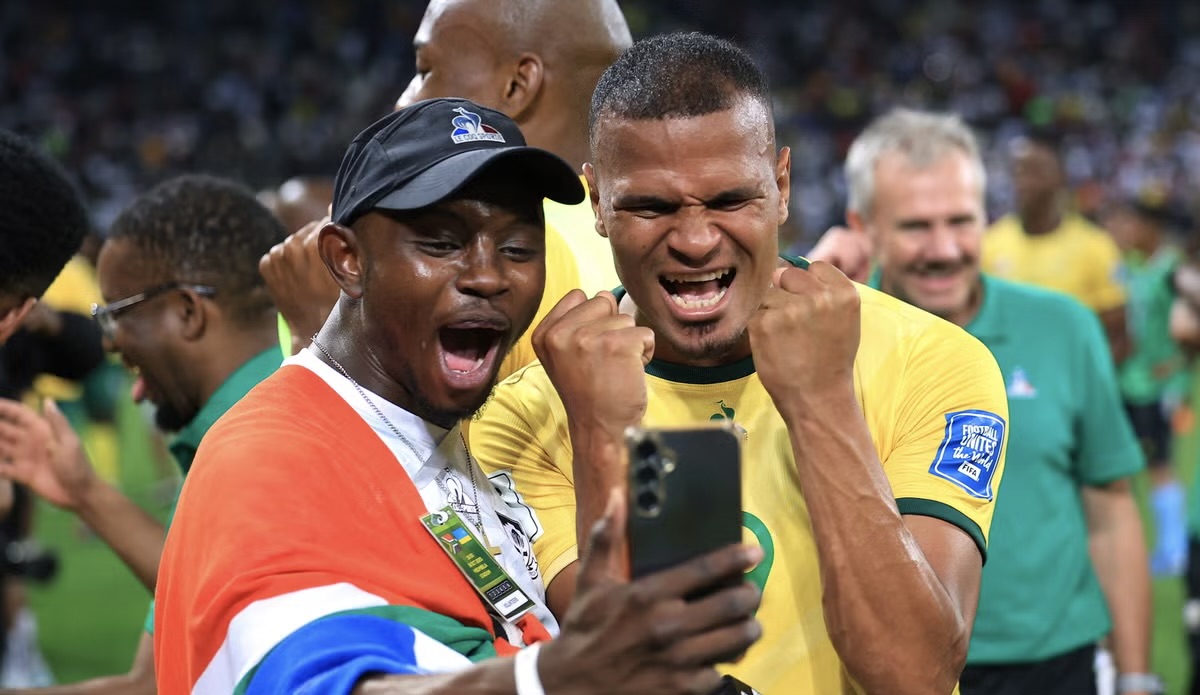
South African football supporters have been invited to participate in a national competition that could see a select group attend the 2026 FIFA World Cup, reflecting an effort by government to foreground the cultural and social significance of sport within the country and across the African continent.
The initiative has been introduced by the Minister of Sport, Arts and Culture, Gayton McKenzie, whose department has positioned the programme as part of a broader policy approach that situates sport as a vehicle for social cohesion and national representation. According to an announcement by the Department of Sport, Arts and Culture, the initiative titled Mzansi to the World Cup Lucky Fans Competition will provide 20 individuals with a fully funded opportunity to travel to either the United States or Mexico, where they will attend one of South Africa’s group stage fixtures should the national team qualify.
The department has indicated that participants will be drawn from across the spectrum of South African football support, including followers of all 16 Premier Soccer League clubs, alongside additional wildcard entries designed to broaden access beyond formal club affiliations. This approach reflects a recognition of the diverse and decentralised nature of football support in South Africa, where informal and community based allegiances remain as significant as professional structures.




Entry to the competition requires applicants to submit a short video via the official DSAC online portal, outlining their connection to the game, their club loyalty, and their motivation to represent the country on an international stage. The department has framed this requirement not simply as a selection mechanism but as a means of documenting the lived experiences and narratives that underpin football culture in South Africa.
The initiative emerges within a wider continental context in which African nations continue to assert their presence in global football, both through competitive participation and through the cultural visibility of their supporters. South Africa’s previous hosting of the 2010 FIFA World Cup remains a reference point for the country’s engagement with international sport, and programmes such as this suggest an ongoing effort to sustain that legacy through people centred initiatives rather than infrastructure alone.
Reporting by outlets including The Citizen and Bloemfontein Courant indicates that the prize package will cover international travel, accommodation, match tickets, and local transport, positioning the competition as one of the more comprehensive fan engagement initiatives linked to the tournament.

While the announcement does not alter the competitive realities facing Bafana Bafana in qualification for the 2026 tournament, it underscores the symbolic role of supporters in shaping how nations are represented globally. Across Africa, fan cultures have long functioned as sites of identity formation, artistic expression, and political commentary, often transcending the boundaries of the sport itself.
The Department of Sport, Arts and Culture has stated that the Minister, Gayton McKenzie, together with the Deputy Minister, will announce the winners on 5 May 2026. In framing the competition, the department has emphasised participation and representation, signalling an intent to present South African football support as both locally grounded and globally connected, while contributing to a broader narrative that recognises African agency within international sporting spaces.