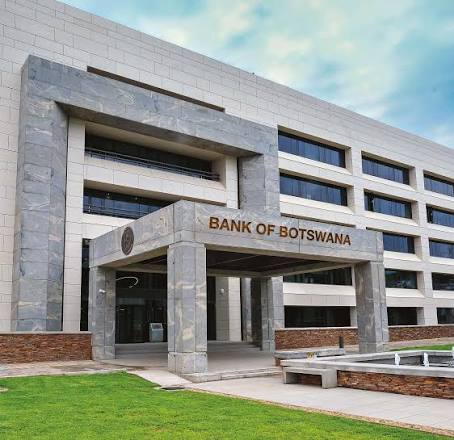
Botswana has become the first African country to raise interest rates in response to the recent global energy shock, as policymakers move to contain mounting inflationary pressures linked to geopolitical developments and domestic structural vulnerabilities.
The Bank of Botswana increased its benchmark interest rate by 200 basis points to 5.5 percent from 3.5 percent, according to reporting by Bloomberg and corroborated by Investing.com. The decision reflects a sharp reassessment of inflation risks following disruptions in global energy and commodity markets.
Officials indicated that inflation is projected to rise significantly in the short term, potentially exceeding the central bank’s objective range of 3 percent to 6 percent. Estimates suggest inflation could reach approximately 8.9 percent in the second quarter of 2026, up from 4.2 percent in March, before moderating over the medium term. The central bank anticipates an annual average inflation rate of 8.7 percent in 2026, easing to around 5.6 percent in 2027.



The shift in monetary policy follows the escalation of conflict involving Iran and its wider regional implications, which have disrupted critical global supply chains. The partial closure of the Strait of Hormuz, a key transit route for a substantial share of global oil and liquefied natural gas, has contributed to elevated fuel prices worldwide. As noted by multiple outlets including News24, this has had direct implications for economies with high import dependence on energy.
For Botswana, the inflationary impact is particularly pronounced due to the significant weighting of transport costs within the consumer price index. Rising fuel prices are expected to feed into broader cost structures, affecting public transport, food distribution, and household expenditures. Secondary effects, including adjustments in administered prices such as electricity and medical services, are also likely to intensify price pressures.
The rate increase occurs against a complex domestic economic backdrop. Botswana’s economy remains heavily reliant on diamond exports, which account for a substantial proportion of foreign exchange earnings and fiscal revenues. Recent volatility in global diamond demand has weighed on growth, as highlighted in regional economic reporting by CNBC Africa. This underscores the country’s exposure to external demand cycles and commodity price fluctuations.

In addition, the agricultural sector faces challenges linked to a foot and mouth disease outbreak, which has led to restrictions on beef exports to key markets such as the European Union. This development introduces further uncertainty into food supply chains and may contribute to upward pressure on domestic food prices.
Botswana’s policy response reflects a broader pattern of economic adjustment across the continent, where central banks are balancing inflation control with the need to sustain growth in a volatile global environment. While some governments have opted for fiscal interventions such as fuel subsidies or tax adjustments, Botswana’s approach signals a prioritisation of monetary stability.
Across Africa, the implications of global shocks are mediated by diverse economic structures, policy frameworks, and social contexts. In Botswana’s case, the current moment highlights both resilience and constraint, as authorities navigate external pressures while addressing domestic vulnerabilities. The decision to tighten monetary policy illustrates an effort to anchor inflation expectations, even as households and businesses face rising costs of living.
The evolving situation underscores the interconnected nature of global and African economies, where distant geopolitical developments can have immediate and tangible effects on everyday life. Botswana’s experience reflects a wider continental reality in which economic policy must respond dynamically to both global disruptions and local conditions, shaping outcomes that extend beyond national borders.