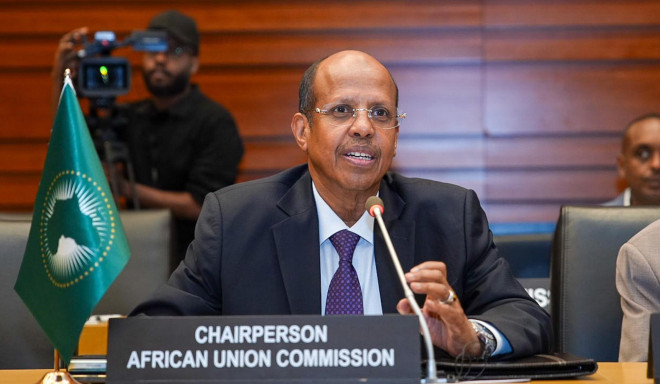
The African Union has reiterated its longstanding position on the sovereignty and territorial integrity of Somalia following reports that Israel has moved to deepen diplomatic engagement with Somaliland, a self declared republic in the Horn of Africa.
In a statement issued from its headquarters in Addis Ababa, the continental body expressed concern regarding Israel’s reported decision to appoint a diplomatic envoy to Somaliland. The African Union reaffirmed that it does not recognise Somaliland as an independent state and emphasised its continued commitment to Somalia’s unity in line with its Constitutive Act and established principles of international law.
Somaliland declared independence from Somalia in 1991 following the collapse of the Somali central government. Despite maintaining relative internal stability and functioning state institutions over several decades, it has not secured formal recognition from the African Union or the United Nations. The AU has historically approached the question of Somaliland with caution, balancing acknowledgment of local governance realities with a broader commitment to the preservation of post colonial borders across the continent.



The current development follows Israel’s announcement in December 2025 that it would formally recognise Somaliland as a sovereign entity, a move reported by several international outlets including documentation on international recognition of Somaliland. If fully implemented, this would mark the first instance of a United Nations member state extending such recognition, although the diplomatic and legal implications remain under scrutiny.

Somalia’s federal government has consistently rejected any recognition of Somaliland, viewing such actions as a violation of its sovereignty. In response to Israel’s decision, Somali authorities have reiterated their position through diplomatic channels, while calling for adherence to international norms governing state recognition.
The African Union Peace and Security Council had previously addressed the matter in early 2026, underscoring that unilateral recognition of Somaliland would be considered inconsistent with continental frameworks aimed at safeguarding stability. The Council warned that such actions could risk exacerbating tensions within the Horn of Africa, a region already navigating complex political and security dynamics.
Observers note that the AU’s position reflects a broader continental concern regarding precedent. The organisation has historically prioritised the principle of territorial integrity, shaped by the legacy of colonial boundary formation and the potential for fragmentation if such norms are widely challenged. This approach has informed responses not only to Somaliland but also to other self determination movements across Africa.
At the same time, the situation continues to generate debate among policymakers, scholars and regional actors regarding the balance between legal recognition and lived political realities. Somaliland’s governance structures, electoral processes and relative stability are frequently cited in discussions about its status, even as formal recognition remains limited.
Israel’s engagement in the Horn of Africa is also being viewed through a wider geopolitical lens. Analysts suggest that diplomatic outreach in the region intersects with economic, security and strategic considerations, particularly along key maritime routes linking the Red Sea and the Gulf of Aden.
The African Union has indicated that it will continue to support dialogue aimed at strengthening Somalia’s state institutions and national cohesion. Its latest statement signals an intention to maintain a consistent position while encouraging approaches that prioritise regional stability and inclusive political processes.
As developments unfold, the question of Somaliland’s status remains a complex and evolving issue, shaped by historical context, regional dynamics and the interplay of international diplomacy.