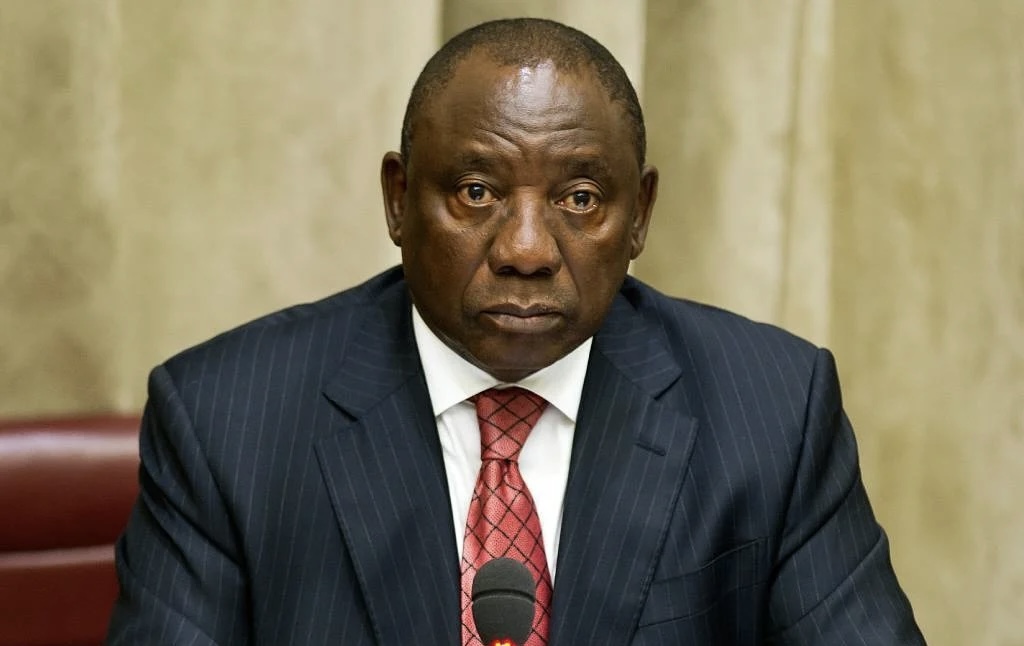
President Cyril Ramaphosa has rejected any personal implication in findings contained within a recently declassified report by the Independent Police Investigative Directorate, which examined the handling of the 2020 theft at his Phala Phala farm in Limpopo. However, beyond the President’s denial, the report raises broader and more complex questions about institutional conduct, the exercise of authority, and the resilience of governance systems within South Africa’s security architecture.
The report, released following a successful application under the Promotion of Access to Information Act, focuses primarily on the actions of members of the Presidential Protection Service rather than the President himself. It recommends disciplinary proceedings against Major General Wally Rhoode and Constable HH Rekhoto, citing multiple breaches of policing protocols, legal obligations, and administrative standards. While the President is referenced as having informed his head of protection about the theft of approximately 580000 US dollars derived from game sales, the report does not conclude that he directed or participated in any unlawful conduct. This distinction remains central to understanding both the legal and political contours of the matter.
At the core of the report lies a critical procedural failure. The theft, despite its scale and sensitivity, was not formally registered as a criminal case. This omission represents a departure from statutory requirements and effectively removed the matter from established investigative and judicial oversight. The absence of a formally registered case appears to have created a procedural vacuum within which subsequent actions unfolded outside established legal frameworks, shifting the matter from a regulated investigation into what may be understood as an informal security response.



Within this vacuum, the report details how state resources were deployed in pursuit of what is characterised as a private matter. Travel arrangements, operational activities, and personnel deployments were undertaken without proper authorisation or accurate documentation. In several instances, official records were allegedly misrepresented, including travel justifications that cited meetings which could not be substantiated. These actions are described as constituting fruitless and wasteful expenditure. Beyond administrative irregularity, this blurring of public resources and a private matter reflects a wider governance tension, where institutional boundaries may become less distinct in cases involving senior office bearers.
The report further documents allegations of an unofficial investigative process, including the tracking, surveillance, and questioning of suspects without a formal case docket. It notes that individuals not formally authorised may have participated in these processes, raising concerns about the legitimacy and legality of such actions. While the findings remain within the scope of disciplinary assessment rather than criminal adjudication, they point to a pattern of conduct that diverges from constitutional policing standards and established legal norms.
Read in its entirety, the report points to a pattern in which formal procedures were set aside in favour of what may be understood as an informal, hybrid security response. This concept is significant. It suggests that, under conditions of perceived urgency or sensitivity, institutional actors may shift from rule based frameworks to more flexible, and at times ambiguous, modes of operation. While no evidence is presented that the President directed such actions, the findings suggest that authority can operate in diffuse ways, where proximity to executive office shapes decision making even in the absence of explicit instruction. In this sense, power is not only exercised through formal directives, but also through perceived expectations and institutional culture.
Equally significant is the apparent breakdown in command and reporting structures within the South African Police Service. The report indicates that the then National Commissioner of Police was not informed of the theft through official channels and only became aware of the matter through media reports after his tenure. This apparent bypassing of formal reporting lines raises questions about the resilience of institutional hierarchies in high sensitivity cases, and whether established chains of command remain effective when confronted with politically delicate matters.
The findings also extend into the realm of financial governance. The use of SAPS resources for travel, accommodation, and operational activities is described as irregular and, in some cases, unjustified. Instances of duplicated roles, unnecessary travel, and inconsistent documentation point to weaknesses in internal controls and oversight mechanisms. Such issues are not unique to this case, but rather reflect broader challenges facing public institutions in managing resources efficiently and transparently. In contexts where public trust in institutions is closely tied to perceptions of accountability, these findings carry significant weight.
The report also alludes to cross border dimensions, including engagements involving Namibian authorities, underscoring the sensitivity of the matter and its potential regional implications. In a broader African context, such developments highlight the complexities of security cooperation and the potential for informal practices to intersect with formal diplomatic processes, particularly in cases involving high level political actors.
A notable feature of the report is the repeated invocation of presidential authority by those involved in the investigation. The President’s name, according to the findings, was cited in operational contexts, including in justifications for travel and decision making. This raises important questions about how symbolic authority may be mobilised within state structures. Even in the absence of direct instruction, the association with executive power can carry significant influence, shaping behaviour and decision making in ways that are not always formally documented.
While the report does not implicate President Ramaphosa in direct wrongdoing, it situates him within a politically sensitive nexus of responsibility. As the origin point of the reported theft, the presidency becomes indirectly linked to the chain of decisions that followed, even where those actions were undertaken without explicit instruction. This distinction between legal implication and political accountability is significant. It raises questions not about criminal liability, but about executive oversight and the extent to which informal practices can emerge within state structures operating in close proximity to presidential authority.
In this context, the issue for the President is less one of personal culpability and more one of institutional stewardship. The findings suggest that authority associated with the executive office may be invoked and operationalised in ways that are not always formally sanctioned, pointing to a broader challenge of ensuring that proximity to power does not translate into procedural exception. For Ramaphosa, the political implications therefore lie in how effectively his administration can demonstrate that governance systems remain intact, even when confronted with matters of personal or political sensitivity.
The Independent Police Investigative Directorate, mandated to ensure police accountability, concludes that the conduct of the officers concerned may have undermined both legal obligations and the integrity of the service. Its recommendations for disciplinary action are grounded in provisions relating to failure to comply with legal duties, mismanagement of state resources, and conduct deemed improper and prejudicial to the image of the police. These recommendations now fall within the internal processes of the South African Police Service, where their implementation will be closely watched.
Taken together, the findings reposition the Phala Phala matter as a reflection of institutional behaviour under pressure rather than a singular episode of alleged misconduct. They highlight how governance systems can shift from rule based processes to informal modes of operation when confronted with politically sensitive circumstances. This shift does not necessarily imply coordinated intent at the highest levels, but it does reveal the conditions under which procedural safeguards can weaken.

Within a broader African context, the case underscores enduring challenges in balancing executive authority with institutional accountability. Across the continent, similar tensions have emerged in varying forms, often centred on the management of security apparatuses and the oversight of elite units tasked with protecting state leadership. The South African case, given the country’s constitutional framework and institutional maturity, offers a particularly important lens through which to examine these dynamics.

Ultimately, the significance of the IPID report lies not only in its specific findings, but in what it reveals about the functioning of state institutions. It raises fundamental questions about how power is exercised, how accountability is maintained, and how systems respond under pressure. For South Africa, and for the region more broadly, these questions remain central to the ongoing project of democratic consolidation and institutional integrity.