There are moments in international affairs when events do more than unfold. They reveal. The war in Iran is one such moment. It is not simply another episode in a region long defined by instability. It is a test of structure, a moment that exposes how power is exercised, perceived, and, increasingly, questioned.
For decades, the United States operated with a coherence that made its dominance appear almost natural. Military strength, alliance discipline, and institutional legitimacy reinforced one another. Power was not only projected. It was accepted. Today, that alignment feels less certain. What is emerging is not collapse, but strain, visible in the gaps between action and acceptance, between authority and consent.
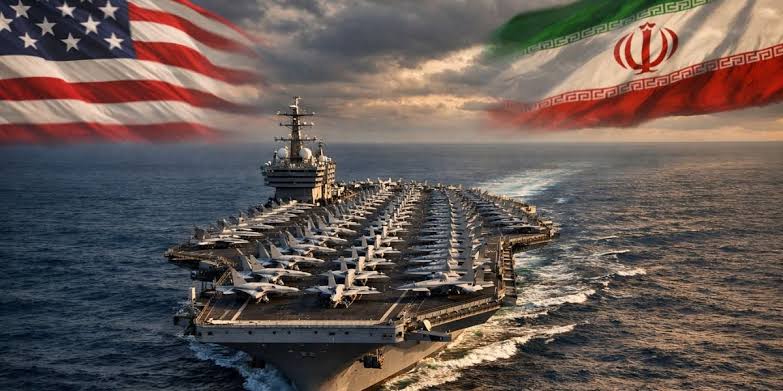
The battlefield offers the first clue. American installations across the Gulf, once seen as secure platforms of projection, now exist within reach of credible retaliation. Distance no longer guarantees insulation. It merely delays consequence. The United States retains overwhelming military capability, but the conditions under which that power is exercised have shifted. Deterrence, once anchored in perceived invulnerability, now operates in a space where vulnerability is openly acknowledged.



Yet it is not the battlefield alone that tells the story. It is the language of power. When President Donald Trump warned that “a whole civilisation will die” if Iran failed to comply with American demands, the intention was unmistakable. It was meant to project finality, to close the space for resistance. Instead, it widened it. The statement unsettled allies, raised legal and moral questions, and drew attention to the very limits it sought to obscure.
In an earlier era, such rhetoric might have been absorbed into a broader framework of leadership. Today, it stands exposed, detached from the consensus that once gave it weight. Power, when expressed without restraint, risks revealing not only its strength, but its isolation.
The announcement of a two week ceasefire reinforces this shift. On the surface, it signals restraint, a pause that suggests diplomacy may yet have space to operate. Beneath that surface lies something more telling. A system that once dictated outcomes now negotiates pauses. The ceasefire is not weakness, but neither is it dominance. It is recognition. Recognition that escalation carries limits, and that those limits are now visible to others.
Across Europe, the response has been careful, but revealing. Leaders have called for de escalation while avoiding full alignment with Washington’s posture. The emphasis on international law, on restraint, on proportionality, signals a quiet recalibration. These are not the reflexes of unquestioned alliance. They are the instincts of partners measuring distance.
Beyond Europe, the contrast sharpens. China and Russia have framed the crisis in terms that position themselves as advocates of stability rather than escalation. Their responses are not incidental. They are strategic. Where the United States projects force, they project composure. Where Washington speaks in absolutes, they speak in balance. This is not merely opposition. It is competition over narrative, over who defines what responsible power looks like.
That contest has played out clearly within global institutions. The failure of a United States backed resolution at the United Nations Security Council is more than a procedural setback. It is a signal that authority no longer translates automatically into consensus. Power must now persuade where it once directed.
In the Middle East, long time partners have responded with caution. Calls for restraint have replaced affirmations of alignment. This is not abandonment. It is adjustment. States are recalibrating, managing relationships rather than anchoring themselves to certainty. The ceasefire has been welcomed, but without illusion. It is seen as a pause, not a resolution.
What is unfolding externally is mirrored internally. Within the United States, the rhetoric surrounding the conflict has not unified opinion. It has fragmented it. Legal scholars, policymakers, and legislators have raised concerns about both the tone and the implications of escalation. These debates do not yet define policy, but they matter. A state divided over the terms of its own engagement projects uncertainty, even when its capabilities remain unmatched.
Public sentiment reflects a similar hesitation. The memory of prolonged conflicts in Iraq and Afghanistan lingers. There is no broad surge of confidence, no unified belief that escalation will produce clarity. Instead, there is caution. The ceasefire has been met with relief, but also with scepticism. It is understood as a pause, not a solution.
All of this points to something deeper than the immediate conflict. The United States remains the most powerful military actor in the international system. Its reach is global. Its capabilities are unparalleled. But power at that level has never been defined by capability alone. It depends on coherence. On the alignment of force with legitimacy, of leadership with followership, of action with consent.
It is that coherence that now appears under strain.
The war in Iran does not signal the end of American power. It signals its transformation. The United States can still act decisively, but the consequences of its actions are no longer absorbed into a system that automatically reinforces its authority. Allies hesitate. Institutions reflect division. Rivals offer alternative frames of stability.
A superpower exposed is not yet a superpower diminished. But exposure alters perception, and perception shapes reality. Once alignment becomes calculation, once consensus becomes negotiation, the nature of power begins to shift.
The ceasefire will pass. The conflict may settle into stalemate or negotiation. But the moment will remain. It will linger in the calculations of allies, in the strategies of rivals, and in the internal debates that shape future decisions.
What has been revealed cannot easily be concealed again?


Kundai Darlington Vambe is a lawyer and researcher focusing on law, governance and technology, with a particular interest in artificial intelligence, cybercrime and international legal frameworks.