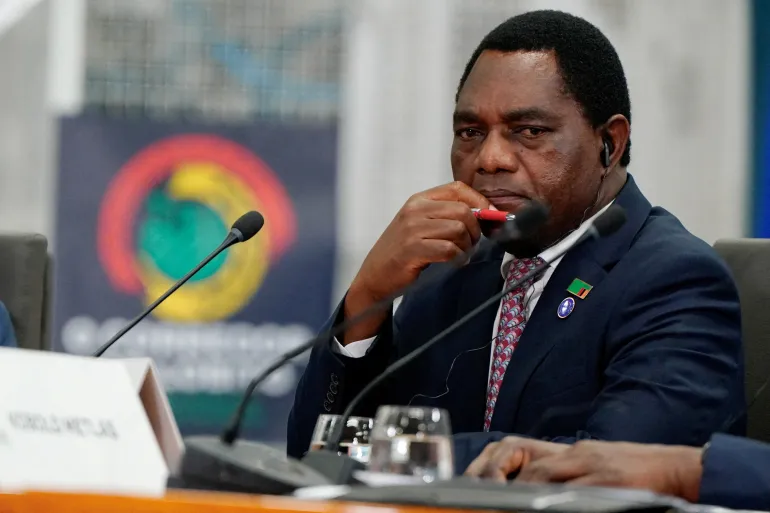
The United States is considering changes to its long standing HIV and public health support to Zambia as part of broader negotiations over access to critical mineral resources, according to multiple reports, including from The New York Times and Reuters.
The discussions centre on a proposed agreement that would link elements of US health assistance to expanded opportunities for American companies in Zambia’s mining sector, particularly in copper, cobalt and lithium. These minerals are central to global energy transitions and industrial supply chains.
Zambia remains one of the countries most reliant on external support for HIV treatment programmes. Approximately 1.3 million people are supported through initiatives funded in part by the US President’s Emergency Plan for AIDS Relief, widely known as PEPFAR. The programme has played a significant role across the continent over the past two decades, contributing to expanded access to antiretroviral therapy and reductions in AIDS related mortality.




Reports indicate that potential reductions in support could be considered if negotiations do not progress. The discussions form part of a broader shift in US foreign policy, in which development assistance is increasingly linked to strategic and economic priorities. This approach has been observed in several bilateral frameworks across Africa, where funding agreements are accompanied by conditions related to governance, financing and sectoral reforms.
In Zambia’s case, the proposed framework extends beyond health cooperation. It includes provisions relating to mining sector access as well as data governance. According to details reported by The Guardian, draft terms have included clauses on long term sharing of health data and biological samples. These elements have prompted discussion within Zambia among policymakers, civil society organisations and public health stakeholders regarding issues of sovereignty, data protection and equitable benefit.
The Zambian government has indicated that it is reviewing the proposals in line with national interests. Officials have stated that certain provisions require further consideration to ensure alignment with domestic priorities and legal frameworks. This reflects a broader pattern across the continent, where governments are increasingly seeking to balance external partnerships with domestic policy autonomy.
The context of these negotiations extends beyond bilateral relations. Zambia’s mineral resources have become part of a wider global competition involving multiple actors, including China, which has maintained a longstanding presence in the country’s mining sector. As demand for battery related minerals grows, African producers are navigating complex partnerships that intersect economic development, industrial policy and international relations.
Public health advocates have raised concerns about the potential implications of linking essential health services to non health negotiations. At the same time, some analysts note that African governments are engaging with greater assertiveness in such discussions, reflecting evolving approaches to resource governance and international cooperation.
Zambia’s position illustrates the challenges faced by many countries in the region. These include managing public health needs, negotiating equitable resource partnerships and maintaining policy independence in a shifting global landscape. The outcome of the current discussions may influence not only Zambia’s immediate policy environment but also wider approaches to development partnerships across Africa.

As negotiations continue, the situation underscores the interconnected nature of health, economic policy and geopolitics, and the importance of centring local priorities within global engagements.