Zimbabwe’s steel sector is experiencing a significant resurgence as exports to regional markets expand, reflecting broader shifts in Southern Africa’s industrial landscape and renewed investment in Zimbabwe’s heavy industry. Data released by the Minerals Marketing Corporation of Zimbabwe indicates that the country exported 146,314 metric tonnes of steel in 2025, generating approximately US$92.1 million in revenue. The figures represent a rise of about 450 per cent in export value compared with the previous year and mark one of the most notable recoveries in Zimbabwe’s metals sector in recent decades.
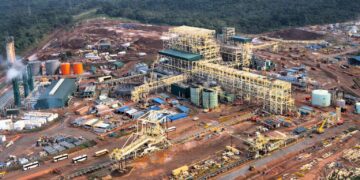
Much of the growth has been linked to the development of the Dinson Iron and Steel Company’s operations in Manhize in central Zimbabwe. The facility, which forms part of a broader industrial complex, is backed by China’s Tsingshan Holding Group. According to investment disclosures and industry reporting, Tsingshan intends to channel roughly US$800 million into expanding the plant’s infrastructure and installing a new blast furnace. Once completed, the expansion is expected to increase the plant’s carbon steel production capacity from about 600,000 metric tonnes annually to roughly 1.2 million metric tonnes.
Zimbabwe’s exports currently consist largely of long steel products including billets, reinforcing bars and wire rods. These materials are widely used in construction and manufacturing, and the majority of shipments are destined for markets within Southern Africa. The regional orientation of the trade reflects the interconnected nature of industrial development across the Southern African Development Community, where infrastructure expansion and urban construction continue to drive demand for steel inputs.



South Africa has emerged as a significant destination within this regional supply chain. Trade analysts note that South African manufacturers and recyclers have faced persistent shortages of scrap metal, an essential feedstock for electric arc furnace steel production. According to analysis by XA Global Trade Advisors, Zimbabwe accounts for roughly six per cent of South Africa’s scrap metal imports. This dynamic has encouraged cross border flows of both raw materials and semi processed steel products.
At the same time, industry bodies in South Africa have expressed concern about the potential impact of rising imports. The South African Iron and Steel Institute reported in 2025 that primary steel imports into the country reached approximately 1.56 million tonnes, the highest level on record for several product categories. Semi finished steel imports such as billets, blooms and slabs rose sharply, increasing by more than 500 per cent to nearly 196,000 tonnes. By contrast, imports of some finished steel products including hot rolled coil declined during the same period, reflecting shifting supply patterns within the region.
The institute has cautioned that the rapid expansion of Zimbabwe’s steel output could place additional pressure on South African producers, who already face rising electricity costs, logistics constraints and fluctuating raw material prices. Concerns raised by industry groups include the possibility of market distortion or dumping, although such claims remain part of an ongoing policy and trade discussion rather than a formal determination.

Zimbabwe’s renewed participation in regional steel markets also carries historical significance. The country once maintained one of the largest integrated steel operations in sub Saharan Africa through the Zimbabwe Iron and Steel Company, commonly known as Ziscosteel. However, production collapsed in the early 2000s following years of operational difficulties, governance challenges and declining capital investment. The shutdown of Ziscosteel significantly reduced domestic steel output and forced local industries to rely heavily on imports.
The emergence of new projects such as the Manhize complex suggests a gradual rebuilding of industrial capacity. For many observers across the region, the development represents more than a commercial milestone. It illustrates how African economies are increasingly shaping regional value chains through new investment partnerships, domestic industrial policy and expanding infrastructure programmes. The trajectory of Zimbabwe’s steel sector therefore reflects both national economic recovery efforts and a wider continental conversation about industrialisation, resource value addition and intra African trade.

Within this evolving landscape, the growth of Zimbabwe’s steel exports highlights the degree to which Southern Africa’s economies are becoming interdependent. Construction projects, mining operations and manufacturing industries across the region rely on shared supply networks that link producers, processors and end users across borders. As production capacity expands and infrastructure investment continues, these relationships are likely to remain central to the region’s economic development and industrial integration.