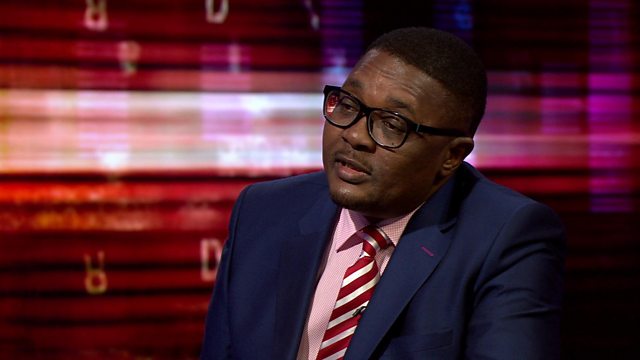
Walter Mzembi, once one of Africa’s most prominent figures in global tourism diplomacy, appeared in a packed High Court in Harare this week to defend decisions made during one of the most turbulent periods in Zimbabwe’s recent political history.
The former tourism minister, who later served briefly as foreign affairs minister and once ran for the leadership of the United Nations World Tourism Organisation, is currently in custody while contesting charges related to the allocation of giant public viewing screens to several influential churches.
At the centre of the case is whether the distribution of the equipment represented an unlawful donation of state assets or a temporary loan under a government strategy aimed at expanding religious tourism and reviving Zimbabwe’s economy.



For Mzembi, the trial represents a striking reversal. Only a decade ago he was widely credited with helping rebuild Zimbabwe’s tourism sector after the country endured one of the deepest economic crises in its history.
Now he is attempting to defend those same policies in court.
A courtroom beginning
Proceedings on Tuesday began with an unusual delay.
The hearing, originally scheduled for 10am, was moved between several courtrooms before eventually settling in a larger venue to accommodate observers.
Mzembi was brought into court shortly before 11am and briefly exchanged remarks with the state prosecutor.
“You can still greet me. There is no war,” he joked as the proceedings began.
The light moment quickly gave way to a lengthy explanation of the political and economic context behind the decisions now being scrutinised.
Rebuilding tourism after crisis
Mzembi told the court that when he assumed office as Minister of Tourism and Hospitality Industry in February 2009, Zimbabwe’s tourism sector had effectively collapsed.
The disputed elections of 2008 had triggered political turmoil, while the consequences of the fast track land reform programme launched earlier in the decade had damaged the country’s international image.
When the ministry was established as a standalone portfolio, he said, it had almost no institutional capacity.
“There were just four officials in the ministry when I arrived,” Mzembi told the court.
Zimbabwe at the time was receiving about 250,000 visitors a year and generating roughly 296 million United States dollars in tourism revenue.
The task before him, he said, was to rebuild the sector from the ground up.
The coalition government
The policy decisions at the centre of the trial date back to Zimbabwe’s Government of National Unity.
Formed in 2009 after a disputed election forced a political compromise, the coalition brought together President Robert Mugabe’s ZANU PF party and the two main factions of the opposition Movement for Democratic Change led by Morgan Tsvangirai and Arthur Mutambara.
Under that fragile arrangement, economic recovery became the government’s central objective.
Tourism was identified as one of the quickest ways to generate foreign currency.
Mzembi told the court that the government therefore pursued a new strategy that included revising tourism legislation, strengthening the Zimbabwe Tourism Authority, and developing new forms of tourism beyond traditional wildlife attractions.
Rethinking Zimbabwe’s tourism model
Historically Zimbabwe’s tourism industry had relied heavily on wildlife tourism centred around national parks and the Victoria Falls.
However the political controversies surrounding land reform had weakened that sector.
The ministry therefore sought to diversify the country’s tourism offering.
Conference tourism, international events, and religious tourism were identified as areas with significant growth potential.
Mzembi told the court that religious tourism had already proven successful in other parts of the world.
Pilgrimage destinations such as Mecca and the Vatican attract millions of visitors every year, while large churches in Nigeria and southern Africa generate substantial international travel.
Zimbabwe, he argued, could develop similar opportunities.
The World Cup initiative
The origins of the case lie in preparations for the 2010 FIFA World Cup hosted by South Africa.
Zimbabwe had initially expected to participate in hosting some of the tournament’s activities as part of a regional effort.
A special cabinet committee comprising nineteen ministers was established to coordinate Zimbabwe’s preparations. Mzembi served as chair of the committee.
One of the projects involved establishing public viewing areas across the country where football fans could watch matches on giant outdoor screens.
The government planned to install forty such viewing sites nationwide.
Large screens were imported from China as part of that initiative.

However the regional hosting expectations eventually changed and the equipment arrived too late to be used during the tournament.
Screens without a home
After the World Cup, the government attempted to distribute the equipment to provincial authorities.
But most provinces declined to accept the screens because of the operational costs involved, including electricity consumption and staffing requirements.
Mzembi told the court that only one province initially accepted its equipment allocation. That installation later collapsed and the equipment was damaged after animals trampled it.
As a result, many of the screens were placed in storage at a military facility.
With the equipment unused, the government began considering alternative ways to deploy it.
Churches and religious tourism
The solution, according to Mzembi, emerged through the government’s religious tourism policy.
Three large churches were selected as potential destinations for faith based travel.
These were the United Family International Church led by Prophet Emmanuel Makandiwa, the Prophetic Healing and Deliverance Ministries led by Prophet Walter Magaya, and the Zion Christian Church led by Bishop Samuel Mutendi.

The Zimbabwe Tourism Authority designated these locations as official tourist sites.
The screens were installed in overflow areas to accommodate large congregations during major gatherings.
Mzembi insisted the equipment was not donated to the churches.
Instead he described the arrangement as a temporary loan of state assets.
“A donation permanently transfers ownership,” he told the court. “These screens remained government property.”
Records presented during the trial indicated that the screens remained listed in the ministry’s asset register several years after they were installed.
The legal dispute
Prosecutors argue that the equipment was transferred to religious organisations without proper Treasury approval and that the decision caused prejudice to the state.
Mzembi rejected that interpretation.
He told the court the programme was implemented as a cabinet policy under the coalition government and involved multiple ministries.
Senior ministers attended several handover ceremonies, including then defence minister Emmerson Mnangagwa, who is now Zimbabwe’s president.
“If it were a unilateral action, how could half the cabinet attend?” Mzembi asked the court.
Tourism as economic lifeline
Mzembi repeatedly emphasised that tourism had become a key driver of Zimbabwe’s economic recovery during the coalition years.
According to his testimony, tourist arrivals increased from 250,000 annually in 2009 to around 1.5 million by 2017.
Tourism revenue rose from about 296 million dollars to approximately 1.5 billion dollars a year over the same period.
The sector, he said, was treated as a form of export industry capable of generating vital foreign currency.
“If you destroy the model,” he told the court, “you destroy the revenue.”
Allegations of political pressure
Mzembi also suggested that the investigation itself may have been influenced by political pressure.
He told the court that an investigator from the Zimbabwe Anti Corruption Commission initially concluded there was no case against him after a day long inquiry in 2018.
According to his account, the investigator later received instructions from superiors to detain him regardless.
Mzembi described the arrest as malicious.
Waiting for judgment
The defence concluded its presentation on Wednesday, March 4.
Both sides will now submit written legal arguments to the court.
If the judge finds the submissions sufficient, the case will reconvene on March 27 when a date for the verdict is expected to be announced.
If further clarification is required, oral submissions may be heard before a final ruling is scheduled.
A test of Zimbabwe’s past policies
Beyond the fate of one former minister, the case raises broader questions about how Zimbabwe interprets policy decisions made during the coalition government years.
Those years were marked by attempts to rebuild an economy damaged by political turmoil and international isolation.
Whether the courts ultimately conclude that the public screens were part of a legitimate tourism strategy or a misuse of state resources may shape how that period of Zimbabwe’s economic history is judged.