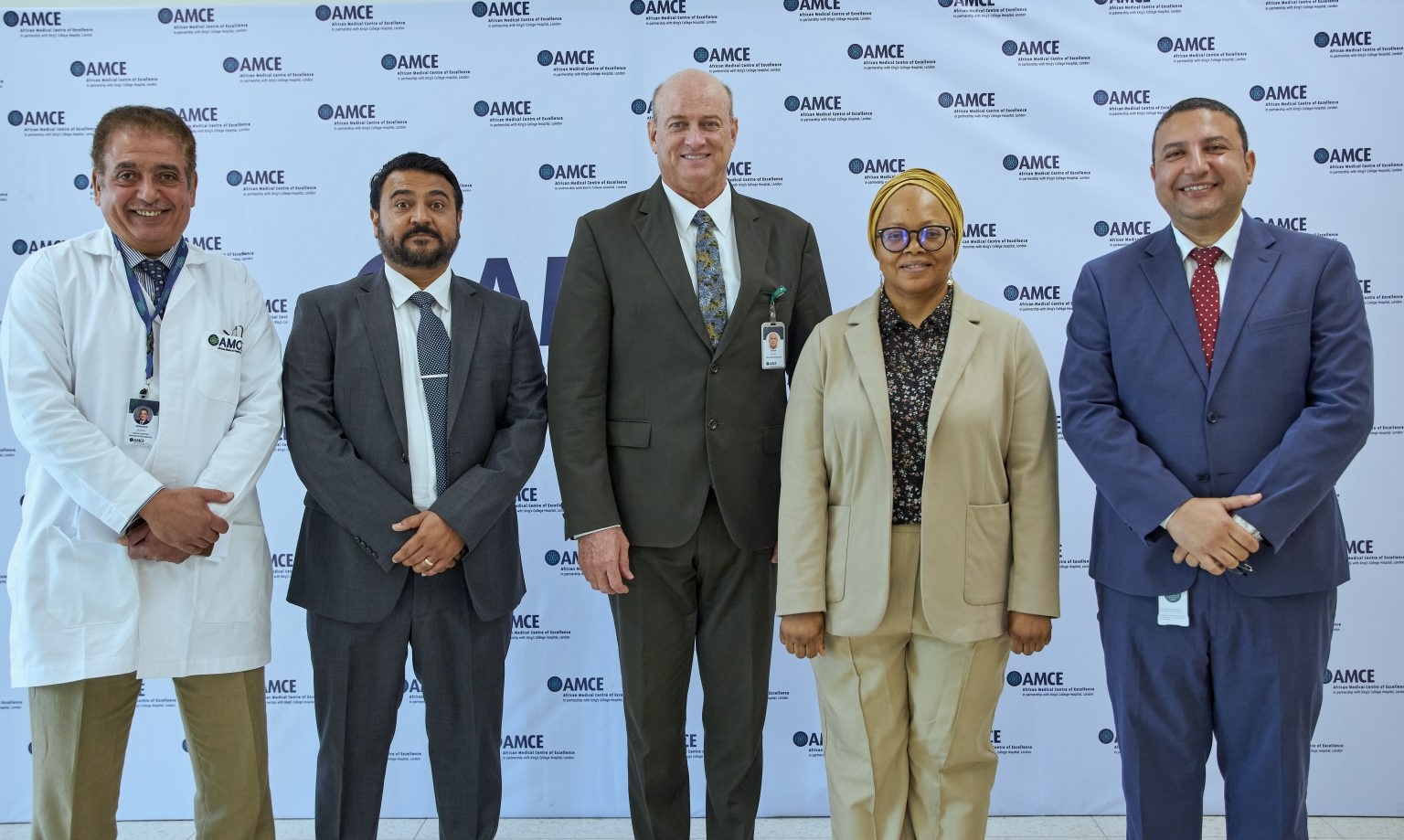
The African Medical Centre of Excellence (AMCE) in Abuja has reached two major clinical milestones within just six months of its inauguration, marking a significant stride in the advancement of Africa’s healthcare capacity. The centre, developed by the African Export Import Bank (Afreximbank) in partnership with King’s College Hospital London, has successfully performed its first open-heart surgery and delivered West Africa’s first Stereotactic Body Radiation Therapy (SBRT) for lung cancer.
These achievements represent more than clinical success; they reflect a growing commitment to reversing medical dependency on overseas treatment and building a sustainable, high-standard healthcare ecosystem across Africa. The open-heart procedure, a complex Triple Coronary Artery Bypass Grafting (CABG), was executed by AMCE’s cardiovascular team led by Dr Mohamed Ibrahim, Clinical Director of Cardiovascular Services. This places the centre among the select few institutions on the continent offering a fully integrated cardiac care pathway, encompassing advanced diagnostics, interventional cardiology, and complex cardiac surgery under one roof.



Equally notable is the completion of West Africa’s first SBRT treatment, a precision oncology procedure that delivers surgical-level accuracy without incision. The case involved an elderly patient with a localised lung tumour, treated through advanced imaging and real-time motion tracking technology. This milestone underscores AMCE’s rapidly growing capacity to deliver complex oncology care and sets a new benchmark for radiotherapy standards in the region.
Speaking on these achievements, AMCE Chief Executive Officer Brian Deaver highlighted the transformative nature of the milestones, stating that the institution’s progress signals a shift in how Africa approaches specialised healthcare. “Delivering our first open-heart surgery and the first SBRT treatment in West Africa is not just a medical achievement; it represents a moment of empowerment for the continent. It demonstrates that world-class care can be delivered locally, by African specialists, for African patients,” he said.
Dr Aisha Umar, Chief Operating Officer of AMCE, and Dr Boules Gabriel, Clinical Director of Oncology, reaffirmed that the centre’s mission extends beyond clinical excellence to encompass capacity building, technology transfer, and human capital development. This approach aims to reduce the significant economic and social burden caused by outbound medical tourism, estimated to cost African countries between US$6 billion and US$10 billion annually.

Afreximbank’s Managing Director of Export Development, Oluranti Doherty, described the dual milestones as tangible proof of the transformative impact of sustained investment in Africa’s health infrastructure. “The success of AMCE’s pioneering procedures demonstrates what can be achieved when we invest in developing our own capacity. It is a testament to Africa’s ability to build a self-reliant healthcare system that retains expertise and strengthens the broader health ecosystem,” she noted.
The AMCE is currently expanding its cardiovascular and oncological services to include advanced valve repair and replacement surgeries. The centre’s state-of-the-art infrastructure includes an 18 MeV cyclotron, 3 Tesla Magnetic Resonance Imaging systems, a 256-slice computed tomography scanner, and one of the largest stem cell laboratories in the region. With an initial capacity of 170 beds and a planned expansion to 500, the centre is poised to become a cornerstone of high-end medical care in Africa.
Beyond its immediate achievements, AMCE represents a wider shift towards a more self-sufficient and dignified African healthcare narrative—one that centres African expertise, fosters continental collaboration, and challenges long-standing dependency paradigms. This is not merely about reducing the need for medical travel; it is about affirming the continent’s right and ability to deliver the highest standards of care within its own borders.