Jubilee Metals Group, a mining and metals recovery company listed on the AIM and JSE, has entered into a strategic cooperation and project development agreement with AIM listed Galileo Resources to jointly advance the Molefe copper mine in Zambia. This collaborative arrangement reflects a shared intent to consolidate African-based technical expertise, enhance resource exploration and fast-track the growth of a high potential mining project in Zambia’s Central Province.
Under the terms of the agreement, Galileo will earn up to a 23.75 percent stake in the Molefe copper project through an investment of 700 thousand US dollars in exploration and resource definition activities. Upon fulfilment of this commitment, Jubilee will retain a 71.25 percent ownership stake while a 5 percent share will be held by a Zambian partner in accordance with local ownership frameworks aimed at empowering national stakeholders.
The agreement is designed to leverage Jubilee’s mineral processing and operational infrastructure in tandem with Galileo’s geological and exploration capabilities. The collaborative model enables both entities to pool resources and direct technical expertise towards establishing sustainable copper production anchored within an African development framework.



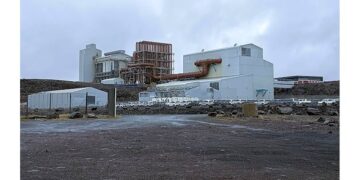
Operationally, the Molefe copper mine is functioning as a brownfield restart and currently supplies high grade ore to Jubilee’s Sable Refinery in Kabwe. Present production targets are set at approximately 4500 tonnes per month of run-of-mine ore with copper grades exceeding 2 percent. In parallel, an estimated 2.2 million tonnes of lower grade stockpiles, averaging 0.7 percent copper, have been accumulated on site since October. Plans are underway to construct an on-site processing plant that will treat both newly extracted ore and historic stockpiles. The integration of new and legacy material aligns with Jubilee’s strategy to maximise existing resource value through modular and efficient processing solutions.
The financing structure under the cooperation framework provides for Jubilee’s current investment to be recognised as a capital loan accruing interest as well as a shareholder loan that is non interest bearing. The capital loan will receive preferential earnings until it is fully repaid. The development model adopted demonstrates a prudent financial structure that seeks to balance investment risk with operational returns in a region that continues to attract responsible foreign capital committed to longer term industrial transformation.
A joint executive committee will provide oversight for the project comprising two members nominated by Jubilee including the chair and one member from Galileo. Once the earn-in is completed, Jubilee will appoint two directors and Galileo one to the Molefe holding company board. This governance structure echoes a balanced approach to stewardship and responsibility across all stakeholders.

Importantly, the Molefe development is not isolated in its impact. The agreement signals potential future collaboration across other mineral tenures recently secured by Jubilee within the Central Province of Zambia. The region is increasingly recognised for its prospective geology and potential for scalable modular copper operations. The cooperative approach between Jubilee and Galileo could serve as a model for similar African-centred ventures where local context and technical capacity are jointly optimised.
The Zambian Ministry of Mines has consistently articulated support for partnerships that combine capital, technical strength and local knowledge to enable accelerated and inclusive project delivery. Structures such as the Molefe earn-in agreement are commonplace in Zambia’s evolving resource governance architecture. They are designed to bring together international financial participation with national ownership to deliver rapid early stage development without the full burden of capital exposure falling on any one party.
Galileo Resources has maintained a well-established footprint within Zambia’s exploration landscape with licences across multiple prospects including Shinganda and Luansobe. The firm has previously undertaken mapping, drilling and resource definition work in regions that lie at the heart of Zambia’s copper producing zones. Jubilee’s operations in Zambia also include a number of copper and cobalt recovery facilities, and the company is actively expanding its modular processing capacity in line with the national agenda of achieving three million tonnes of copper output annually by 2030.
Speaking on the partnership, Jubilee Chief Executive Leon Coetzer noted that the cooperation aligns the core strengths of both entities and positions Molefe for accelerated development. He emphasised that the shared ownership structure will support a unified and coherent approach to project execution and long term value creation.

In the broader context of Southern Africa’s mining future, the Molefe initiative reflects a maturing of intra-African cooperation that challenges historical extractive models. The project is a demonstration of how technical capability, operational capital and local participation can converge to forge pathways that humanise African development narratives. Rather than relying on legacy models, projects such as Molefe are emerging from collaborative structures that recognise Africa’s agency in shaping its own mineral destiny.