If the European Union seeks to become a credible and strategic trade partner to Africa, it must rethink its posture toward the continent. The historical template built on extraction and export of raw commodities has run its course. Africa is demanding a new framework grounded in value addition, technology transfer, and inclusive economic development. At the centre of this reorientation is the concept of forward linkages – the expansion of downstream beneficiation processes that enable African economies to capture more value from their mineral wealth. Europe’s opportunity lies not only in funding these ventures but in brokering a trilateral arrangement with China that balances market access, industrial development, and strategic competitiveness.

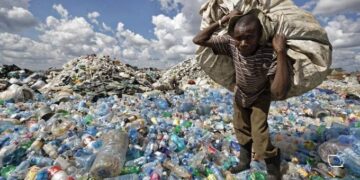
Downstream beneficiation refers to the local processing and transformation of raw minerals into semi-finished or finished products. This could range from smelting copper to manufacturing battery components from lithium or cobalt. In regions such as the Copperbelt in Zambia and the Democratic Republic of Congo, there is increasing appetite to move away from the export of unprocessed ores. Research by Morris and Fessehaie (2014) has long illustrated that African countries capture only a fraction of value in the mining sector because of the dominance of foreign-owned firms operating isolated, enclave-type extractive ventures. Without beneficiation, opportunities for employment, skills development, and industrial diversification are lost.
This is where the European Union can play a catalytic role. Through development finance institutions and private equity investors, it can deploy blended finance models that de-risk downstream investments. These can include mechanisms such as concessional loans, first-loss capital guarantees and green industrial bonds. Facilities under the European Fund for Sustainable Development Plus can be mobilised to support industrial infrastructure, regional power pools and corridor logistics that are essential for beneficiation hubs. Such investment is not charity – it is sound strategic policy. By enabling beneficiation at source, Europe reduces its dependency on highly centralised global supply chains and aligns itself with resilient, decarbonised sourcing practices.



The incentive for China to participate in this shift is also clear. Chinese firms already dominate the upstream extraction of many critical minerals on the continent. However, geopolitical tensions with the United States and regulatory scrutiny in the European Union are increasingly challenging China’s access to Western markets. Europe’s most valuable leverage, therefore, is its market. The EU remains a premium destination for high-value green technologies, from electric vehicles to renewable energy systems – all of which require critical minerals such as cobalt, lithium and rare earth elements. These materials, when processed under high environmental and labour standards, can be eligible for preferential access under emerging carbon and sustainability regulation such as the EU Carbon Border Adjustment Mechanism.
By creating policy instruments that reward sustainable beneficiation partnerships based in Africa, Europe can invite Chinese technical and financial cooperation while ensuring African countries retain greater value. Recent studies have illustrated that Chinese state-linked capital is not averse to co-financing local processing zones. Jepson and Baldakova (2024) document how China has partnered with governments in Bolivia and Kazakhstan to co-invest in lithium refining and related downstream industries. A similar model can be structured in Africa, provided the terms reflect African development priorities and European sustainability mandates.

Zambia’s newly launched Critical Minerals Strategy in 2024 presents a powerful case study. The government aims to develop domestic smelting and refining capacity to move up the battery value chain. Yet these ambitions require risk-tolerant capital and offtake security. European automakers and battery producers, facing strict ESG regulations under the new Corporate Sustainability Due Diligence Directive, can enter into structured offtake agreements with Zambian refiners. This model guarantees revenue predictability for African firms while ensuring secure and ethical mineral sourcing for European industry.
Already, promising initiatives are emerging. The German Development Bank, KfW, has partnered with China Nonferrous Metal Mining Group to explore a modular cobalt processing plant near Solwezi. This public-private initiative would generate skilled jobs, introduce advanced refining technology, and embed quality standards consistent with EU requirements. The African Continental Free Trade Area strengthens this by harmonising investment codes, industrial regulations and cross-border logistics to facilitate intra-African value chains.
Crucially, this approach would not only boost trade volumes and technology absorption across Africa, but also play a pivotal role in addressing the structural root causes of irregular migration to Europe. Multiple peer-reviewed studies highlight that economic desperation and youth unemployment are among the most significant drivers of migratory flows from Africa to Europe. Müller (2023) argues that the promotion of mineral beneficiation and local industrialisation reduces vulnerability and raises the opportunity cost of migration, thereby keeping talent and energy on the continent. Moyo (2024) similarly demonstrates that the strengthening of intra-African trade under AfCFTA enhances local entrepreneurial ecosystems, which in turn absorb the labour force more effectively and mitigate outward mobility.

Cilliers (2021) models the macroeconomic impact of AfCFTA, estimating that if full implementation is achieved alongside industrial upgrading, Africa could reduce net emigration by over 20 percent by 2040. The evidence is compelling: beneficiation, when linked to regional integration frameworks such as AfCFTA, multiplies employment, deepens domestic capital formation and establishes industrial clusters that are sticky to talent. In short, people migrate less when they see a future within.
Moreover, Vhumbunu (2019) and Mavhunga (2023) reinforce the idea that regional beneficiation centres, supported by pan-African trade, not only build competitiveness but also create dignified jobs that foster community resilience. Africa does not lack talent or ambition – it has long lacked the industrial scaffolding to absorb and deploy its human capital. Forward linkages, embedded within trade architecture and backed by trilateral investment, offer a powerful response to this deficit.
The strategic alignment of Europe’s finance and regulatory capacity with China’s technical know-how and Africa’s resource endowment represents a rare geopolitical opportunity. Such trilateral engagement can rebalance trade dynamics, foster industrial transformation and serve the mutual interests of all parties. To achieve this, policy must be intentional. European governments should mandate ESG-linked preferential market access. DFIs must deploy patient capital through blended structures. Corporates must embrace long-term offtake commitments. And African states must enhance policy coherence across regional and national industrial frameworks.

For Europe, this is not only about Africa. It is about securing access to strategic minerals under transparent and resilient conditions. It is about reducing dependency on a narrow set of supply chains dominated by systemic risks. And it is about redefining global development not as a function of extraction but of co-investment and shared industrial futures.
The call is clear. If the European Union seeks a meaningful role in the next phase of African development, it must pivot toward beneficiation and forward linkages. Extraction without transformation is a losing proposition. The future of global trade lies in collaboration, co-location and industrial co-creation.
Written by Farai Ian Muvuti, the Chief Executive Officer of The Southern African Times, 2023 winner of the Young Entrepreneur of the Year award by the South African Chamber of Commerce UK, an advisor on the board of the Africa Chamber of Commerce, and a contributor to Arise News, Al Jazeera, and the BBC.