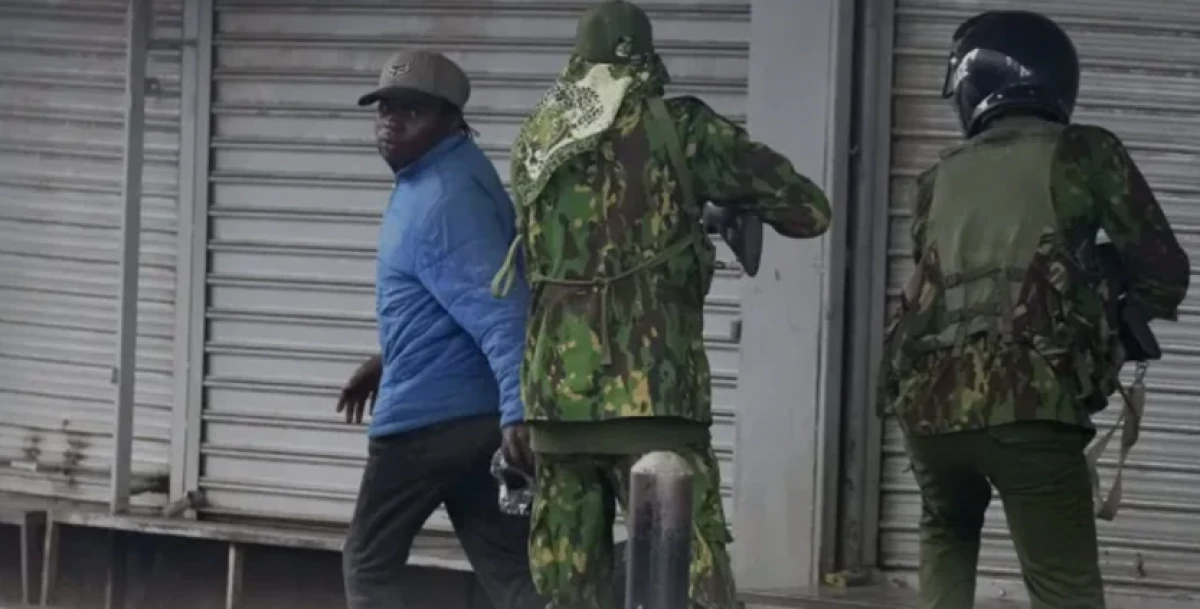
Another name has joined the growing list of victims in Kenya’s ongoing crisis of police violence. Boniface Kariuki, a 22-year-old street vendor shot in the head during protests in Nairobi, has been declared brain dead. His heart continues to beat only because of life support. His family knows what this means. The machines are keeping a body alive, but they are already mourning a young man lost to a bullet fired during a moment of national protest.
Kariuki was selling masks on the street when he was caught in the chaos of a protest sparked by the death in custody of blogger and teacher Albert Ojwang. That protest was meant to demand justice. It ended with another casualty, another family grieving, another open question hanging in the air.
Doctors have performed several operations on Kariuki, but some bullet fragments remain lodged in his brain. His case has drawn public outrage, but outrage alone does not bring justice. Two police officers have appeared in court over his shooting, but no charges have yet been laid. They remain in custody as investigations continue. Meanwhile, at least nineteen people were killed during nationwide anti-government demonstrations last week, according to the state-funded human rights commission.



The official response has added fuel to public anger. Interior Minister Kipchumba Murkomen described the protests as terrorism disguised as dissent and instructed police officers to shoot on sight any civilians attacking police stations. These words, reckless and inflammatory, were widely condemned by rights groups and lawyers, but the damage is already done. What happens when those in power speak like this? What message does it send to officers already facing criticism for excessive force?
This is no longer about isolated cases. It is a pattern. It is a culture of violence, enabled by rhetoric and reinforced by inaction. When Ojwang was killed in police custody, six people including three police officers were charged with murder. Kenya’s deputy police chief Eliud Lagat was forced to step aside. But even then, many asked whether that was enough. Ojwang had been arrested after Lagat filed a complaint accusing him of defamation. An autopsy later confirmed that Ojwang died from assault wounds. Lagat denies any wrongdoing.
How long will this go on? How many deaths must it take before someone draws a clear line between policing and brutality? Who in government will take responsibility for what is happening on Kenya’s streets and in its police cells? Who will protect the right to protest, the right to speak, the right to live?

And where are the voices across the region? There has been a troubling silence from neighbouring governments. Not a word of solidarity. Not a statement of concern. Nothing. East Africa has seen a surge in youth-led protest movements in recent years. Governments have responded not with listening, but with suppression. What are these governments learning from each other? Are they watching each other’s crackdowns and finding new ways to silence dissent in the name of stability?
There is a risk here that should not be ignored. The region is becoming more coordinated in the way it neutralises opposition. Not through official alliances, but through shared practices. A protester is no longer just a citizen demanding change. He is an enemy. A threat. An obstacle to be removed. It is this logic that leads to young men being shot in the head while selling masks on the street.
Justice cannot be selective. It cannot depend on where you live or who your lawyer is or how loud your case becomes on social media. It must apply equally to every citizen. And it must come with consequences for those who abuse power, not just apologies and promises of reform.
Kenya’s Parliament must act with urgency. The courts must remain firm. Civil society must not relent. And the government must stop treating dissent as a disease. Protest is not a crime. Criticism is not terrorism. Speaking the truth about injustice is not the same as threatening the state.
This moment demands more than statements and inquiries. It demands political courage. It demands reform that does not only live in policy documents but is felt on the streets, in the hospitals, in the courts and in the lives of ordinary citizens.
Kariuki’s family has asked the government to settle the rising hospital bills. That such a request even needs to be made is itself a failure. A state that harms its citizens cannot then abandon them in the aftermath. This is not just about compensation. It is about dignity. About recognising the weight of a life cut short by those who were supposed to protect it.
The world is watching. So are Kenyans. The questions are not going away. Who will hear them? Who will answer them? And who, if anyone, will act before more names are added to the list?