Friday, May 1, 2026
  • Login
The Southern African Times
  • Home
  • Southern Africa
  • Business
    • African Start ups
    • African Continental Free Trade Area
  • Technology
    • Lifestyle
      • Health
      • Culture
      • Food and Drink
      • Entertainment
  • Opinion
  • Sports
  • SAT Jobs
    • Events
  • About Us
    • Advertise with Us
    • Contact Us
No Result
View All Result
  • Home
  • Southern Africa
  • Business
    • African Start ups
    • African Continental Free Trade Area
  • Technology
    • Lifestyle
      • Health
      • Culture
      • Food and Drink
      • Entertainment
  • Opinion
  • Sports
  • SAT Jobs
    • Events
  • About Us
    • Advertise with Us
    • Contact Us
No Result
View All Result
The Southern African Times
No Result
View All Result
Home Markets

AfDB Forecasts $1.43 Trillion Domestic Resource Potential

by SAT Reporter
May 29, 2025
in Markets
0
AfDB Forecasts $1.43 Trillion Domestic Resource Potential

Africa’s economic resilience continues to draw global attention as the African Development Bank Group (AfDB) projects that the continent could mobilise an additional $1.43 trillion in domestic resources, driven by effective reforms and reduced financial leakages. According to its 2025 edition of the African Economic Outlook (AEO), released during the Bank’s Annual Meetings in Abidjan, Côte d’Ivoire, Africa’s GDP is set to rise from 3.3 percent in 2024 to 4 percent in 2026, reflecting a resilient growth trajectory amid global uncertainties.

The AEO, titled Making Africa’s Capital Work Better for Africa’s Development, presents a sober but optimistic roadmap for transforming the continent’s capital utilisation. It calls for decisive reforms across tax systems, natural resource management, institutional savings, and governance frameworks. The report notes that 21 countries are projected to exceed 5 percent growth in 2025, while Ethiopia, Niger, Rwanda, and Senegal may surpass 7 percent, the threshold commonly associated with meaningful poverty reduction and inclusive economic progress.

East Africa is forecast to lead with 5.9 percent growth during 2025–2026, buoyed by the dynamism of economies such as Ethiopia, Rwanda, and Tanzania. West Africa will maintain a solid 4.3 percent, bolstered by oil and gas developments in Senegal and Niger. North Africa is expected to post 3.6 percent, Central Africa 3.2 percent, and Southern Africa lags with just 2.2 percent, weighed down by South Africa’s anaemic 0.8 percent growth projection.


ADVERTISEMENT

Despite this mixed performance, the continent’s long-term economic potential remains strong. The report underscores Africa’s massive untapped capital base, which, if efficiently harnessed, could fundamentally shift its development trajectory. According to the AEO, the key sources of this domestic capital include:

  • Natural capital: Africa holds 30 percent of global mineral reserves and stands to gain over 10 percent of the projected $16 trillion in revenues from green minerals by 2030.
  • Human capital: With a median age of 19, the continent has a significant demographic dividend, estimated to add $47 billion to GDP through increased workforce participation.
  • Financial capital: Pension fund assets have grown to $1.1 trillion, and if transfer costs decline, formal remittances could reach $500 billion by 2035.
  • Business capital: The full implementation of the African Continental Free Trade Area (AfCFTA) could enhance exports by $560 billion and boost income by $450 billion across Africa by 2035.

However, these opportunities are tempered by extensive capital outflows. The report highlights that while $190.7 billion in financial inflows were recorded in 2022, a staggering $587 billion exited the continent through leakages. Of this, $90 billion was attributed to illicit financial flows, $275 billion to profit shifting by multinational corporations, and $148 billion lost to corruption. The scale of these losses significantly undermines Africa’s capacity to finance its development autonomously.

The AfDB report places strong emphasis on the need for digitalisation of tax systems, broadening tax bases, and fostering social contracts to improve public compliance and trust. It further advocates for mandatory natural capital accounting and enforcing domestic value addition through beneficiation frameworks. Additionally, to deepen Africa’s financial markets, it recommends mobilising institutional savings, nurturing local currency bond markets, and establishing harmonised regulatory systems to promote cross-border investments.

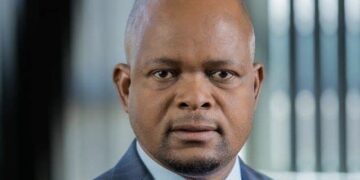
According to Kevin Chika Urama, AfDB’s Chief Economist and Vice President, Africa’s development trajectory must be owned and financed internally. “When Africa allocates its own capital—human, natural, fiscal, business and financial—effectively, global capital will follow Africa’s capital to accelerate investments in productive sectors,” he stated.

Beyond growth metrics, the AEO underscores the pivotal role of sound macroeconomic policy, strong institutions, transparent governance, and rule of law as non-negotiable pillars for sustained development. Interest payments now account for 27.5 percent of government revenues—up from 19 percent in 2019—while 15 countries face double-digit inflation, compounding fiscal pressures.

Africa’s projected growth is expected to outpace most global regions, save for emerging and developing Asia, positioning it as a future economic anchor. However, the full realisation of this vision demands urgent reform, better utilisation of existing capital, and an end to systemic leakages.

The AfDB’s latest assessment provides not only a macroeconomic snapshot, but a strategic template for African-led growth, offering a powerful counter-narrative to the dependency paradigm. With policy clarity and implementation, Africa has the tools to chart a prosperous and inclusive future.

Tags: AfDBAfrica domestic resource mobilisationAfrican Development BankAfrican economic growthAfrican Economic Outlook 2025capital flows Africafinancial leakages Africainstitutional reform Africamacroeconomic policy Africanatural capital Africatax reform Africa
Previous Post

Ngũgĩ wa Thiong’o Dies: A Literary Giant and Champion of Native Languages

Next Post

Namibia Commemorates First Genocide Remembrance Day Honouring Victims of Colonial Atrocities

SAT Reporter

Related Posts

African Capital Markets Conference spotlights diaspora capital for market growth
Markets

AFRINEX Lists US$33 million Bond for Cellecor Gadgets Limited

by SAT Reporter
May 1, 2026
Botswana Raises Interest Rates as Inflation Surges and Global Energy Shock Intensifies
Markets

Botswana Raises Interest Rates as Inflation Surges and Global Energy Shock Intensifies

by SAT Reporter
May 1, 2026
Victoria Falls Financial Centre Positioned as Gateway for Global Capital into Africa
Markets

Victoria Falls Financial Centre Positioned as Gateway for Global Capital into Africa

by SAT Reporter
May 1, 2026
AELP Drives African Capital Market Integration at London Conference
Markets

AELP Drives African Capital Market Integration at London Conference

by SAT Reporter
April 30, 2026
Fed Holds Rates Steady as Powell Defends Central Bank Independence
Markets

Fed Holds Rates Steady as Powell Defends Central Bank Independence

by SAT Reporter
April 30, 2026
Next Post
Namibia Commemorates First Genocide Remembrance Day Honouring Victims of Colonial Atrocities

Namibia Commemorates First Genocide Remembrance Day Honouring Victims of Colonial Atrocities

Browse by Category

  • Africa AI
  • African Continental Free Trade Area
  • African Debt
  • African Start ups
  • Agriculture
  • AI Africa
  • Algeria
  • All News
  • Analysis
  • Angola
  • Arts / Culture
  • Asia
  • Botswana
  • BOTSWANA
  • BREAKING NEWS
  • BRICS
  • Burkina Faso
  • Burundi
  • Business
  • Business
  • Business Wire
  • Cameroon
  • Central Africa
  • Chad
  • China
  • Climate Change
  • Climate Changev
  • Community
  • Congo Republic
  • Conservation
  • Côte d’Ivoire
  • COVID 19
  • CRYPTOCURRENCY
  • Culture
  • Democratic Republic of Congo
  • Diplomacy
  • Eastern Africa
  • Economic Development
  • Economy
  • Education
  • Egypt
  • Elections 2024
  • Energy
  • Entertainment
  • Environment
  • Eritrea
  • Ethiopia
  • Europe
  • Fashion
  • Feature
  • Finance
  • Financial Inclusion
  • Food
  • Food and Drink
  • Foods
  • GABON
  • Ghana
  • Global
  • Global Africa
  • Guinea
  • Health
  • Immigration
  • in Southern Africa
  • International news
  • International Relations
  • Investment
  • Ivory Coast
  • Just In
  • Kenya
  • Lesotho
  • Libya
  • Life Style
  • Lifestyle
  • Literature
  • Malawi
  • Malawi
  • Mali
  • Markets
  • Mauritius
  • Middle East
  • Mining in Africa
  • Morocco
  • Mozambique
  • Namibia
  • Niger
  • niger
  • Nigeria
  • North Africa
  • North-Eastern Africa
  • Obituaries
  • Obituary
  • Opinion
  • PARTNER CONTENT
  • Politics
  • Property
  • Racism
  • Rwanda
  • Rwanda
  • SADC
  • SAT Interviews
  • SAT Investigation
  • SAT Jobs
  • Saudi Arabia
  • Senegal
  • Seychelles
  • Somaliland
  • South Africa
  • South Sudan
  • Sports
  • Startup Africa
  • STOCK EXCHANGE
  • Sudan
  • Sustainability
  • Sustainablity
  • Tanzania
  • Technology
  • Telecommunications
  • The Editorial Board
  • The Power Of She
  • Togo
  • Trade
  • Travel
  • Travel
  • Tunisia
  • Uganda
  • Uncategorized
  • Wealth
  • West Africa
  • World
  • World
  • ZAMBIA
  • Zambia
  • Zimbabwe
  • ZIMBABWE

Browse by Tags

#NewsUpdate #SouthAfrica #SouthernAfricanTimes #TheSouthernAfricanTimes AfCFTA africa African Continental Free Trade Area African development African Development Bank African economies African economy African Union Agriculture Angola Botswana Business China Climate change Cyril Ramaphosa Economic Development economic growth energy transition fiscal policy industrialisation Inflation Infrastructure Infrastructure Development International relations Investment Kenya Mozambique Namibia news Nigeria Regional Integration renewable energy Rwanda SADC South Africa Southern Africa sustainable development Tanzania United States Zambia Zimbabwe
ADVERTISEMENT

WHO WE ARE

The Southern African Times is a regional bloc digital newspaper that covers Southern African and world news. The paper also gives a nuanced analysis on news and covers a wide range of reporting which include sports, entertainment, foreign affairs, arts and culture.

Welcome Back!

Login to your account below

Forgotten Password?

Retrieve your password

Please enter your username or email address to reset your password.

Log In

  • Home
  • Southern Africa
  • Business
    • African Start ups
    • African Continental Free Trade Area
  • Technology
    • Lifestyle
      • Health
      • Culture
      • Food and Drink
      • Entertainment
  • Opinion
  • Sports
  • SAT Jobs
    • Events
  • About Us
    • Advertise with Us
    • Contact Us
Are you sure want to unlock this post?
Unlock left : 0
Are you sure want to cancel subscription?