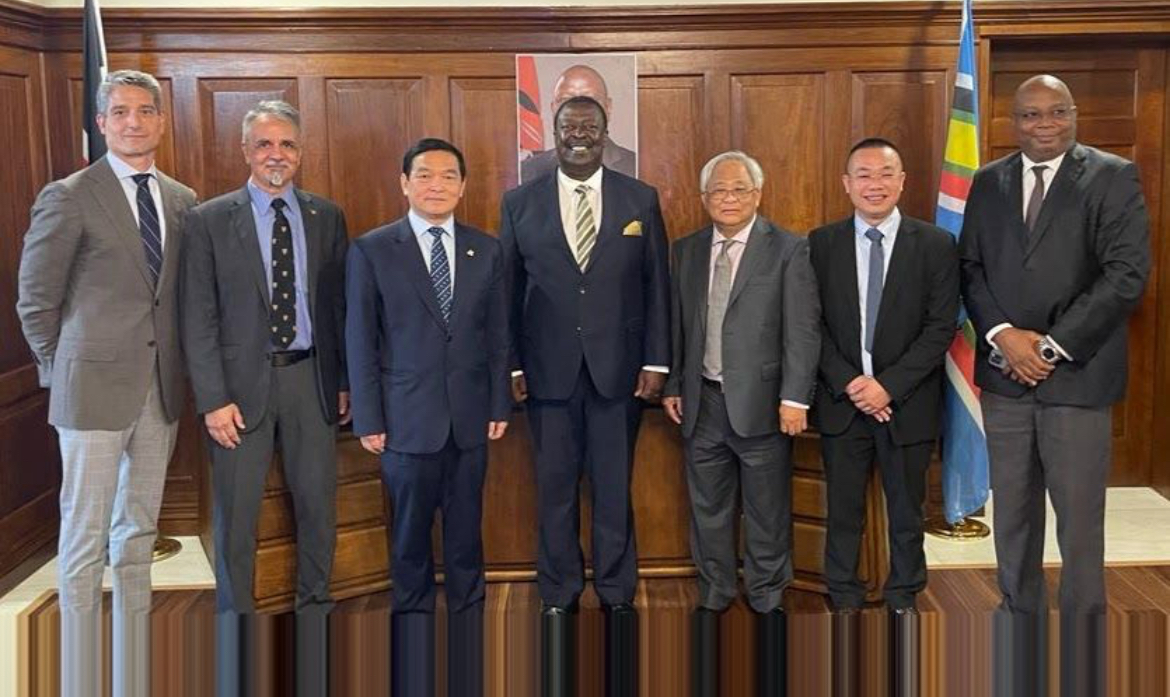
Kenya’s ambitious vision for modernisation remains aspirational rather than transformative. Despite compelling rhetoric from top-level officials, such as President William Ruto and Prime Cabinet Secretary Musalia Mudavadi, a closer look reveals a persistent inertia in execution and an environment that often prioritises political posturing over systemic reform.
Contrary to narratives of insufficient resources, Kenya’s primary deficit lies in operational culture and policy follow-through. As Cilliers et al. (2018) and Hope Sr. (2010) observed, Kenya has long suffered from development bottlenecks not for lack of funding or talent, but due to weak institutional frameworks and short-term political incentives. Execution delays in critical sectors like energy and housing consistently undermine economic progress.
A key indicator is electricity generation. Kenya, with a population of approximately 53 million, currently has an installed power capacity of around 4.8. In contrast, Vietnam, with close to 100 million citizens, has over 70 GW in power capacity, much of it clean and industrially focused. Singapore, a city-state of under six million people, ensures uninterrupted supply through strategic redundancy, despite not producing its own energy.



These statistics are not marginal—they underpin economic expansion. Vietnam’s prioritisation of power capacity before industrial zones enabled rapid export-led growth. Kenya’s inconsistent electricity, by contrast, discourages industrialisation and deters long-term foreign direct investment (FDI) (Osano & Koine, 2016; SpringerLink).
Worse still, Kenya often invests in prestige infrastructure disconnected from economic purpose. The Standard Gauge Railway and Nairobi Expressway, though technologically impressive, were rolled out ahead of sufficient export volumes or logistical integration. Analysts argue these investments lack multiplier effects because they are not accompanied by productive ecosystems.
In the tourism sector, inefficiencies remain glaring. Procedural frictions at national parks and limited nightlife infrastructure reduce Kenya’s potential to capture tourism value beyond safari snapshots. Singapore’s seamless tourist logistics and Vietnam’s rapidly expanding cultural tourism market highlight how policy coherence can drive economic returns.
Meanwhile, corruption and regulatory uncertainty further erode investor confidence. Despite public declarations on housing and enterprise reforms, Kenya lacks the institutional guarantees required by international investors—risk mitigation, legal recourse, and consistent policy application.
The success of East Asian states stems not from external largesse but from internal discipline. Leaders in Vietnam and Singapore are known for early starts and long-term planning grounded in data and accountability. Policies are incentive-aligned, and leadership remains immersed in delivery rather than optics.
Kenya’s potential remains undeniable, especially in renewable energy where it leads Africa in geothermal development. Yet the foundation for sustainable economic transformation—consistent execution, energy reliability, legal certainty, and an investor-friendly ethos—remains fragile.
The window of global competitiveness is narrowing. With Asia consolidating its industrial rise and Latin America exploring new partnerships, Africa’s race is not against the West, but against time. To leap forward, Kenya and its neighbours must adopt a new mindset—less theatrical, more technocratic; less reactive, more deliberate.
A microphone makes a speech; a power grid makes a factory. Kenya must prioritise the latter.

Doanh Chau is the President of the Vietnam Gas and Energy Science Group. His insights reflect both professional expertise and personal experience working across Asia and Africa. The reflections herein are offered with respect and constructive intent, particularly towards Kenya and its leadership. The views expressed in this article are those of the author and do not necessarily reflect the official policy or position of The Southern African Times. This article is presented for informational and analytical purposes only.