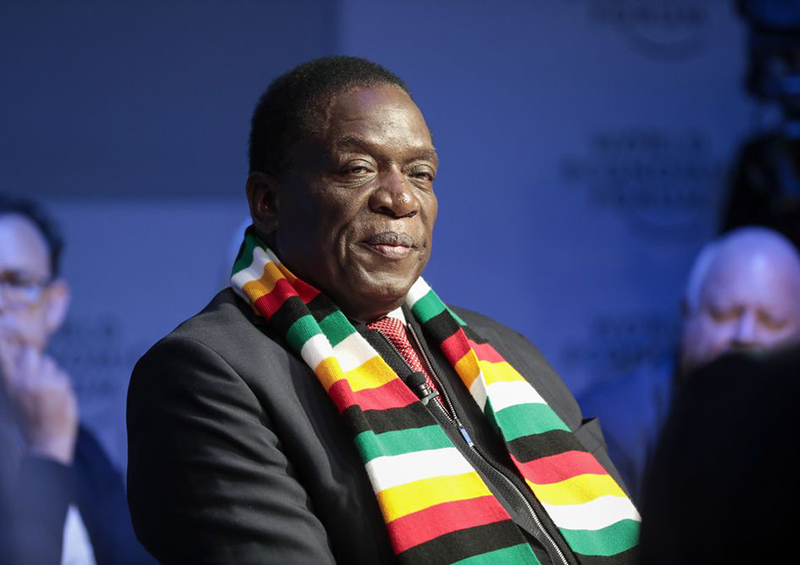
Zimbabwe stands at a defining crossroads. As the world accelerates towards a future shaped by rapid technological advancements, shifting trade dynamics, and climate-driven food security challenges, Zimbabwe’s political discourse has increasingly centred on amending the constitution to allow President Emmerson Mnangagwa a third term. Proponents argue that continuity in leadership ensures stability and the seamless implementation of long-term policies. Yet historical experience and academic evidence suggest that extended tenures often breed economic stagnation, institutional decay, and policy inertia.
President Mnangagwa has on several occasions publicly affirmed his commitment to the constitutional framework established in 2013, which limits the presidency to two terms. These pronouncements were designed to assure both the local electorate and international investors of Zimbabwe’s respect for democratic norms and predictable governance. However, the current drive to amend the constitution contradicts these assurances and undermines the credibility of the nation’s institutions. Research in political science, such as Schedler (2002), underscores that even perceived deviations from constitutional promises can have lasting adverse effects on investor confidence. For investors, both domestic and foreign, a stable policy environment is paramount, and any indication of leadership transition being manipulated for political gain raises the risk premium applied to long-term investments.
The economic implications of this uncertainty are profound. Zimbabwe’s economy remains fragile, with inflation persistently high and the local currency losing 80% of its value against the US dollar in 2023 alone. Foreign direct investment (FDI), a crucial driver of economic recovery, has stagnated, with the World Bank recording inflows of only $194 million in 2022—dwarfed by regional peers such as Mozambique, which attracted over $5 billion in the same period. Investors have long highlighted Zimbabwe’s inconsistent policy environment as a deterrent, citing the abrupt banning of multi-currency usage in 2019 before its reintroduction in 2022 as an example of unpredictability. Political uncertainty exacerbates this, particularly when compounded by concerns over governance stability and leadership transitions.
A key factor in economic recovery is the ability to attract long-term capital investment, particularly in infrastructure, energy, and industrialisation. One mechanism widely used by emerging markets to secure large-scale financing is the sovereign guarantee—a formal commitment by the government to back specific projects, offering assurance to lenders that obligations will be met even if the direct borrower defaults. Sovereign guarantees enable countries to attract concessional financing from international lenders and development finance institutions. However, their efficacy is contingent on government credibility and macroeconomic stability.
In Zimbabwe’s case, political uncertainty weakens the value of such guarantees. Lenders evaluate sovereign risk by assessing political stability, institutional integrity, and policy continuity. A government perceived as unstable or prone to constitutional manipulation faces higher borrowing costs, if not outright reluctance from financiers. Zimbabwe’s history is instructive in this regard. Following the controversial 2000 land reform programme, international lenders significantly reduced credit lines due to governance concerns, leading to an economic crisis exacerbated by the loss of access to concessional financing. Even in recent years, Zimbabwe has struggled to secure new lines of credit, with its external arrears standing at $14 billion, largely because of credibility issues rather than an absolute lack of economic potential.
A pertinent example is the stalled Batoka Gorge Hydroelectric Project, a $4.5 billion energy infrastructure initiative critical to regional power security. Despite strong fundamentals and potential financing from the African Development Bank and China Exim Bank, progress has been hampered by Zimbabwe’s sovereign risk profile. Investors require firm guarantees that policy direction will remain stable and that contracts will be honoured across political cycles. The third-term debate adds an additional layer of uncertainty, as it signals that constitutional provisions can be adjusted to suit political expediency. This weakens confidence in Zimbabwe’s ability to uphold commitments, making lenders hesitant to accept sovereign guarantees as reliable instruments.
Political distractions also have a tangible impact on governance effectiveness. Vision 2030, Zimbabwe’s strategic blueprint for attaining upper-middle-income status, requires focused policy implementation. However, with political actors preoccupied with securing an extended tenure for the incumbent, ministerial priorities have shifted away from pressing economic reforms. The delayed rollout of Zimbabwe’s AI strategy, which is crucial for positioning the country within the global digital economy, exemplifies how political considerations override developmental urgency. Similarly, key anti-corruption measures remain stalled, with Transparency International ranking Zimbabwe 157th out of 180 countries in its 2023 Corruption Perceptions Index—an issue that directly affects business confidence.
Proponents of the third term argue that continuity in leadership ensures policy consistency, citing infrastructure successes such as the Hwange Power Station expansion and progress in road rehabilitation. While continuity can be beneficial, history suggests that prolonged rule often breeds policy inertia and diminished accountability. Zimbabwe itself offers a precedent: Robert Mugabe’s extended tenure, particularly post-2000, saw economic policy dictated more by political survival than by developmental imperatives, leading to hyperinflation and industrial collapse. Across the continent, similar patterns have emerged, with extended incumbencies in countries such as Cameroon and Uganda correlating with declining economic competitiveness.
The broader global context adds further urgency to this debate. The world is undergoing a profound structural shift, with artificial intelligence, green energy transitions, and geopolitical realignments redefining economic opportunities. Zimbabwe has competitive advantages in agriculture, lithium, and renewable energy but risks missing out on these opportunities due to inward-focused political distractions. For instance, while Zimbabwe debates constitutional amendments, Kenya and Rwanda are securing investments from tech giants like Microsoft and Google, precisely because of their emphasis on policy clarity and investor-friendly regulatory frameworks.
The trajectory towards 2030 demands discipline, policy stability, and institutional trustworthiness. Constitutional term limits are not just democratic principles but economic imperatives that underpin investor confidence. The sovereign guarantee scenario illustrates the real-world consequences of eroded credibility—without stable governance, even well-structured financial instruments become ineffective. If Zimbabwe is to fully realise its economic potential, it must reaffirm institutional integrity, refocus on governance priorities, and ensure that leadership transitions are conducted within constitutional frameworks. The cost of failing to do so is not just political it is measured in lost investment, stalled development, and diminished global competitiveness.
Written by Farai Ian Muvuti, the Chief Executive Officer of The Southern African Times, 2023 winner of the Young Entrepreneur of the Year award by the South African Chamber of Commerce UK, an advisor on the board of the Africa Chamber of Commerce, and a contributor to Arise News, Al Jazeera, and the BBC.