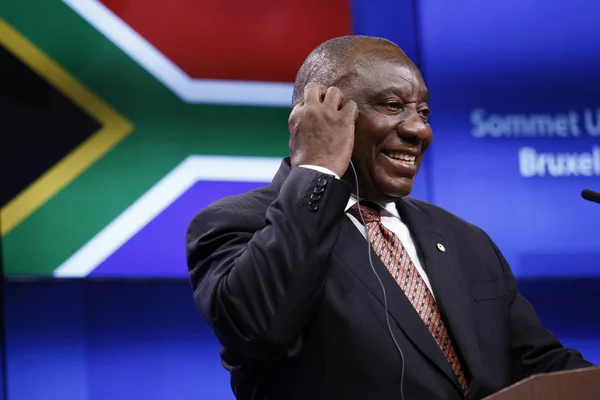
In a global political environment marked by shifts in diplomatic dynamics, South Africa’s President Cyril Ramaphosa has assured that the country remains confident in its relationship with the United States under former President Donald Trump’s administration. Speaking at the annual World Economic Forum in Davos, Switzerland, Ramaphosa expressed optimism about continued bilateral cooperation between the two nations, even amidst significant changes in global leadership.
The South African leader noted that shortly after Donald Trump’s election victory, he reached out to congratulate the then-President-elect. “I’m not worried about our relations,” Ramaphosa stated. “I spoke to him soon after he was elected, congratulated him, and we both said we are looking forward to continued dealings and engagements.”
This proactive diplomatic outreach signifies a commitment to maintaining a strong partnership with the United States, despite apprehensions that some global observers expressed regarding potential policy shifts under Trump’s presidency. South Africa, an influential member of the international community, has underscored its readiness to engage constructively with the U.S. administration, reinforcing ties built on mutual respect and shared interests.



South Africa’s role as the then-current holder of the G20 presidency placed the nation at the forefront of global economic and political discourse. As the U.S. prepared to assume the G20 presidency, Ramaphosa emphasised South Africa’s willingness to collaborate with the incoming American leadership to ensure a seamless transition. He stated, “We will work with the U.S. to prepare it for its G20 presidency,” highlighting the value South Africa places on fostering continuity and cooperation in multilateral platforms.
The G20, an intergovernmental forum comprising the world’s major economies, serves as a vital arena for addressing pressing global challenges, from economic stability to climate change. South Africa’s commitment to working with the United States reflects a broader objective of advancing solutions to international issues through dialogue and coordinated efforts.
The relationship between South Africa and the United States has historically been shaped by economic, cultural, and political ties. However, the transition to the Trump administration in 2017 introduced uncertainties for various nations concerning U.S. foreign policy priorities. Trump’s “America First” approach raised questions about its implications for bilateral and multilateral relationships, including those with African nations.
Nevertheless, Ramaphosa’s remarks demonstrate a pragmatic approach to diplomacy. By fostering open channels of communication and emphasizing areas of shared interest, South Africa signals its intent to navigate these uncertainties constructively. This reflects the nation’s broader foreign policy strategy, which prioritises stability and partnership over confrontation.
The United States remains a significant trading partner for South Africa, with bilateral trade spanning industries such as mining, agriculture, and technology. Strengthening these economic ties requires fostering a conducive environment for investment and addressing potential barriers to trade. Ramaphosa’s assurances of collaboration signal to investors and stakeholders that South Africa remains committed to sustaining a stable and mutually beneficial economic relationship with the U.S.
Moreover, South Africa’s position as a gateway to the broader African continent provides strategic value in its relationship with the U.S.. As global attention increasingly shifts toward Africa’s economic potential, maintaining strong ties with key partners like South Africa becomes a priority for the U.S. administration. This dynamic underscores the importance of a balanced and forward-looking approach to bilateral engagements.
Ramaphosa’s confidence in South Africa’s relations with the U.S. reflects the resilience of the nation’s diplomatic framework. By focusing on dialogue and mutual respect, South Africa demonstrates its capacity to engage effectively with a wide range of international actors, irrespective of leadership changes.
As the Trump administration assumed its role on the global stage, South Africa’s proactive and optimistic stance set a tone of constructive engagement. This approach not only bolsters bilateral ties but also reinforces South Africa’s commitment to being a reliable partner in addressing shared global challenges.

While the future of U.S.-South Africa relations under Trump’s administration unfolded over subsequent years, Ramaphosa’s statements in Davos marked an important moment of reassurance for both domestic and international audiences. His emphasis on continuity, collaboration, and shared goals underscored the enduring strength of the relationship between the two nations.
As history has shown, maintaining robust international partnerships requires adaptability and a commitment to common values. South Africa’s leadership under Ramaphosa exemplified these qualities, reinforcing the nation’s position as a key player in global diplomacy.