Sunday, June 14, 2026
  • Login
The Southern African Times
  • Home
  • Southern Africa
  • Business
    • African Start ups
    • African Continental Free Trade Area
  • Technology
    • Lifestyle
      • Health
      • Culture
      • Food and Drink
      • Entertainment
  • Opinion
  • Sports
  • SAT Jobs
    • Events
  • About Us
    • Advertise with Us
    • Contact Us
No Result
View All Result
  • Home
  • Southern Africa
  • Business
    • African Start ups
    • African Continental Free Trade Area
  • Technology
    • Lifestyle
      • Health
      • Culture
      • Food and Drink
      • Entertainment
  • Opinion
  • Sports
  • SAT Jobs
    • Events
  • About Us
    • Advertise with Us
    • Contact Us
No Result
View All Result
The Southern African Times
No Result
View All Result
Home Analysis

Ghana’s Currency Crisis Takes Centre Stage Ahead of 2024 Election

by SAT Reporter
December 5, 2024
in Analysis
0
Ghana’s Currency Crisis Takes Centre Stage Ahead of 2024 Election

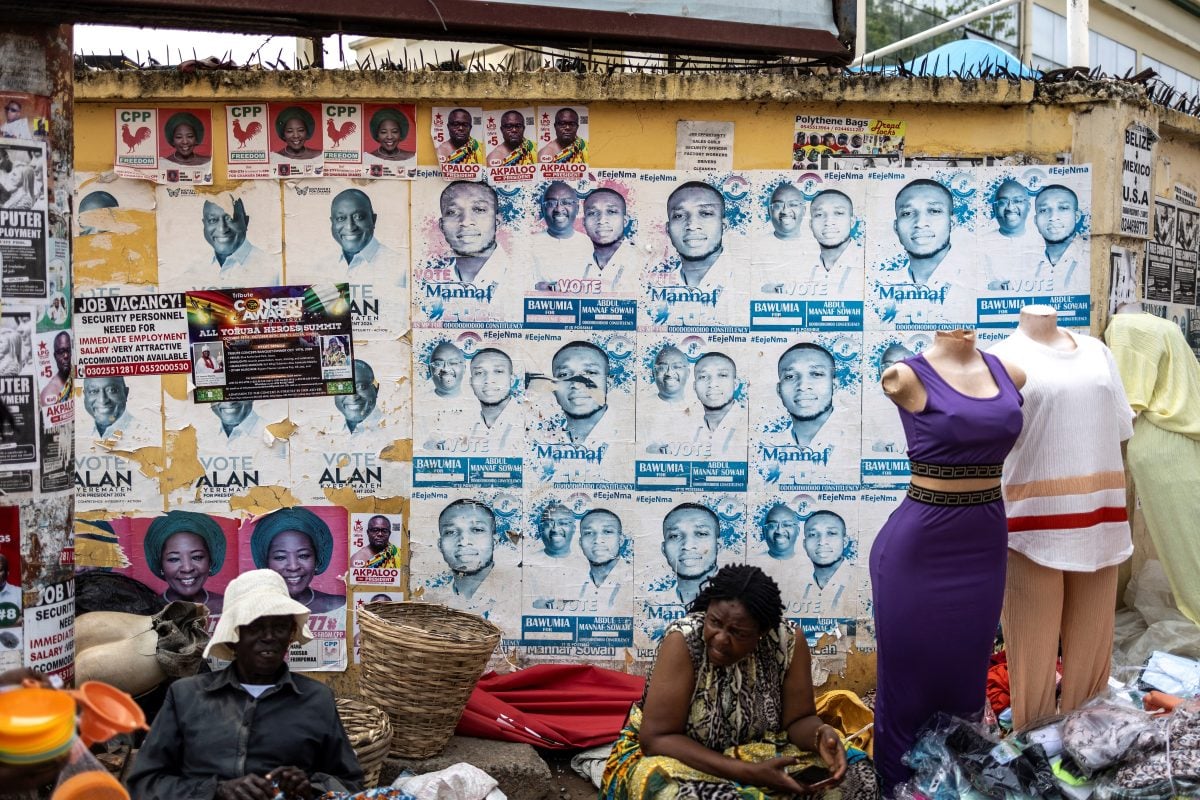
As Ghana approaches its general election this Saturday, the government is engaged in an urgent battle to stabilise the Ghanaian cedi, a currency under intense pressure from both domestic and global economic forces. Amid soaring inflation and a precarious macroeconomic landscape, the cedi’s dramatic depreciation has become a pivotal issue in the election campaign.

The Ghanaian currency has been in freefall for several years, facing significant setbacks during the COVID-19 pandemic as global investors flocked to the perceived safety of dollar-denominated assets. This weakened the cedi dramatically, a trend compounded by Ghana’s 2022 default on much of its external debt. This default, alongside rising debt costs, soaring interest rates, and excessive government borrowing, has placed immense strain on the local economy. Since 2020, the US dollar has surged nearly 180% against the cedi, which currently trades at approximately 15 to the dollar, up from 11 in May 2023.

The cedi’s decline has become an electoral battleground as ruling party candidate Mahamudu Bawumia, who is replacing incumbent Nana Akufo-Addo, faces former President John Mahama in what is expected to be a highly competitive race. Economic conditions, particularly the public’s experience of rampant inflation, could heavily influence voter decisions.


ADVERTISEMENT

In response to the currency crisis, the Ghanaian government has implemented a series of aggressive measures to curb further declines in the cedi. Among the most notable is a directive aimed at pension fund managers, restricting their ability to invest in offshore assets. The national pensions regulatory authority has sought to contain foreign exchange outflows by enforcing limits on pension fund investments abroad, although many fund managers have increasingly turned to international markets following the country’s debt default. While current regulations allow pension funds to invest up to 5% of their assets overseas, there have been reports that the regulatory body has threatened sanctions against those seeking to bypass these restrictions. However, most analysts are doubtful that these measures will be effective in addressing the underlying structural issues affecting the cedi.

Joseph Appiah, vice president of the Accra-based investment banking firm Black Star Group, noted that while the authorities’ interventions have led to some short-term stabilisation—particularly in the lead-up to the elections—the currency’s recovery remains fragile. Over the past month, the cedi has appreciated by approximately 7% against the dollar, but Appiah cautions that this rebound is likely to be temporary. “The current foreign exchange rate is not being supported by robust economic fundamentals or sustainable government policies,” he said. “Rather, it is the result of central bank efforts to stabilise the cedi in a volatile market.”

Appiah forecasts that the cedi could again weaken to as high as 18 or 20 to the dollar in the coming months, once these short-term interventions subside. This uncertainty underscores the fragility of Ghana’s currency and its vulnerability to external shocks.

The weakening cedi has been a significant contributor to inflation, particularly in essential imports such as rice, poultry, and other food staples. Inflation in Ghana reached an alarming rate of over 37% in 2023, with food prices disproportionately driving the rise. The World Bank has warned that high inflation, particularly in food, has severely impacted living standards, pushing more people into poverty and heightening the risk of food insecurity.

Furthermore, the devaluation of the cedi exacerbates Ghana’s debt burden, which remains stubbornly high despite a debt restructuring agreement in early 2024. The country’s total debt exceeds $50bn, and the weakening currency makes repayments on dollar-denominated debt increasingly expensive. The agreement to restructure $5.4bn in debt to official creditors and the acceptance of a 37% haircut on $13bn of bonds in November 2024 offer some relief, but the overall debt crisis remains a significant challenge.

The government’s focus on stabilising the cedi is critical, not only for the economy but also for the election. The public’s frustration with inflation, high living costs, and the perceived mishandling of the economy will likely shape voting decisions. With both candidates, Bawumia and Mahama, vying for support in the face of a faltering economy, the future of the cedi—and the broader economic recovery—will be crucial factors in determining the outcome of the election.

Ghana’s experience offers a sobering lesson in the complexities of managing a national currency amidst external pressures and internal fiscal challenges. As the election approaches, both candidates will need to convince voters that they possess the leadership and economic acumen to navigate these turbulent times.

Tags: Ackerman Investment Holdingscedicurrency depreciationDebteconomic policyeconomyelectionsfinancial crisisforeign exchangeGhanaInflationJohn MahamaMahamudu Bawumiawest africa
Previous Post

Libya Reaches Decade-High Oil Production of 1.4 Million Barrels per Day

Next Post

Can South Africa and the AU Drive G20 Support for Africa’s Infrastructure Needs?

SAT Reporter

Related Posts

Approaching Equity Investing During High Geopolitical and Stagflation Risks
Analysis

Approaching Equity Investing During High Geopolitical and Stagflation Risks

by SAT Reporter
April 27, 2026
Zimbabwe’s Fuel Boom Masks a Laundering Economy
Analysis

Zimbabwe’s Fuel Boom Masks a Laundering Economy

by SAT Reporter
April 22, 2026
LONG READ: Why Sanctions Will Not Solve the Rwanda–DRC Conflict
Analysis

LONG READ: Why Sanctions Will Not Solve the Rwanda–DRC Conflict

by The Editorial Board
April 12, 2026
Kagame’s Wake Up Call: The End of Leadership Without Consequence?
Analysis

Kagame’s Wake Up Call: The End of Leadership Without Consequence?

by Farai Muvuti
April 4, 2026
UPDATED: Leveraging AfCFTA for Continental Trade Integration: Lessons from KEDA Ceramics
Analysis

UPDATED: Leveraging AfCFTA for Continental Trade Integration: Lessons from KEDA Ceramics

by Development Reimagined
March 12, 2026
Next Post
Can South Africa and the AU Drive G20 Support for Africa’s Infrastructure Needs?

Can South Africa and the AU Drive G20 Support for Africa’s Infrastructure Needs?

Browse by Category

  • Africa AI
  • African Continental Free Trade Area
  • African Debt
  • African Start ups
  • Agriculture
  • AI Africa
  • Algeria
  • All News
  • Analysis
  • Angola
  • Arts / Culture
  • Asia
  • Botswana
  • BOTSWANA
  • BREAKING NEWS
  • BRICS
  • Burkina Faso
  • Burundi
  • Business
  • Business
  • Business Wire
  • Cameroon
  • Central Africa
  • Chad
  • China
  • Climate Change
  • Climate Changev
  • Community
  • Congo Republic
  • Conservation
  • Côte d’Ivoire
  • COVID 19
  • CRYPTOCURRENCY
  • Culture
  • Democratic Republic of Congo
  • Diplomacy
  • Eastern Africa
  • Economic Development
  • Economy
  • Education
  • Egypt
  • Elections 2024
  • Energy
  • Entertainment
  • Environment
  • Eritrea
  • Ethiopia
  • Europe
  • Fashion
  • Feature
  • Finance
  • Financial Inclusion
  • Food
  • Food and Drink
  • Foods
  • GABON
  • Ghana
  • Global
  • Global Africa
  • Guinea
  • Health
  • Humanitarian Aid
  • Immigration
  • in Southern Africa
  • International news
  • International Relations
  • Investment
  • Ivory Coast
  • Just In
  • Kenya
  • Lesotho
  • Libya
  • Life Style
  • Lifestyle
  • Literature
  • Malawi
  • Malawi
  • Mali
  • Markets
  • Mauritius
  • Middle East
  • Mining in Africa
  • Morocco
  • Mozambique
  • Namibia
  • Niger
  • niger
  • Nigeria
  • North Africa
  • North-Eastern Africa
  • Obituaries
  • Obituary
  • Opinion
  • PARTNER CONTENT
  • Politics
  • Property
  • Racism
  • Rwanda
  • Rwanda
  • SADC
  • SAT Interviews
  • SAT Investigation
  • SAT Jobs
  • Saudi Arabia
  • Senegal
  • Seychelles
  • Somaliland
  • South Africa
  • South Sudan
  • Sports
  • Startup Africa
  • STOCK EXCHANGE
  • Sudan
  • Sustainability
  • Sustainablity
  • Tanzania
  • Technology
  • Telecommunications
  • The Editorial Board
  • The Power Of She
  • Togo
  • Trade
  • Travel
  • Travel
  • Tunisia
  • Uganda
  • Uncategorized
  • Wealth
  • West Africa
  • World
  • World
  • ZAMBIA
  • Zambia
  • ZIMBABWE
  • Zimbabwe

Browse by Tags

#NewsUpdate #SouthAfrica #SouthernAfricanTimes #TheSouthernAfricanTimes AfCFTA africa African Continental Free Trade Area African development African Development Bank African economies African economy African Union Agriculture Angola Botswana China Climate change Cyril Ramaphosa Economic Development economic growth energy transition governance IMF industrialisation Inflation Infrastructure Infrastructure Development International relations Investment Kenya Mozambique Namibia news Nigeria Regional Integration renewable energy Rwanda SADC South Africa Southern Africa sustainable development Tanzania United States Zambia Zimbabwe
ADVERTISEMENT

WHO WE ARE

The Southern African Times is a regional bloc digital newspaper that covers Southern African and world news. The paper also gives a nuanced analysis on news and covers a wide range of reporting which include sports, entertainment, foreign affairs, arts and culture.

Welcome Back!

Login to your account below

Forgotten Password?

Retrieve your password

Please enter your username or email address to reset your password.

Log In
  • Home
  • Southern Africa
  • Business
    • African Start ups
    • African Continental Free Trade Area
  • Technology
    • Lifestyle
      • Health
      • Culture
      • Food and Drink
      • Entertainment
  • Opinion
  • Sports
  • SAT Jobs
    • Events
  • About Us
    • Advertise with Us
    • Contact Us
Not enough quota to unlock this post
Unlock left : 0
Are you sure want to cancel subscription?