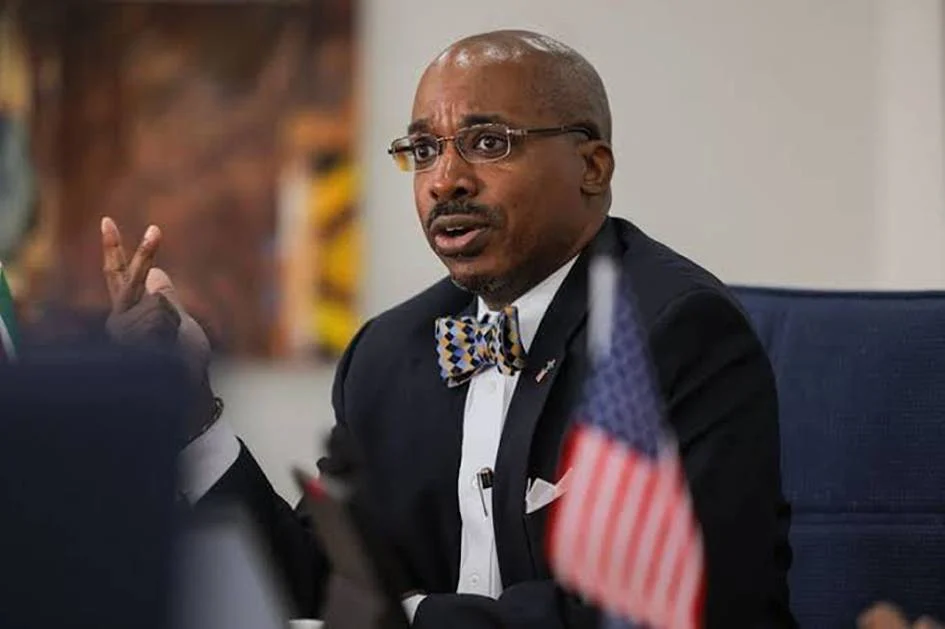
In a statement issued today, U.S. Ambassador to South Africa Reuben E. Brigety II confirmed that he will resign from his post effective January 10, 2025, following the standard procedure during a change of presidential administration. Brigety, who has served in the role since his appointment, expressed pride in his tenure and highlighted the strengthening of U.S.-South Africa relations.
“Serving in this role and fostering the strong relationship between the United States and South Africa has been an immense honor,” said Brigety. He lauded the accomplishments of his tenure, particularly in the areas of trade, healthcare, education, and cultural exchanges. He emphasized the positive impacts of initiatives like the African Growth and Opportunity Act (AGOA), which has enabled South African businesses to gain access to the U.S. market, as well as the collaboration on global health issues, such as combating HIV/AIDS and tuberculosis.
The Ambassador also reflected on the success of the U.S. Mission’s Atlanta Phambili initiative, which aims to forge stronger ties between the United States and South Africa by leveraging the civil rights legacy, creative industries, and economic dynamism of Atlanta and South Africa. This partnership, according to Brigety, has resulted in over R54 million in funding for research and academic exchange, as well as valuable youth leadership programs.



Despite these successes, Brigety’s tenure has been marked by significant controversy. In May 2023, Brigety found himself at the center of a diplomatic storm when he publicly accused South Africa of supplying arms to Russia in breach of its neutral stance on the war in Ukraine. The remarks, made in an interview with South African media, prompted backlash from the South African government, with President Cyril Ramaphosa calling the accusations “disinformation.” The incident led to tensions between the U.S. and South Africa, with Brigety later clarifying his remarks, although the damage to his diplomatic standing was done.
Additionally, Brigety’s tenure was sometimes criticized for perceived heavy-handedness in dealing with local political dynamics, particularly regarding the role of the U.S. in South Africa’s domestic affairs. Some analysts viewed his direct and outspoken style as a double-edged sword, alienating certain sectors of the South African political establishment while bolstering his standing with others who saw him as a staunch advocate for U.S. interests.

While these controversies were certainly a blot on his diplomatic career, Brigety’s resignation marks the close of a significant chapter in U.S.-South Africa relations. His successor will face the challenge of navigating these diplomatic tensions, as well as continuing to build on the partnerships that Brigety helped establish.
In his parting message, Brigety thanked the people and government of South Africa for their “warm hospitality and unwavering partnership,” and commended his team at the U.S. Mission for their commitment to advancing mutual interests. “I know the Mission will continue to deepen the U.S.-South Africa relationship and it will flourish thanks to the strong foundations we’ve built together,” he said.
As South Africa prepares for the reciprocal visit from the country later this year, the legacy of Brigety’s tenure will remain a complex one, marked by both achievements and controversies.