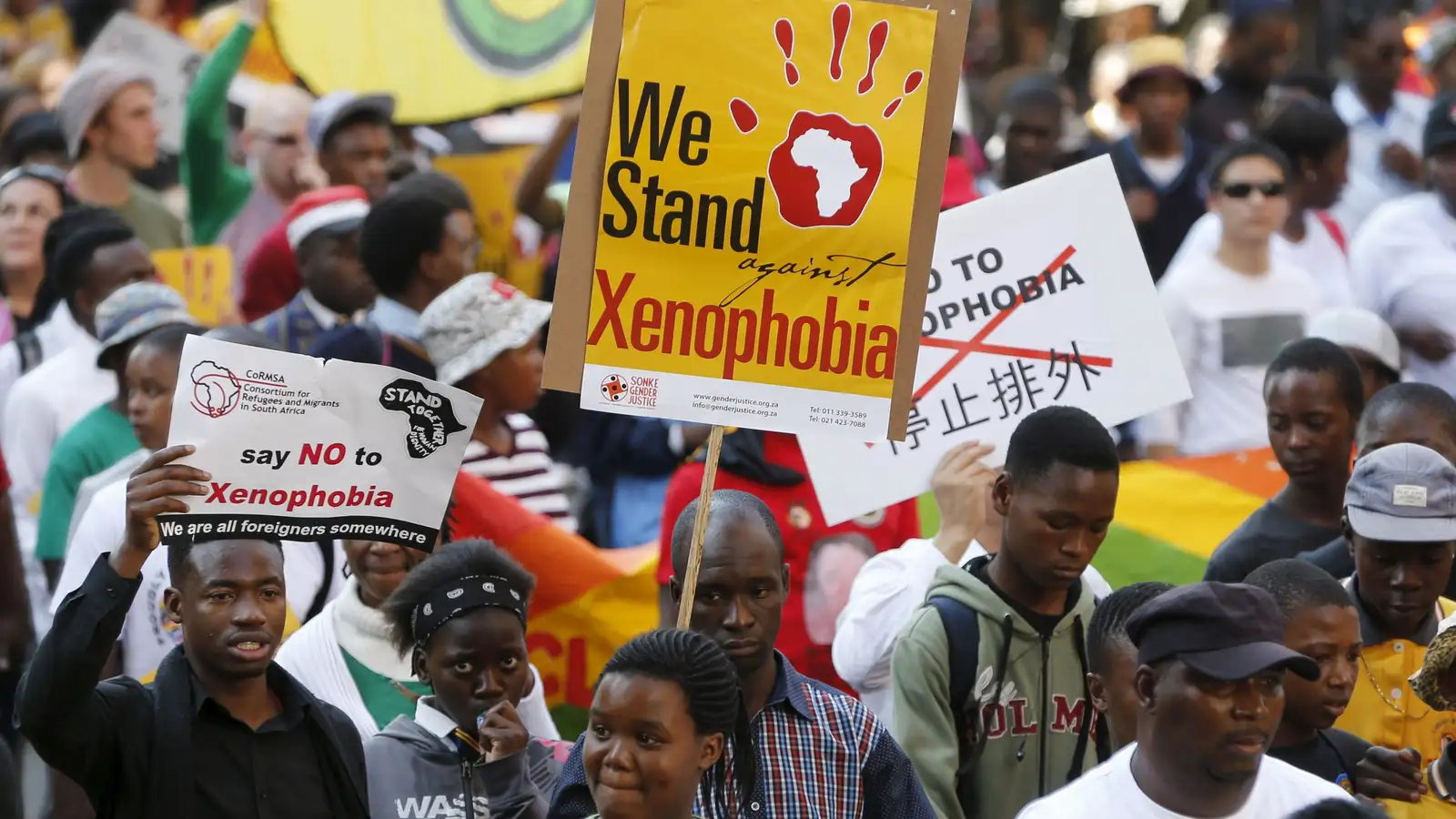
South Africa has grappled with significant socio-economic challenges, including high unemployment, rampant inequality, and sporadic violence. Amidst these issues, a concerning narrative has emerged, blaming African immigrants for the country’s difficulties. This narrative, fuelled by xenophobia and misinformation, has led to growing hostility towards immigrants, with some South Africans perceiving them as the root cause of many societal problems. However, this perception is not only inaccurate but also dangerous, as it diverts attention from the true sources of South Africa’s challenges.
Contrary to the belief that African immigrants are a burden on the economy, substantial evidence suggests they are a crucial part of South Africa’s economic engine. According to a World Bank report, immigrants contribute approximately 9% to South Africa’s GDP. Many of these immigrants are entrepreneurs who establish businesses, creating jobs not only for themselves but also for South Africans. This entrepreneurial spirit is critical in a country where unemployment rates are alarmingly high, currently standing at over 32% according to Statistics South Africa (Stats SA).
Moreover, African immigrants fill essential roles in various sectors, particularly in areas where South Africa faces a skills shortage. The healthcare sector, for instance, benefits significantly from the expertise of foreign professionals. A study published in the South African Medical Journal found that immigrant doctors and nurses are vital in providing healthcare in underserved regions. Similarly, the education sector relies on immigrant teachers to meet the demand for quality education, especially in subjects like mathematics and science, where local expertise is lacking.



Critics argue that immigrants are taking jobs away from South Africans, exacerbating the unemployment crisis. However, this argument oversimplifies the complex dynamics of the labour market. A report by the South African Journal of Economic and Management Sciences shows that immigrants are not displacing local workers but are instead complementing the workforce. By creating businesses and filling skill gaps, immigrants help grow the economy, which in turn generates more employment opportunities. The notion that immigrants are to blame for unemployment fails to consider the broader structural issues, such as economic mismanagement, corruption, and inadequate education systems, which are the real drivers of joblessness.
Another prevalent myth is that African immigrants contribute disproportionately to crime in South Africa. This belief has been widely debunked by numerous studies, including research from the Institute for Security Studies, which found no significant link between immigration and crime rates. On the contrary, many immigrants are law-abiding citizens who are often themselves victims of crime. The focus on immigrants as criminals serves as a convenient scapegoat, deflecting attention from the deep-rooted issues within South Africa’s criminal justice system, such as underfunded police services, judicial inefficiencies, and socio-economic disparities that contribute to high crime rates.
Despite these facts, there is a persistent fear among some South Africans that immigrants strain public services, particularly in healthcare and education. While it is true that increased demand can put pressure on these systems, the solution lies not in excluding immigrants but in improving service delivery for all. Research published in the Journal of Public Administration highlights that with proper management and investment, public services can accommodate a growing population, including immigrants. In fact, immigrants often bring valuable skills and resources that can enhance public service provision, particularly in areas where the government struggles to meet demand.
Furthermore, African immigrants enrich South Africa’s cultural and social landscape. They bring diverse languages, traditions, and perspectives that contribute to the country’s vibrant multicultural identity. This diversity is a strength, fostering creativity and innovation, as seen in various sectors from the arts to business. A study by the Centre for Development and Enterprise points out that immigrant communities often play a crucial role in fostering social cohesion by building bridges between different cultural groups, thus enhancing societal resilience.
The presence of African immigrants also strengthens South Africa’s ties with the rest of the continent. As the most industrialised nation in Africa, South Africa benefits from robust economic and diplomatic relations with its neighbours. The African Union’s Agenda 2063 highlights the importance of regional integration and cooperation for sustainable development, a goal that is supported by the movement of people across borders. Immigrants are not just residents; they are ambassadors of their home countries, facilitating trade, investment, and cultural exchange that benefit South Africa.
However, it is important to acknowledge the concerns of those who feel threatened by immigration. Economic hardships and competition for scarce resources can create fear and resentment. Yet, the solution is not to close borders or expel immigrants but to address the root causes of these anxieties. The government must implement policies that promote inclusive economic growth, improve education and training for South Africans, and ensure that the benefits of development are shared equitably. By focusing on these areas, South Africa can reduce the competition for jobs and resources that fuels xenophobia.

In conclusion, African immigrants are not the problem in South Africa; they are an essential part of the solution. Their contributions to the economy, society, and culture are invaluable, helping to drive growth, innovation, and social cohesion. Blaming immigrants for the country’s challenges is not only misguided but also harmful, as it distracts from the real issues that need to be addressed. South Africa must embrace its diversity and work towards a future where all residents, regardless of origin, can contribute to and benefit from the nation’s progress. By doing so, the country can build a more inclusive, prosperous, and resilient society.
Written by Farai Ian Muvuti, the Chief Executive Officer of The Southern African Times and the 2023 winner of the Young Entrepreneur of the Year award by the South African Chamber of Commerce UK