The current global financial architecture faces significant challenges in addressing the financial needs for climate action, sustainable development, and debt management. The calls for reform are growing louder, seeking to create a more equitable, inclusive, and sustainable financial system.
Increasing the representation of developing countries, particularly African nations, in global economic decision-making processes is crucial for the continent’s development and prosperity. We therefore commend the International Monetary Fund (IMF) for creating a third chair (board membership) for sub-Saharan Africa to improve its voice and representation.
Climate change is one of the most pressing issues of our time, with far-reaching consequences for our planet and its inhabitants. Addressing climate action requires a multi-faceted approach that involves individuals, communities, organizations, and governments.



Tackling Public Debt in African Countries
We need to build a prosperous, inclusive, and resilient Africa through renewed partnerships and strong institutions. However, a troubling trend has emerged: governments worldwide are grappling with mounting public debts, limiting their ability to invest in core social services that their citizens so desperately need.
The average public debt in Africa is around 65% of GDP, amounting to $1.1 trillion, with some countries having much higher debt levels. Alarmingly, nearly 40% of African countries are in, or at high risk of, debt distress. To make matters worse, 60% of African nations now spend more on servicing their external public debt than on healthcare.
The existing global debt architecture is ill-equipped to address the pressing needs of African countries. Urgent reforms to the G20 Common Framework are required to make it more effective, transparent, and fit for purpose. Furthermore, we appeal for the suspension of debt service for all countries entering Common Framework restructurings and a comprehensive review of the IMF-World Bank Debt Sustainability Analysis Framework to prioritize solvency over mere liquidity.
The path ahead is not without its challenges. Achieving the Sustainable Development Goals (SDGs) by 2030 will require an estimated $1.3 trillion per year, while the costs of addressing climate change alone are projected to reach $2.8 trillion by 2030 in Africa. Sadly, even as these financing needs grow, official development assistance to Africa declined by 3.5% in 2022, while borrowing costs have soared in the tighter global monetary environment and private capital remained sidelined.
Addressing the Widening Financing Gap in Africa
Africa has made significant progress in financing its development through domestic resources in recent years. However, this funding is inadequate to close a widening financing gap.
To bridge the funding gap, African countries need to boost domestic resource mobilization (DRM) by increasing financial resources, improving public spending efficiency, leveraging large pension fund markets and sovereign wealth funds, curbing illicit financial flows out of the continent, and harnessing partnerships. New sources of tax revenue should be sought, including those from digital payments, informal sector taxes, and sin taxes, among others.

Africa must explore innovative solutions and leverage the ongoing Financing for Development processes to secure adequate financial and technical resources to support Africa’s participation and engagement in the tax reform process.
Deepening Africa’s capital markets for resource mobilization will enable countries to source additional financial resources from the private sector and the pension fund industry. The use of Public-Private Partnerships (PPPs) will also allow African countries to finance critical infrastructure projects with resources from the private sector.
By leveraging carbon credits, countries can unlock benefits supporting sustainable development, economic growth, and climate resilience while contributing to global efforts to combat climate change. There is scope for the issuance of green and blue bonds linked to climate change to raise additional resources for development. Climate insurance at both sovereign and micro-level goes a long way in mitigating the negative impact of climate shocks to vulnerable communities. For example, Zimbabwe and Malawi recently received payouts from the African Risk Capacity Group (ARC) for the insurance they took against the 2023/2024 agricultural season.
Africa’s significant diaspora community enables various countries to issue diaspora bonds and related instruments to raise additional funding. Sovereign wealth funds have also proved to be a critical economic pillar in driving economic development in some countries. There is, therefore, a need to create sovereign wealth funds across Africa, not only to harness natural resource revenues to achieve inter-generational equity but to harness the full potential of state-owned enterprises. The example of Temasek, a sovereign wealth fund in Singapore, presents a successful case for achieving optimal contributions from state-owned entities and beyond. Such sovereign wealth funds will also help to improve the credit rating of African countries.
Funding Sustainable Development
Scaling up resources from International Financial Institutions (IFIs) is vital for African countries to address economic challenges, including those exacerbated by geopolitical tensions. These resources should be more concessionary, long-term, and inclusive. In particular, the Poverty Reduction and Growth Trust (PRGT) and the Growth and Sustainability Fund (GSF) under the IMF need reform to better serve Africa and developing countries.
Affordable finance is crucial for sustainable development, and strengthening multilateral development banks (MDBs) is essential to increasing lending capacity and supporting development projects. By strengthening MDBs, we can unlock more resources for sustainable development, bridge the financing gap, and achieve the SDGs.
Furthermore, innovative financing tools and mechanisms can help reduce financing costs, making it easier for countries to access affordable finance for development. The balance sheets of IFIs can also be utilized to provide guarantees for crowding in resources from the private sector.
Debt swaps can be valuable for managing debt and alleviating financial stress. By exchanging debt for new obligations with more favorable terms, countries can manage their debt more effectively, reduce financial stress, and create space for sustainable development and economic growth.
Alongside debt relief, African nations are also calling for support in developing tools and instruments to lower extreme financing costs. The recent UN General Assembly resolution 78/230 emphasizes the need for a UN Framework Convention on international tax cooperation, which is a positive step in the right direction. Concrete action is needed to achieve results from the UN Framework Convention on International Taxation to establish a globally fair and transparent tax system. This will ensure the achievement of a more just and equitable global tax system.

African countries should begin implementing the Domestic Minimum Top-Up Tax (DMTT) to ensure that multinational companies contribute their fair share of taxes in Africa and minimize transfer pricing leakages. For example, Zimbabwe and South Africa have begun implementing the DMTT provision, which will ensure that multinational cooperation pays at least 15% of corporate tax.
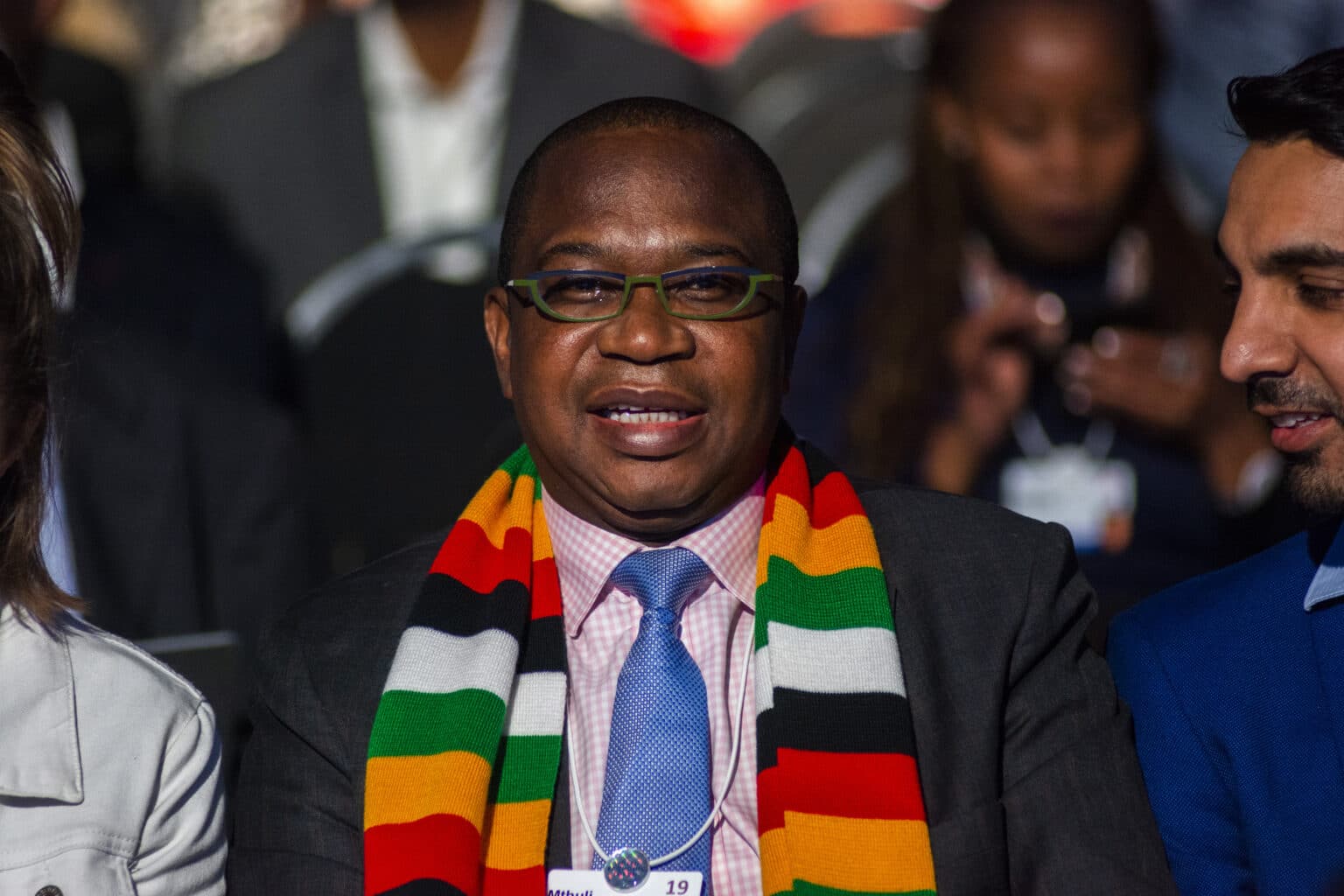
— Hon. Professor Mthuli Ncube
Minister of Finance, Economic Development and Investment Promotion, Ministry of Finance, Economic Development and Investment Promotion of Zimbabwe