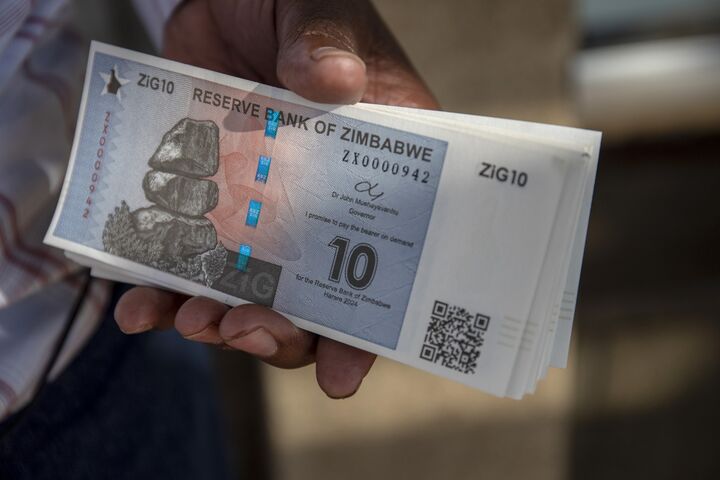
The ZiG, Zimbabwe’s gold-backed currency, experienced its most significant single-day drop since its introduction three months ago, weakening by 0.5% to 13.76 per dollar on Thursday. This decline marks a cumulative loss of 1.5% from its debut rate of 13.56 per dollar in April, according to the latest data from the central bank.
Despite the currency’s recent decline, Zimbabwe’s monetary authorities remain unperturbed. Deputy Governor Innocent Matshe of the Reserve Bank of Zimbabwe (RBZ) characterised the drop as part of normal currency fluctuations, indicating no immediate plans for intervention.

“There was also a time that it strengthened a bit and that’s as it should be,” Matshe commented in a phone interview. “The worry would be if it is one way.”



The ZiG represents Zimbabwe’s sixth attempt at establishing a stable local currency over the past 15 years. This iteration is underpinned by 2.5 tons of gold and $100 million in foreign currency reserves, providing a measure of confidence and stability that had been missing in previous attempts.
The International Monetary Fund (IMF) recently praised the introduction of the ZiG, noting that it had mitigated the instability which led to the abandonment of its predecessor, the Zimbabwe dollar. The IMF’s endorsement provides a significant boost to the credibility of the new currency.

In the face of the recent decline, Matshe remains optimistic about the ZiG’s future performance. He anticipates that the production of winter crops and increased mining output will bolster the currency in the coming months. “The currency is still settling,” he said, emphasizing that the central bank plans to enhance the foreign currency market through various initiatives, although specific details were not disclosed.
The central bank had predicted that the ZiG would strengthen following the collection of quarterly corporate taxes at the end of last month, expecting a surge in demand for the currency. Despite the currency’s drop, Matshe expressed satisfaction with the response to Treasury’s advisory urging companies to pay half of their taxes in ZiG.
Critics, however, argue that the central bank’s reluctance to intervene may signal a lack of readiness to support the currency during its formative stages. They caution that without proactive measures, the ZiG might struggle to gain the stability needed to function as a reliable medium of exchange.

Proponents of the ZiG argue that allowing market forces to determine the currency’s value is essential for its long-term stability. They believe that occasional fluctuations are a natural part of this process and should not be viewed as a cause for alarm.
As Zimbabwe navigates its way through the early stages of the ZiG, both the central bank and economic analysts will be closely monitoring its performance. The coming months will be critical in determining whether the ZiG can establish itself as a robust and stable currency, capable of withstanding the economic challenges faced by the nation.