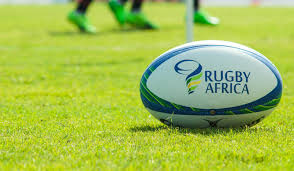
Rugby is a profoundly African sport, or perhaps, Rugby is a great analogy for every struggle on the continent.
I first played rugby when I was nine or ten on a Sunday afternoon in spring in the UK. I do not know why I volunteered to join the group that was playing, as we were a football and hockey school. I remember that sunny afternoon well. It was fun.
Moving schools, I progressed to Captain of Rugby and then on to a bigger school and to play for Dorset at U16, and eventually for the School’s 1st XV where, after five years of playing as a squad, we learned how to win… only beaten once in that last season. It was one of the most inspiring experiences of my life.



So why the connection with Africa? Well, Africa is a place where you are often required to travel in a direction that is opposite to where you want to go… like rugby, you are passing the ball backward. If you play rugby badly, you lose, and you lose badly, as Africa has done, failing in its trade generation through lack of teamwork and an excessive trait for individuality.
Some people describe working with Africans as “herding cats”—strong, independent, and careful people choosing to work alone rather than together. In rugby, reliance on the individual is a plan destined to fail. You need someone at your elbow. You need to keep your project live. You need someone else’s expertise, skill, or courage to break through. It is not an individual game.
Confronted with 15 opponents, many likely to be bigger than you physically, you will be easily tackled, captured, or crushed, and when you lose the ball, you lose the initiative. In my early days, an elderly master dropped the ball into a group of gangly boys and exhorted them to win the ball, one from the others and the others from one… like life, such a contest is not fair. At that age, the strongest wins… even in the first-class game today, power and might are important.
Weight, bulk, and speed are not often found in the same individual, and it is teamwork that creates the space to open up the field for faster, lighter wingers to break into open space. But it is the strategy that ties the defense in… It is guile that draws the opposing backs in the wrong direction, and it is a clever kick or a planned and thoughtful pass that opens the door to a swift try.
American football is not the same. Nor is soccer, although in both, teamwork is essential. The skills of the individual, quarterback or playmaker, are disproportionately important. The scrimmage and the scrum, two different ways of restarting play in mid-match. Sixteen men bound together, matched in weight and strength, make the scrum a technical and potentially dangerous environment. It is a tribute to the strength of the players and careful training by the coaches that ensure that more injuries are not sustained; flesh on flesh being significantly less dangerous than flesh on metal.
When it comes to the contest, that battle of minds from the manager down, through coaches and medical support staff, the fitness and ability of each individual all contribute to the effectiveness of the team. A dropped ball, a loose pass, a mistimed kick often puts a team back on its heels; losing yards, falling back, and having to regroup, win the ball, and make up the yardage once more. I am sure those of you involved in African business will recognize the challenges and the analogy.
For me, the most important part of Rugby is teamwork—always and without fail, the determining factor between a winning and a losing team. In football, some dazzling footwork and a smart shot can turn a game in seconds. The same is not true in rugby. Far more critical is the confidence that you have in the colleague at your shoulder, who you know will be there, any one of the 15, close by and available to carry the ball on as you fall in the tackle.

It is an unusual feeling, both to give and to receive… you know when your colleague is breaking free, he will fall shortly, as the other side masses in defense. He will be looking for you, not necessarily being able to see you, just knowing that he can pop the ball to left or right and someone will be there to carry the work on. For me, Africa could spend a lot more time on teamwork, on leadership, and on building levels of trust and confidence as it strives to take its rightful place in the world. The long forward pass of the American Football field will not be a model that works for Africa.
Winning the ball, keeping it amongst your teammates, and being there for each other will always be the better way to go.
Building a team takes time. It takes companionship; it is a brotherhood, or these days, a sisterhood. It builds confidence and respect. There is a sense of trust born on the training field, grown through the hard yards, tempered by disappointments and failures, but undeniably the strength of appreciation that comes from knowing, I was there, you were there, we were there, and we won!

David Smith, Chairman of the British African Business Alliance, is a seasoned leader with a passion for fostering economic partnerships between Britain and Africa.The article reflects the author’s opinions and not necessarily those of The Southern African Times.