Thursday, June 25, 2026
  • Login
The Southern African Times
  • Home
  • Southern Africa
  • Business
    • African Start ups
    • African Continental Free Trade Area
  • Technology
    • Lifestyle
      • Health
      • Culture
      • Food and Drink
      • Entertainment
  • Opinion
  • Sports
  • SAT Jobs
    • Events
  • About Us
    • Advertise with Us
    • Contact Us
No Result
View All Result
  • Home
  • Southern Africa
  • Business
    • African Start ups
    • African Continental Free Trade Area
  • Technology
    • Lifestyle
      • Health
      • Culture
      • Food and Drink
      • Entertainment
  • Opinion
  • Sports
  • SAT Jobs
    • Events
  • About Us
    • Advertise with Us
    • Contact Us
No Result
View All Result
The Southern African Times
No Result
View All Result
Home Opinion

The key to greening heavy industry

by SAT Reporter
August 25, 2023
in Opinion
0
The key to greening heavy industry

For decades, solar and wind arrays offered a visible indication that the transition toward a green economy was progressing. But if we are to reduce – and, eventually, eliminate – carbon dioxide emissions, we will have to find a “clean” way not only to produce electricity, but also to power hard-to-abate heavy industries such as steel, cement and fertilizer production. Solar and wind energy alone cannot do this job, but hydrogen can.

Most hydrogen produced today is sourced from fossil fuels. But there is a better way: solar and wind energy can be used to power an electrolyzer that splits hydrogen from water molecules, producing zero-emission “green hydrogen.” The only waste product in this process is oxygen, which can safely be vented to the atmosphere. When the hydrogen is used – for example, in steel production – water is generated again, closing the cycle.

In other words, with green hydrogen, heavy industry can be powered by a grand water cycle. So, why hasn’t the world – especially its hard-to-abate industrial sectors – embraced it?


ADVERTISEMENT

The technology, as originally developed, requires huge amounts of fresh water – a resource that, in many parts of the world, is in short supply. Seawater has not been viewed as a viable substitute for fresh water because chlorine gas and other impurities would build up and corrode the electrolyzer. And while one could desalinate the water before splitting the molecules to create hydrogen, this process is too energy-intensive, inefficient and expensive to be a practical – let alone economically attractive – approach to large-scale production of green hydrogen.

Fortunately, researchers in China seem to have found a solution. Last November, Heping Xie and his collaborators from Shenzhen University and the Institute of New Energy and Low-Carbon Technology at Sichuan University reported in the journal “Nature” that they had achieved direct electrochemical saline water electrolysis. In other words, they had converted seawater directly into hydrogen. Crucially, their method appears to be “efficient, size-flexible and scalable,” and does not bring a “notable increase” in operating costs compared to splitting freshwater.

A model of a green hydrogen refueling station based on high-temperature electrolysis technology, built by the Chinese Academy of Sciences, at the 22nd High-tech Fair in Shenzhen, China, November 15, 2020./ VCG

If the world’s vast ocean resources can be tapped directly to produce hydrogen, there will be no holding back the green transition. After all, while much of the world’s attention has been focused on decarbonizing road transport, heavy industries have been contributing 22 percent of global carbon dioxide emissions, and they are considered one of the most difficult sectors to decarbonize. With green hydrogen powering this sector – including the production of steel, cement, and ammonia (for fertilizer) – “green growth” will become a reality.

How much hydrogen would be needed to realize this vision? The International Energy Agency (IEA) estimates that 450 million tons would be required by 2050 if the world is to reach net-zero emissions. While this figure is dwarfed by the 12 billion metric tons (Gt) of oil, gas and coal we currently consume each year, it is still daunting as it amounts to about six times more than the amount of hydrogen produced today, over 95 percent of which still comes from fossil fuels.

Moreover, as one of us (Mathews) shows in a recent book, “A Solar-Hydrogen Economy: Driving the Green Hydrogen Industrial Revolution,” the IEA estimate is far too low. Green hydrogen matters because it can provide a substitute for fossil fuels in virtually every application, including not only heavy industry, but also transport and domestic and industrial heating. Accounting for hydrogen’s energy density – much higher than that of oil, gas, or coal – it would take 4 Gt of green hydrogen to provide an energy-equivalent replacement for the 12 billion tons of oil-equivalent that the fossil-fuel industry uses to produce energy for all applications each year.

This estimate is about eight times the IEA target. This means that if we follow the IEA’s path, by 2050 the world might be living off an energy system comprising one part hydrogen and seven parts fossil fuels. But one-eighth green is not very green.

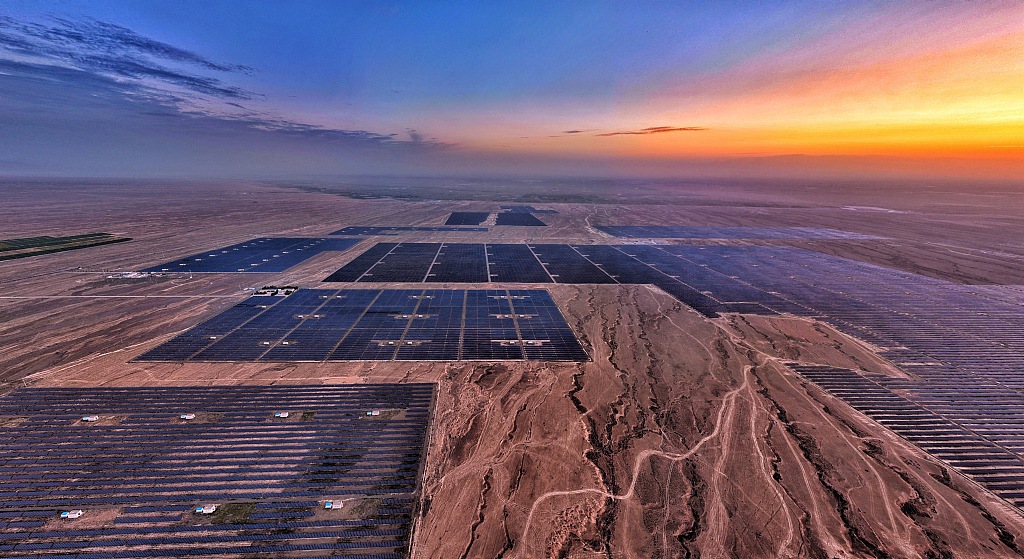
Make no mistake: green hydrogen can completely replace fossil fuels. But vast investment will be needed to make this happen. In order to produce 4 Gt of green hydrogen annually by 2050, we must urgently deploy vast arrays of solar and wind devices, which can power vast arrays of electrolyzers that convert vast quantities of seawater into the zero-emission fuel of the future.

Keun Lee, a former vice chair of the National Economic Advisory Council for the President of South Korea and a former president of the International Schumpeter Society, is Professor of Economics at Seoul National University. John Mathews, an emeritus professor at Macquarie University, is the winner of the 2018 Schumpeter Prize. The article reflects the author’s opinions and not necessarily the views of The Southern African Times.


Previous Post

BRICS expansion: Forging a new era of global pluralism

Next Post

Angola’s Diamond Reserves Set to Sustain Lucrative Trade for Up to Two Decades

SAT Reporter

Related Posts

The Insurance Hack More Drivers Should Know
Opinion

The Insurance Hack More Drivers Should Know

by Times Reporter
June 22, 2026
Southern African Times Announces Brendan Amadi as Recipient of the 2026 Editorial Recognition of the Year Award
The Editorial Board

Southern African Times Announces Brendan Amadi as Recipient of the 2026 Editorial Recognition of the Year Award

by The Editorial Board
June 19, 2026
LONG READ | No Longer the World’s Dustbin: China’s Waste Ban and Africa’s Circular Economy Moment
Opinion

LONG READ | No Longer the World’s Dustbin: China’s Waste Ban and Africa’s Circular Economy Moment

by Times Reporter
June 12, 2026
OPINION | The Investors Southern Africa Refuses to See
Opinion

OPINION | The Investors Southern Africa Refuses to See

by Times Reporter
June 14, 2026
Faith, Miracles and the Crisis of Religious Authenticity
Opinion

Faith, Miracles and the Crisis of Religious Authenticity

by Brendan Amadi
June 10, 2026
Next Post
Angola’s Diamond Reserves Set to Sustain Lucrative Trade for Up to Two Decades

Angola's Diamond Reserves Set to Sustain Lucrative Trade for Up to Two Decades

Browse by Category

  • Africa AI
  • African Continental Free Trade Area
  • African Debt
  • African Start ups
  • Agriculture
  • AI Africa
  • Algeria
  • All News
  • Analysis
  • Angola
  • Arts / Culture
  • Asia
  • Botswana
  • BOTSWANA
  • BREAKING NEWS
  • BRICS
  • Burkina Faso
  • Burundi
  • Business
  • Business
  • Business Wire
  • Cameroon
  • Central Africa
  • Chad
  • China
  • Climate Change
  • Climate Changev
  • Community
  • Congo Republic
  • Conservation
  • Côte d’Ivoire
  • COVID 19
  • CRYPTOCURRENCY
  • Culture
  • Democratic Republic of Congo
  • Diplomacy
  • Eastern Africa
  • Economic Development
  • Economy
  • Education
  • Egypt
  • Elections 2024
  • Energy
  • Entertainment
  • Environment
  • Eritrea
  • Ethiopia
  • Europe
  • Fashion
  • Feature
  • Finance
  • Financial Inclusion
  • Food
  • Food and Drink
  • Foods
  • GABON
  • Ghana
  • Global
  • Global Africa
  • Guinea
  • Health
  • Humanitarian Aid
  • Immigration
  • in Southern Africa
  • International news
  • International Relations
  • Investment
  • Ivory Coast
  • Just In
  • Kenya
  • Lesotho
  • Libya
  • Life Style
  • Lifestyle
  • Literature
  • Malawi
  • Malawi
  • Mali
  • Markets
  • Mauritius
  • Middle East
  • Mining in Africa
  • Morocco
  • Mozambique
  • Namibia
  • Niger
  • niger
  • Nigeria
  • North Africa
  • North-Eastern Africa
  • Obituaries
  • Obituary
  • Opinion
  • PARTNER CONTENT
  • Politics
  • Property
  • Racism
  • Rwanda
  • Rwanda
  • SADC
  • SAT Interviews
  • SAT Investigation
  • SAT Jobs
  • Saudi Arabia
  • Senegal
  • Seychelles
  • Somaliland
  • South Africa
  • South Sudan
  • Sports
  • Startup Africa
  • STOCK EXCHANGE
  • Sudan
  • Sustainability
  • Sustainablity
  • Tanzania
  • Technology
  • Telecommunications
  • The Editorial Board
  • The Power Of She
  • Togo
  • Trade
  • Travel
  • Travel
  • Tunisia
  • Uganda
  • Uncategorized
  • Wealth
  • West Africa
  • World
  • World
  • ZAMBIA
  • Zambia
  • ZIMBABWE
  • Zimbabwe

Browse by Tags

#NewsUpdate #SouthAfrica #SouthernAfricanTimes #TheSouthernAfricanTimes AfCFTA africa African Continental Free Trade Area African development African Development Bank African economies African economy African Union Agriculture Angola Botswana China Climate change Cyril Ramaphosa Economic Development economic growth energy transition Ghana governance industrialisation Inflation Infrastructure Infrastructure Development International relations Investment Kenya Mozambique Namibia news Nigeria Regional Integration renewable energy Rwanda SADC South Africa Southern Africa sustainable development Tanzania United States Zambia Zimbabwe
ADVERTISEMENT

WHO WE ARE

The Southern African Times is a regional bloc digital newspaper that covers Southern African and world news. The paper also gives a nuanced analysis on news and covers a wide range of reporting which include sports, entertainment, foreign affairs, arts and culture.

Welcome Back!

Login to your account below

Forgotten Password?

Retrieve your password

Please enter your username or email address to reset your password.

Log In
  • Home
  • Southern Africa
  • Business
    • African Start ups
    • African Continental Free Trade Area
  • Technology
    • Lifestyle
      • Health
      • Culture
      • Food and Drink
      • Entertainment
  • Opinion
  • Sports
  • SAT Jobs
    • Events
  • About Us
    • Advertise with Us
    • Contact Us
Not enough quota to unlock this post
Unlock left : 0
Are you sure want to cancel subscription?