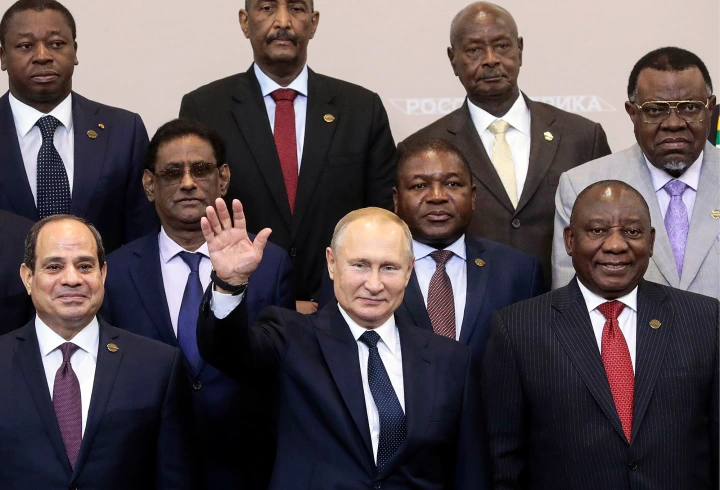
Tensions have escalated ahead of the highly anticipated Russia-Africa summit set to take place later this week in St. Petersburg. The Kremlin has accused the West, particularly the United States, of attempting to undermine the event by pressuring African nations not to participate. The summit, expected to focus on trade, security, arms deals, and grain supplies, will see the attendance of President Vladimir Putin engaging in intensive one-on-one talks with individual African leaders.
The event comes as a follow-up to Moscow’s inaugural Russia-Africa summit in 2019 and reflects Russia’s concerted efforts to expand its influence and business interests on the continent. Despite facing an internal upheaval with an abortive mutiny involving mercenaries from Russia’s Wagner Group, Russia is keen to reinforce its presence in Africa.
Russian diplomat Alexander Polyakov disclosed that forty-nine African delegations have confirmed their participation in the summit, with nearly half represented by their heads of state or government, according to the state TASS news agency.



However, Kremlin spokesman Dmitry Peskov voiced concern over alleged Western interference in the summit, stating, “Virtually all African states have been subjected to unprecedented pressure from the U.S., and French embassies on the ground have not been sleeping either along with other Western missions who are also trying to do their bit to prevent this summit from taking place.”
Peskov went on to criticize the West’s stance, asserting that it disregards the sovereign right of African states to independently choose their partners for cooperation and mutual engagement in various fields.
The United States, for its part, hosted a U.S.-Africa leaders summit in Washington the previous year, seeking to strengthen alliances amid mounting Russian and Chinese influence on the continent. Responding to complaints from Russian Foreign Minister Sergei Lavrov that the West was trying to sabotage the upcoming Russia-Africa summit, the U.S. State Department clarified its position, stating, “We don’t want to limit African partnerships with other countries. We want to give African countries choices.”

Amidst growing tensions, African governments have criticized the Western stance as paternalistic, questioning their attempts to influence and dictate African nations’ decision-making processes.
The summit holds strategic importance for Russia, as discussions on grain supplies and Moscow’s purported responsible behavior and efforts to support world markets are expected to feature prominently. Last week, Russia announced its withdrawal from the Black Sea grain deal, which had allowed Ukraine to safely export grain from its seaports despite ongoing tensions between the two countries.
In an effort to address potential shortfalls in grain supplies resulting from the Black Sea grain deal’s termination, Russia has expressed interest in providing cheap or free grain to Africa’s most vulnerable nations.
As the international community watches with bated breath, the Russia-Africa summit will undoubtedly be a crucial platform for African nations to assert their sovereignty and discuss matters of significant importance. However, the tensions surrounding the event highlight the complexities of global partnerships and interests in the ever-evolving geopolitical landscape.
Please note that this article aims to provide a neutral perspective on the current situation surrounding the Russia-Africa summit. The statements and positions attributed to various parties, including the Kremlin, the U.S., and African governments, have been reported without bias to offer a balanced view of the situation.