
With the world on track to exceed 1.5° Celsius of warming in the next decade, we can expect climate hazards to intensify, driving millions more into famine, causing trillions of dollars in damage, and disproportionately harming those countries that contributed the least to the problem. Worse, a global biodiversity crisis is upon us: ecosystems are being eroded to the point of collapse, and species extinctions are accelerating at a frightening pace. Here, too, the poor are disproportionately affected.
To address this dual crisis at the pace and scale needed, the international community must change its approach. Historically, global agreements to address climate change and biodiversity loss have been negotiated separately, even though the two issues are closely interlinked. Moreover, the process has been marred by structural disparities, power imbalances, and prioritization of national and commercial interests over the global common good.
Neither human societies nor the natural systems that support them can work well in silos. Complex, dynamic interacting challenges require solutions based on systems thinking and a full accounting of all the data. But the relevant data sets are massive and undergo constant change. We cannot possibly navigate them on our own. We need a co-pilot.



Following recent breakthroughs, artificial intelligence could play this role. The technology has proved most useful for analyzing massive data sets, identifying patterns, and predicting behavior. It could well be the key to solving the intersecting climate, biodiversity, and inequity crises, starting at the international negotiating table.
For example, AI could vastly improve international negotiations by illuminating the hitherto-neglected connections between biodiversity and climate issues. Such findings would justify a more formalized, interlinked relationship between the United Nations Framework Convention on Climate Change and the UN Convention on Biological Diversity – the two bodies that have been negotiating agreements separately.
AI could also shed light on the broader effects of agreements like the Paris climate accords and the many inchoate sectoral initiatives focusing on issues like water, energy security, and oceans. As matters stand, at least 250,000 treaties have been negotiated in the interest of deepening global cooperation, yet the broader effect of all this diplomacy has been underwhelming.
The predictive capabilities and analytic precision of AI could help solve this challenge. By processing enormous amounts of data from these treaties, AI can identify any conflicts, contradictions, or gaps, thereby helping to prevent duplication of efforts, resolve disagreements, and ensure that no crucial issue remains unaddressed.
One example of this potential can be seen in the realm of trade agreements. The Legal Analytics Lab at Georgia State University is using AI to identify the specific legal clauses that have the most influence on trade disputes and to understand how treaty language affects outcomes of international disputes. Similarly, AI could be used to analyze environmental treaties to determine which factors or clauses lead to successful environmental outcomes, or to identify potential conflicts between treaties.
Moreover, AI can also facilitate the creation of a global treaty database, where negotiators can quickly search existing agreements for similar provisions, consult precedents, and avoid contradictions. Such a system would ensure the harmonization of treaties, fostering a more effective global diplomatic ecosystem.
Finally, by giving low- and middle-income countries access to the most advanced data analysis available, AI could also help correct the power imbalances that stymie genuine progress on climate change and biodiversity. Partnerships between leading AI developers and developing countries could create tools for assembling all relevant data on a country’s biodiversity, climate, and economy in an accessible format.
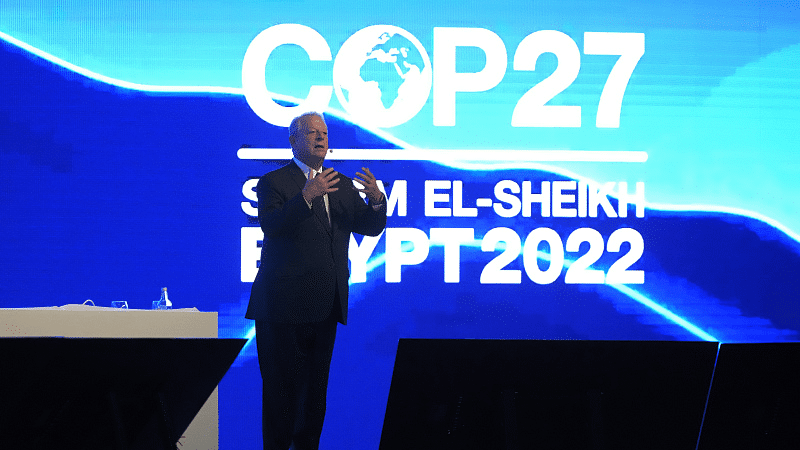
While richer countries typically attend global negotiations with droves of high-powered lawyers and analysts, lower-income countries often struggle to send a single representative. This disparity was evident at the UN Climate Change Conference (COP27) last year. Although the meeting achieved a more representative balance than previous COPs, the biggest delegation, from the United Arab Emirates, had more than 1,000 people, while more than 100 countries had 50 or fewer delegates, with several sending just one or two. With AI, countries as small as Bhutan (which had 15 delegates at COP27) could suddenly have the same data and analytical power as countries with armies of experts.
But it is not just about numbers. Low-income countries are still catching up in terms of technology and research expertise, and this asymmetry is being exacerbated by the global digital divide. According to the UN Conference on Trade and Development, the United States and China together account for 50 percent of the world’s hyperscale data centers, 70 percent of the world’s top AI researchers, and 94 percent of all funding for AI startups.
We can overcome the effects of such concentration by making AI co-pilots available to developing countries, rather than waiting for them to develop their own homegrown technologies. Doing so would allow delegates to assess negotiated agreements’ implications for their own country’s laws, capacities, and interests in real time, vastly improving their decision-making.

Of course, AI is no silver bullet, and as Bill Gates recently noted, it comes with some risks. AI cannot replace human creativity, intuition, and intelligence. While it can be used to analyze data with unmatched speed and accuracy, it cannot make ethical judgments or determine whether outcomes are fair. Moreover, the algorithms that inform AI may themselves be subject to deeply rooted biases. Ethical and political decisions will still require empathic human intervention.
To navigate the AI revolution, we must understand the technology’s potential and its limitations, as well as our own responsibilities for ensuring its fair and ethical use. We must guard against biased data and remain vigilant against potential hacking and manipulation. If we can do that, we can forge ahead toward the goal of building a sustainable and equitable future – even at a time when hope is losing its hold in the public imagination.

Maxwell Gomera, Resident Representative of the United Nations Development Programme in Rwanda, is a senior fellow of Aspen New Voices. The article reflects the author’s views and not necessarily those of The Southern African Times.