Friday, April 17, 2026
  • Login
The Southern African Times
  • Home
  • Southern Africa
  • Business
    • African Start ups
    • African Continental Free Trade Area
  • Technology
    • Lifestyle
      • Health
      • Culture
      • Food and Drink
      • Entertainment
  • Opinion
  • Sports
  • SAT Jobs
    • Events
  • About Us
    • Advertise with Us
    • Contact Us
No Result
View All Result
  • Home
  • Southern Africa
  • Business
    • African Start ups
    • African Continental Free Trade Area
  • Technology
    • Lifestyle
      • Health
      • Culture
      • Food and Drink
      • Entertainment
  • Opinion
  • Sports
  • SAT Jobs
    • Events
  • About Us
    • Advertise with Us
    • Contact Us
No Result
View All Result
The Southern African Times
No Result
View All Result
Home Opinion

Women should be leading conservation efforts in Africa

Women’s voices are noticeably absent from discussions on conservation in Africa. It is time to make our voices heard.

by SAT Reporter
July 14, 2022
in Opinion
0
Women should be leading conservation efforts in Africa

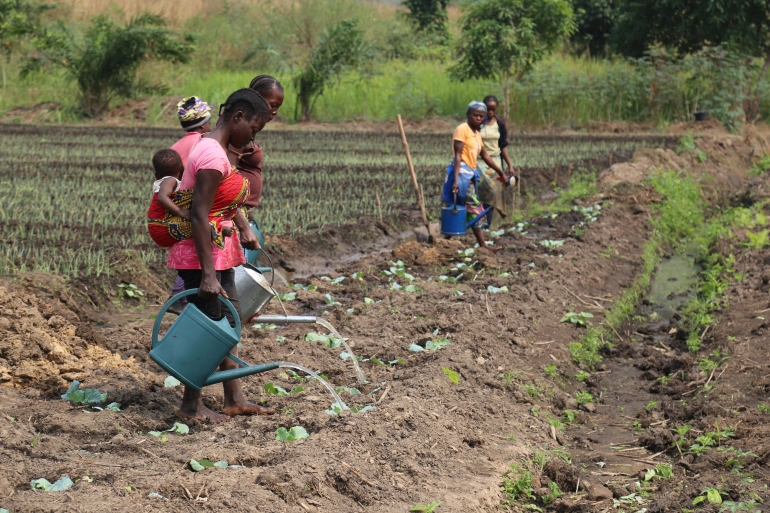
Women make up the backbone of society. Nowhere is this truer than in rural Africa, where the so-called “lesser sex” takes on the bulk of the childrearing, housekeeping and income earning. According to the Organisation for Economic Co-operation and Development (OECD), women make up 70 percent of Africa’s agricultural workforce and grow 90 percent of its food.

Most women in sub-Saharan Africa have traditional responsibilities as food growers, water and fuel gatherers, and caregivers. The gender-specific division of labour in rural agricultural societies means that environmental degradation caused by climate change as well as unplanned development affects women the most.

Yet, despite their strong dependence on the environment’s wellbeing making significant contributions to their households, their communities and the economy, women’s voices are noticeably absent from discussions on Africa’s development. It is time to make our voices heard.


ADVERTISEMENT

Feminism has already had an impact in Africa. I became the first elected female African head of state two decades ago. Other women have since taken on important public leadership roles in other African nations. Today, we are beginning to see more women in decision making and leadership roles than ever before across the continent.

Indeed, Africa is leading the world in women’s public leadership. Five African countries are among the top 20 in the world in women’s parliamentary representation. Rwanda still leads the list with its 60 percent female parliament.

The increasing number of African women in public leadership positions is not a trend confined to national institutions. Many African women now hold leadership positions in international organisations such as the World Trade Organization, African Union and United Nations.

While we have made significant progress towards increasing gender equality in Africa, and an increasing number of women are now in decision-making roles in many areas, there is one important field where female voices are still lacking: conservation.

If we are to create a truly vibrant African conservation sector which produces dynamic and effective solutions to our significant conservation challenges, governments and conservation groups need to put in place measures to ensure that we look at problems from different angles. And one of the best ways to achieve this is to listen to women who are often the most affected by environmental degradation.

The establishment of conservancies has allowed for the safeguarding of wildlife corridors across Africa, and connected protected areas with one another. They also created opportunities for many at the community level. Rural women who had since time immemorial assumed the role of the guardians of natural resources, however, have not been able to fully reap these benefits because they are not the recognised owners of the land. Held back by traditional gender roles, they have not been given the opportunity to engage in the governance of conservancies.

As the group most affected by climate change, women have a better understanding of what needs to be done to adapt to changing environmental conditions, protect the environment, and come up with practical solutions to problems introduced by climate change. But restricted land rights, lack of access to financial resources, training and technology, as well as limited access to political decision-making spheres often prevent them from playing a full role in tackling climate change and other environmental challenges. Unleashing the knowledge and capability of women thus represents an important opportunity to craft effective climate change solutions for the benefit of all and increase the efficiency of conservation efforts.

The conservation sector has been male-dominated since the beginning and is still failing to tap into female knowledge and potential in addressing the complex problems it is facing today.

The inaugural Africa Protected Areas Congress (APAC) that is slated to take place in Kigali from next week, 18 to 23 July, 2022, will not only provide an important platform for women in conservation to make their voices heard but also serve as a venue for having conversations about the best paths to increase female representation in the field.

The number of women in decision-making positions in the sector needs to be increased to achieve gender equality, but this should not be the only reason behind efforts to encourage women to participate in conservation. The sector also needs to acknowledge the unique approaches and solutions women can bring to the table.

At national and subnational levels, more women – and especially rural women- should be involved in the design and planning of conservation policies, programmes and projects, as well as their financing, implementation, and monitoring and evaluation. Investing in participatory, multi-stakeholder and multi-sectoral gender action plans related to conservation can also help countries develop comprehensive strategies that integrate gender concerns and build on women’s unique knowledge and perspectives.

Today, achieving gender parity should be a priority for every sector. Thus, APAC should be an opportunity for all actors that have a stake in conservation, from global organisations to the private sector and governments, to engage in a dialogue on increasing female representation in the field. More women should be participating in setting the agenda of the conservation industry, not only because we need gender equality but because women are likely holding the key to developing effective and sustainable conservation solutions.

Women should take their rightful place in all organisations and initiatives aiming to combat climate change and protect Africa’s environment and precious ecosystem – not only for the sake of gender parity, but for the sake of the continent’s future.


Ellen Johnson Sirleaf  Co-Chair of the Independent Panel for Pandemic Preparedness and Response, and former President of Liberia. The views expressed in this article are the author’s own and do not necessarily reflect The Southern African Times editorial stance.
Previous Post

Africa seeks private sector funding for ocean climate action

Next Post

Russia-Ukraine conflict: What it means for Africa

SAT Reporter

Related Posts

Zambia’s Copper and the Social Cost of Extraction Deals
The Editorial Board

Zambia’s Copper and the Social Cost of Extraction Deals

by Nothando Ndlovu
April 17, 2026
Op-Ed by Yemi Osinbajo, Former Vice President of Nigeria: Africa Is Losing the Iran War
Opinion

Op-Ed by Yemi Osinbajo, Former Vice President of Nigeria: Africa Is Losing the Iran War

by SAT Reporter
April 13, 2026
A Superpower Under Strain: Iran and the Limits of American Power
Opinion

A Superpower Under Strain: Iran and the Limits of American Power

by Kundai Vambe
April 8, 2026
South Africa Seeks to Tighten Immigration Rules in Policy Shift
Opinion

South Africa Seeks to Tighten Immigration Rules in Policy Shift

by Kundai Vambe
April 8, 2026
OPINION | Africa Isn’t Failing Democracy — The Narrative Is
Opinion

OPINION | Africa Isn’t Failing Democracy — The Narrative Is

by The Editorial Board
April 6, 2026
Next Post
Russia-Ukraine conflict: What it means for Africa

Russia-Ukraine conflict: What it means for Africa

Browse by Category

  • Africa AI
  • African Continental Free Trade Area
  • African Debt
  • African Start ups
  • Agriculture
  • AI Africa
  • Algeria
  • All News
  • Analysis
  • Angola
  • Arts / Culture
  • Asia
  • Botswana
  • BOTSWANA
  • BREAKING NEWS
  • BRICS
  • Burkina Faso
  • Burundi
  • Business
  • Business
  • Business Wire
  • Cameroon
  • Central Africa
  • Chad
  • China
  • Climate Change
  • Climate Changev
  • Community
  • Congo Republic
  • Conservation
  • Côte d’Ivoire
  • COVID 19
  • CRYPTOCURRENCY
  • Culture
  • Democratic Republic of Congo
  • Diplomacy
  • Eastern Africa
  • Economic Development
  • Economy
  • Education
  • Egypt
  • Elections 2024
  • Energy
  • Entertainment
  • Environment
  • Eritrea
  • Ethiopia
  • Europe
  • Fashion
  • Feature
  • Finance
  • Financial Inclusion
  • Food
  • Food and Drink
  • Foods
  • GABON
  • Ghana
  • Global
  • Global Africa
  • Guinea
  • Health
  • Immigration
  • in Southern Africa
  • International news
  • International Relations
  • Ivory Coast
  • Just In
  • Kenya
  • Lesotho
  • Libya
  • Life Style
  • Lifestyle
  • Literature
  • Malawi
  • Malawi
  • Mali
  • Markets
  • Mauritius
  • Middle East
  • Mining in Africa
  • Morocco
  • Mozambique
  • Namibia
  • niger
  • Niger
  • Nigeria
  • North Africa
  • North-Eastern Africa
  • Obituaries
  • Obituary
  • Opinion
  • PARTNER CONTENT
  • Politics
  • Property
  • Racism
  • Rwanda
  • Rwanda
  • SADC
  • SAT Interviews
  • SAT Investigation
  • SAT Jobs
  • Saudi Arabia
  • Senegal
  • Seychelles
  • South Africa
  • South Sudan
  • Sports
  • Startup Africa
  • STOCK EXCHANGE
  • Sudan
  • Sustainability
  • Sustainablity
  • Tanzania
  • Technology
  • Telecommunications
  • The Editorial Board
  • The Power Of She
  • Togo
  • Trade
  • Travel
  • Travel
  • Tunisia
  • Uganda
  • Uncategorized
  • Wealth
  • West Africa
  • World
  • World
  • ZAMBIA
  • Zambia
  • ZIMBABWE
  • Zimbabwe

Browse by Tags

#NewsUpdate #SouthAfrica #SouthernAfricanTimes #TheSouthernAfricanTimes AfCFTA africa African Continental Free Trade Area African development African Development Bank African economies African economy African Union Agriculture Angola Botswana Business China Climate change Cyril Ramaphosa Economic Development economic growth energy transition fiscal policy food security industrialisation Inflation Infrastructure Development International relations Investment Kenya Mozambique Namibia news Nigeria Regional Integration renewable energy Rwanda SADC South Africa Southern Africa sustainable development Tanzania United States Zambia Zimbabwe
ADVERTISEMENT

WHO WE ARE

The Southern African Times is a regional bloc digital newspaper that covers Southern African and world news. The paper also gives a nuanced analysis on news and covers a wide range of reporting which include sports, entertainment, foreign affairs, arts and culture.

Welcome Back!

Login to your account below

Forgotten Password?

Retrieve your password

Please enter your username or email address to reset your password.

Log In

  • Home
  • Southern Africa
  • Business
    • African Start ups
    • African Continental Free Trade Area
  • Technology
    • Lifestyle
      • Health
      • Culture
      • Food and Drink
      • Entertainment
  • Opinion
  • Sports
  • SAT Jobs
    • Events
  • About Us
    • Advertise with Us
    • Contact Us
Are you sure want to unlock this post?
Unlock left : 0
Are you sure want to cancel subscription?