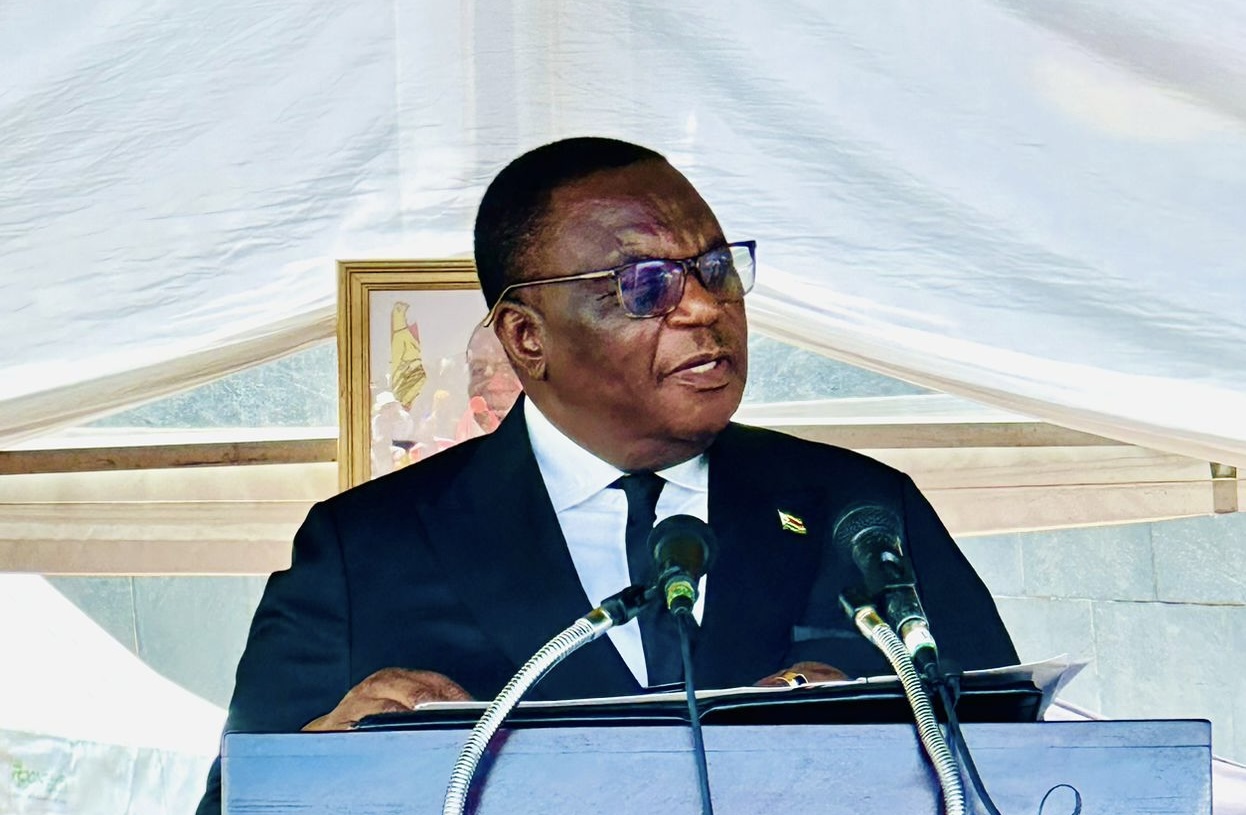
Zimbabwe’s Acting President, General (Rtd) Dr Constantino Chiwenga, has issued a stark warning against corruption, describing it as a direct threat to the country’s developmental ambitions and a betrayal of its liberation ethos. His remarks came during a state funeral for three revered figures of Zimbabwe’s liberation history—Major General (Rtd) Solomon Siziba, Cde Chenhamo Chimutengwende, and Ambassador John Shumba Mvundura—at the National Heroes Acre in Harare.
Speaking on behalf of President Emmerson Mnangagwa, the government, and the ruling ZANU-PF party, Dr Chiwenga eulogised the trio as “gallant sons of the soil” whose sacrifices during Zimbabwe’s liberation struggle laid the foundation for the nation’s independence. He called on the nation to draw lessons from their commitment to national service, urging Zimbabweans to prioritise collective responsibility and integrity.
“Many never lived to see a free Zimbabwe, and their tragic tale must remain a conscious lesson for us all,” Dr Chiwenga said. “What remains is not material wealth but the legacy of righteousness, sacrifice, and selflessness they leave behind.”



Amid the solemn tributes, Dr Chiwenga took the opportunity to highlight corruption as a critical obstacle to the government’s Vision 2030 agenda, which aims to transform Zimbabwe into an upper-middle-income economy by the end of the decade.
“We can only realise Vision 2030 by staying away from deeds and misconducts that go against our national interests, including corruption and shady deals,” he declared. “A loud and clear ‘no’ to corruption must come from us all.”
His remarks, echoing President Mnangagwa’s mantra, Nyika inovakwa nevene vayo (“A country is built by its own people”), underscored the need for national unity and ethical governance as cornerstones of Zimbabwe’s development. Addressing a diverse audience, including senior government officials, civil society representatives, and foreign diplomats, the Acting President reaffirmed the administration’s commitment to fostering transparency, accountability, and meritocracy in public institutions.
While praising the sacrifices of the late national heroes, Dr Chiwenga also made a broader appeal for sustainable development, referencing Zimbabwe’s agricultural prospects. He thanked the Lord for the recent rains and encouraged farmers to focus on short-season crops to capitalise on improved weather conditions.
The Acting President concluded with a call for collaboration across all sectors of society, including the media and civil society, to promote national unity and ensure the legacy of the liberation struggle is preserved. “Let us remain united under the leadership of His Excellency President Emmerson Mnangagwa,” he said. “We must promise to work hard and defend what these heroes fought for.”

For an international audience, Dr Chiwenga’s rhetoric offers both reassurance and cause for scepticism. The emphasis on anti-corruption efforts and national unity suggests a leadership cognisant of the need to rebuild trust—both within its borders and abroad. Yet, for investors accustomed to the promises of African governments, the gap between rhetoric and action remains a critical concern. Zimbabwe’s Anti-Corruption Commission (ZACC), while active in pursuing high-profile cases, has faced criticism for its limited ability to dismantle entrenched networks of influence.
Observers of Zimbabwe’s political landscape will also note the deliberate emphasis on unity and patriotism. In his address, Dr Chiwenga called for the nation to embrace the ethic of Ubuntu, urging Zimbabweans to “shun hatred and embrace each other.” This conciliatory tone is likely aimed at fostering social cohesion, particularly in a country where political polarisation has often hampered progress.
However, questions remain about the political will to implement structural reforms. The administration’s ambitious Vision 2030 agenda hinges on creating an environment conducive to investment, yet progress has been stymied by inconsistent policy implementation and lingering scepticism from international financial institutions.
For potential investors, Dr Chiwenga’s speech serves as a litmus test for Zimbabwe’s readiness to turn the page on its tumultuous past. The Acting President’s condemnation of corruption and call for unity signal an understanding of what is required to restore confidence. But as with many such speeches, the true test lies not in the rhetoric but in the actions that follow.
The state funeral of Major General Siziba, Cde Chimutengwende, and Ambassador Mvundura offered Zimbabwe a moment to reflect on its past and contemplate its future. As Acting President Chiwenga poignantly remarked, “It is the duty of each generation to take our nation forward.” For Zimbabwe, that forward trajectory will depend on whether its leadership can transform lofty ideals into substantive progress—delivering not only on the promise of Vision 2030 but also on the aspirations of those who fought for a free and just Zimbabwe.