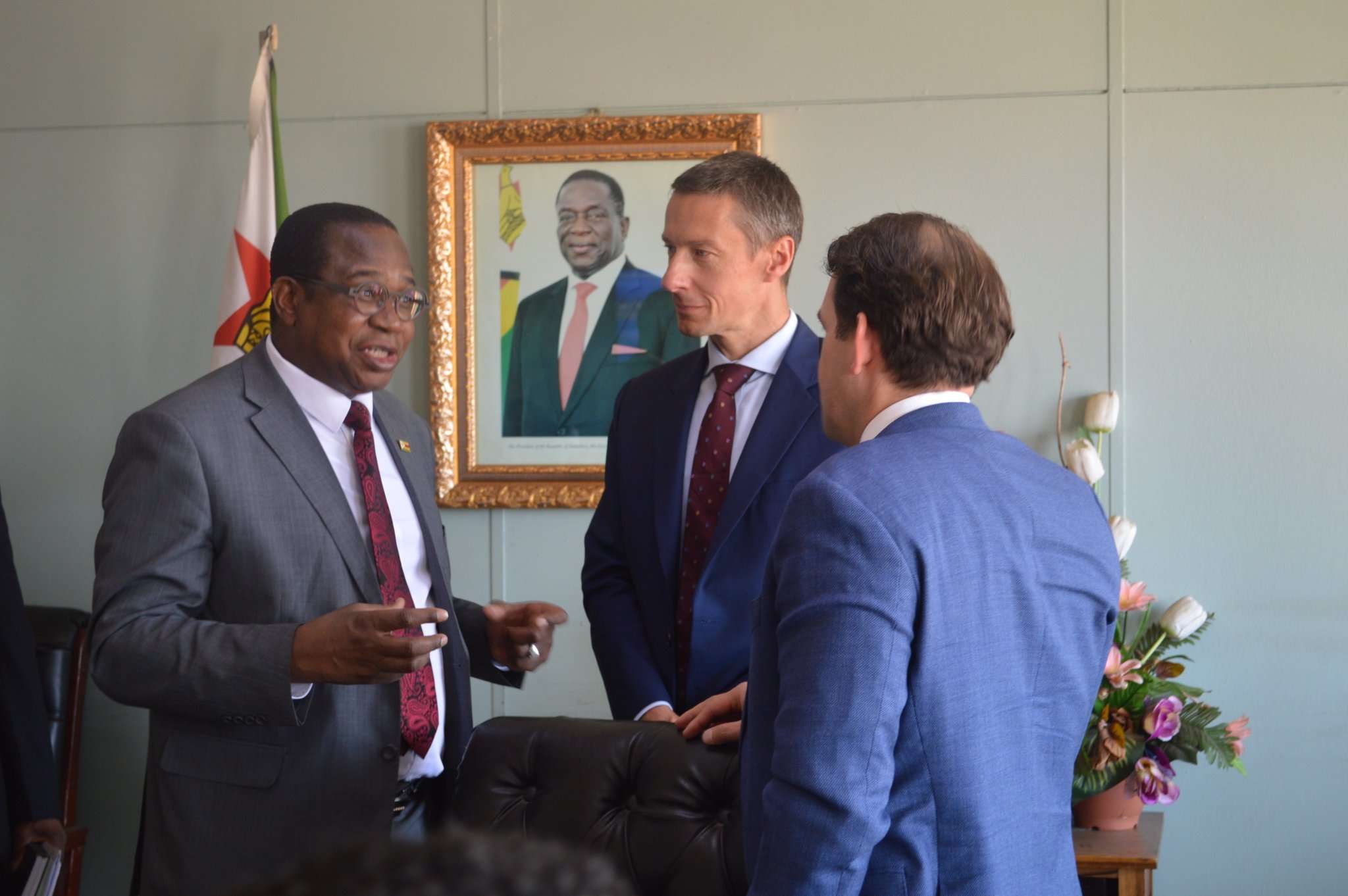
The International Monetary Fund (IMF) has completed its 2025 Article IV consultation with Zimbabwe, delivering a cautiously optimistic yet stern assessment of the country’s economic outlook. Headed by Mr Wojciech Maliszewski, the IMF delegation spent a fortnight in Harare conducting consultations, culminating in a report that recognises progress in macroeconomic stabilisation but underscores lingering fiscal vulnerabilities and structural deficiencies.
While the IMF acknowledges Zimbabwe’s return to modest stability following years of monetary upheaval and policy uncertainty, it warns that the recovery remains tenuous. Economic growth is forecast to reach 6 percent in 2025, a significant rebound after the drought-induced contraction of 2024. Improved climatic conditions and surging global gold prices have rejuvenated the agricultural and mining sectors, boosting export earnings and helping to stabilise the current account.
The stabilisation of inflation is perhaps the most notable achievement. After the ZiG – Zimbabwe’s local currency – suffered a steep depreciation in September 2024, inflation spiked briefly in October before settling to an average of 0.5 percent month-on-month from February to May 2025. The IMF attributes this to stricter monetary policy, the cessation of quasi-fiscal operations (QFOs) by the Reserve Bank of Zimbabwe (RBZ), and the transfer of these obligations to the Treasury. However, the report cautions that the gap between the official willing-buyer willing-seller (WBWS) exchange rate and the parallel market rate remains around 20 percent, reflecting enduring scepticism among market participants.



Zimbabwe’s fiscal performance presents a more mixed picture. On one hand, revenue mobilisation has improved markedly, reaching 18 percent of GDP. This is the result of more efficient tax administration, the scaling back of VAT exemptions, and tighter enforcement against smuggling and tax evasion. On the other hand, expenditure pressures have surged. The state’s wage bill, infrastructure linked to hosting the SADC Summit, and the assumption of QFO debt by the Treasury have all contributed to a widening fiscal deficit. Alarmingly, much of this deficit has been financed through domestic borrowing, including the issuance of Treasury bills and drawing on the RBZ’s overdraft facility—measures the IMF has repeatedly warned against due to their inflationary consequences.

The IMF also raises serious concerns about the Mutapa Investment Fund, Zimbabwe’s sovereign wealth vehicle. While ostensibly created to manage state-owned assets for long-term growth, the Fund has come under scrutiny for its lack of transparency and weak governance. The IMF calls for urgent reforms to its auditing, disclosure, and oversight frameworks, warning that, without reform, the Fund could pose a systemic fiscal risk akin to the past mismanagement of the RBZ’s quasi-fiscal activities.
Of wider strategic importance is Zimbabwe’s plan to move towards a mono-currency regime by 2030, re-establishing the ZiG as the sole legal tender. The IMF supports the principle of dedollarisation but warns that premature or poorly managed implementation could backfire. The Fund urges the government to clearly communicate the implications of the transition, especially with regard to the status of foreign currency deposits. It further recommends that the government increase the share of its own transactions (revenues and expenditures) conducted in ZiG, in order to build confidence and legitimacy in the currency.
The IMF’s policy recommendations are extensive. They call for the immediate closure of the fiscal financing gap using sustainable, non-inflationary means, while preserving essential social spending. Strengthening the public spending commitment control system, conducting audits of domestic arrears, and improving public financial management are listed as urgent priorities. On the monetary front, the Fund recommends improving the operation of the WBWS exchange rate mechanism, introducing a deposit facility at the RBZ, and gradually replacing direct monetary instruments with indirect, market-based tools.
Yet, Zimbabwe’s access to IMF financial support remains constrained. The country continues to carry unsustainable debt levels and is in arrears to several official creditors. Without a comprehensive debt restructuring plan and tangible progress through the government’s re-engagement strategy—such as the Structured Dialogue Platform—the IMF cannot offer a financial arrangement. Nonetheless, it remains engaged through policy advice and technical assistance, particularly in areas such as tax policy, expenditure control, debt management, and macroeconomic statistics.
For investors, the message is nuanced. Zimbabwe’s natural resources, particularly in mining and agriculture, offer clear potential in a stabilising macroeconomic environment. However, lingering currency risk, debt overhang, and institutional opacity temper enthusiasm. For Zimbabwean citizens, the IMF’s findings serve as both a source of cautious hope and a call to vigilance. Without fiscal discipline, institutional integrity, and governance reform, the gains of recent years may prove ephemeral.
The IMF’s 2025 review sets a clear benchmark. Zimbabwe’s authorities have demonstrated an ability to stabilise an economy in distress. The question now is whether they will follow through with deep structural reforms that can place the country on a path of sustainable and inclusive growth. In this context, the next national budget and the government’s commitment to transparency and reform will be watched closely—not only by international creditors and investors but by Zimbabweans themselves.