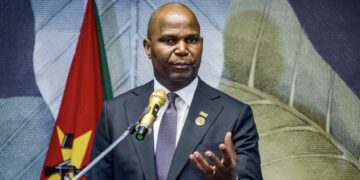
World Bank President Ajay Banga has reaffirmed his intent to lift the institution’s long-standing prohibition on financing nuclear energy projects, intensifying a broader effort to reorient the bank’s energy policy towards a more inclusive and transitional framework. Speaking in Washington, Banga said he would formally seek executive board approval in June to revise the bank’s energy strategy. The proposed reforms aim to allow lending for nuclear power and to extend eligibility for natural gas projects, particularly in low-income countries.
Since assuming the presidency of the World Bank in June 2023, Banga has championed a shift in approach that reflects the complexities of global energy transition, particularly for developing economies. The bank, historically aligned with strict support for renewable energy sources, currently permits natural gas lending only in the poorest nations and excludes financing for oil, coal, and nuclear energy. Nuclear investments have been barred since 2013, while upstream oil and gas funding ceased in 2019.
Banga’s proposed realignment does not signify a wholesale retreat from climate-conscious financing. He reiterated the institution’s commitment to spending 45% of its lending portfolio on climate-related projects. However, he underscored the necessity of balancing development imperatives with environmental objectives, arguing for an “all of the above” strategy that encompasses geothermal, hydroelectric, solar, wind, natural gas, and nuclear power “where it makes sense”.



The forthcoming policy paper outlining the new energy framework will not be finalised in time for the Spring Meetings of the World Bank and the International Monetary Fund in Washington next month. Nonetheless, internal discussions have advanced, and key shareholders, particularly the United States, have expressed growing support for the expanded scope. The U.S. is the bank’s largest single shareholder, holding a 15.83% stake, followed by Japan at 7% and China at just under 6%.
Sources familiar with the matter confirmed that Banga has held talks with U.S. Treasury Secretary Scott Bessent, who represents U.S. interests at the bank. The administration of President Donald Trump has urged multilateral institutions, including the World Bank, to adopt an energy-agnostic approach. White House officials have publicly stated that development banks should focus on enabling economic growth in emerging nations, rather than imposing stringent environmental conditions.
A senior U.S. official recently criticised the existing framework, stating that climate change ranked 19th out of 20 concerns among client countries in World Bank surveys. “If you’re trying to make sure that your people are fed and not dropping dead from disease, that’s your priority,” the official said. “The bank is a development bank. It is not the ‘Bank of Climate Change’.”
The Trump administration’s stance is partly informed by geopolitical and economic considerations. The official noted that China’s rapid advancement in nuclear technology and infrastructure has heightened the urgency for Western institutions to maintain influence in global energy markets. China has authorised a significantly greater number of new nuclear plants than the United States in recent years.
Domestically, Banga’s shift faces resistance from climate advocacy groups who argue that inclusion of nuclear and natural gas funding may divert essential resources away from solar and wind investments. Critics caution that such a change could undermine efforts to help vulnerable countries adapt to the accelerating impacts of climate change.
Nonetheless, support for the revised strategy appears to be consolidating among shareholders. Germany, historically one of the bank’s most vocal nuclear critics, is said to have adopted a more flexible stance, especially regarding gas project financing in Africa. According to a senior World Bank source, the board is expected to remain firm in its exclusion of oil and coal, but more receptive to strategic inclusion of gas and nuclear, given the evolving energy needs of member states.
The question of equitable energy access has featured prominently in the debate. Gyude Moore, a non-resident fellow at the Center for Global Development, described the current framework as punitive towards the Global South. “It created a perverse scenario where African oil and gas were extracted and used elsewhere, but not developed for use on the continent itself,” Moore said. He added that the policy disproportionately burdens those least responsible for climate change while failing to acknowledge regional disparities in infrastructure and technology readiness.

Under Banga’s leadership, the World Bank appears poised to navigate a more pragmatic and regionally tailored energy policy. While renewable energy will remain a central pillar, the inclusion of gas and nuclear aims to provide countries with more diversified tools to achieve both development and climate resilience.
The potential policy shift also reflects broader pressures facing the bank. The Trump administration has threatened to reevaluate U.S. participation in multilateral institutions, following prior withdrawals from bodies such as the World Health Organization. There are concerns among international stakeholders that the World Bank could face similar scrutiny if it fails to align more closely with American priorities.

As global development financing enters a new chapter, the World Bank’s revised energy strategy may redefine the contours of how growth, equity, and environmental stewardship are balanced on the international stage.