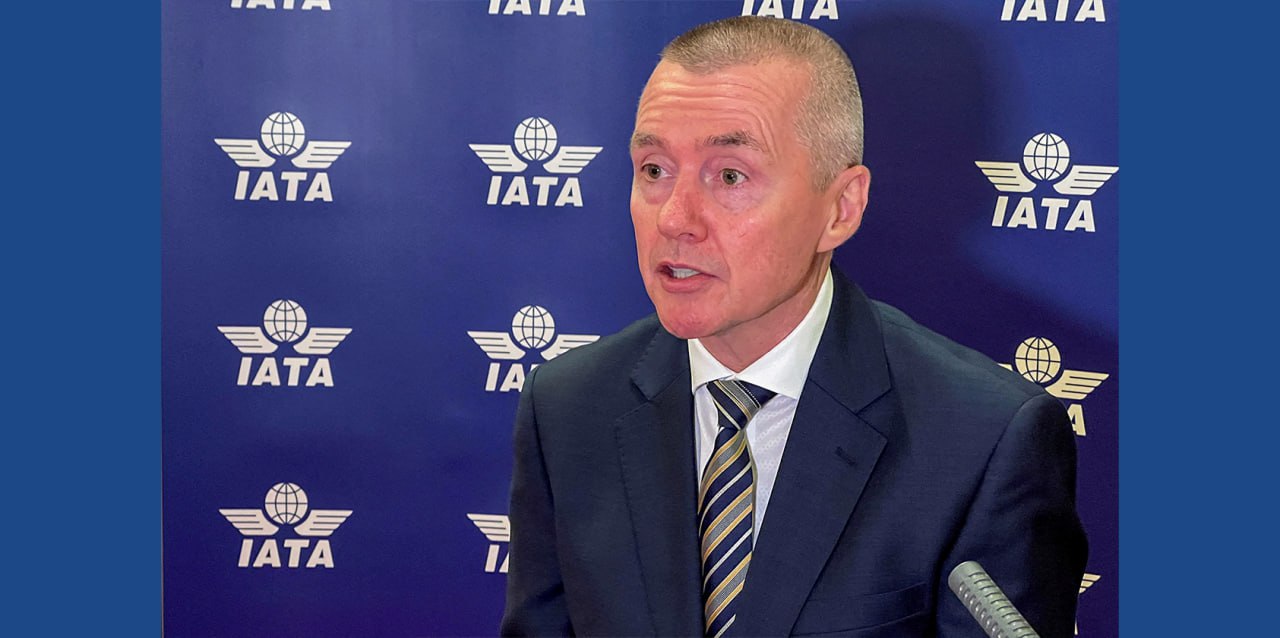
Speaking at the 81st International Air Transport Association (IATA) Annual General Meeting and World Air Transport Summit held in New Delhi, Willie Walsh, Director General of IATA, delivered a pointed message to African policymakers: without immediate and effective implementation of policies fostering a unified aviation market, Africa’s aviation sector risks stagnation. Walsh emphasised that unless structural impediments are addressed, the continent will remain marginalised in global aviation, stuck at just 2% of global market share — the same level it has maintained for decades.
According to IATA, despite projected air traffic growth in Africa of approximately 8% in 2024, this is far below potential. Walsh argued that the fragmented state of the aviation market continues to drive up operational costs, limit market entry, and undermine intra-continental connectivity. He asserted, “The only way we’re going to see Africa fulfil its full potential is if we make it easier for airlines to fly within the continent.” While many acknowledge the need for integration, he noted that implementation has been virtually non-existent.
Walsh’s critique focused in part on the Single African Air Transport Market (SAATM), an initiative launched by the African Union in 2018 aimed at liberalising intra-African air transport. Despite 36 countries having signed up, effective implementation remains elusive. Walsh noted, “You could say it’s a failure because agreements are reached but never implemented. I never celebrate the signing of an agreement — I celebrate the implementation.”



Particularly in Southern Africa, aviation operations are burdened by disproportionately high costs. Walsh pointed to elevated jet fuel prices, high airport fees, and infrastructure costs that exceed those in many other global regions. These challenges are compounded by a shortage of skilled labour, with trained professionals being drawn away by more lucrative opportunities in the Gulf states and elsewhere. The lack of available aircraft on the continent further exacerbates constraints, often forcing airlines to focus on lower-cost, higher-efficiency routes outside Africa.
These structural inefficiencies not only limit regional connectivity but also deter investment and hinder the long-term competitiveness of African airlines. Walsh warned that governments frequently perceive airlines as convenient sources of tax revenue, rather than essential facilitators of economic integration and development. “The structure of the industry there is just so expensive because of all the additional costs associated with the fragmented market,” he explained.

He argued that deregulation and market liberalisation can drive innovation and growth, citing the successful restructuring of Aer Lingus as a model. Once a state-owned carrier operating in a heavily protected market, Aer Lingus adapted to liberalisation and competition, ultimately thriving in the deregulated European aviation landscape. Walsh suggested that African carriers, if given the opportunity to compete freely, could undergo similar transformations.
Despite his criticism, Walsh expressed optimism that the African aviation market has significant untapped potential. The continent’s demographic growth, rising middle class, and geographical vastness make it uniquely suited for air travel expansion — if the right conditions are fostered. Walsh reaffirmed IATA’s commitment to supporting the realisation of SAATM, stating, “We must continue to challenge governments on why SAATM hasn’t been introduced and encourage its implementation. IATA has a role to play in highlighting the benefits and supporting that process.”
The summit, attended by over 1,700 global aviation stakeholders including airline executives, government regulators, and policy experts, addressed not only regional concerns but also the broader landscape of international aviation amid geopolitical volatility and economic uncertainties. Within that context, Africa’s aviation market remains a critical area for reform and opportunity.