

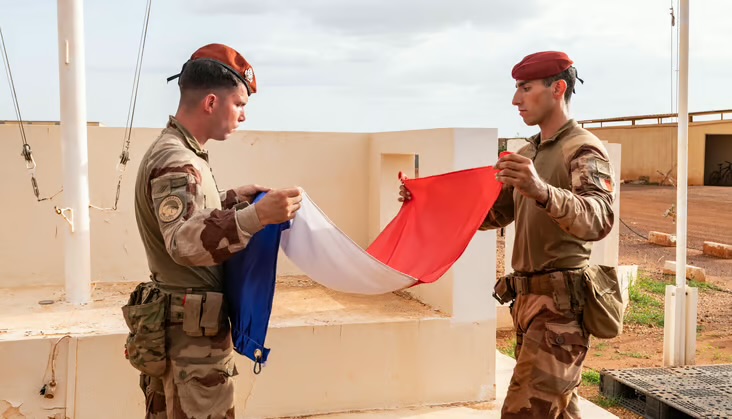
France’s recent military ousting from several African nations signals a profound transformation in the continent’s relationship with its former colonial powers. This unprecedented wave of dismissals underscores an emergent recalibration of African agency, sovereignty, and foreign policy, challenging the historical dominance of Western actors in African affairs. Countries such as Mali, Burkina Faso, and Niger—three pivotal states in the Sahel region—have spearheaded this movement, terminating longstanding military agreements with France and demanding the withdrawal of its troops.
The implications of these expulsions extend beyond military logistics. They reflect the broader discontent in African nations regarding neo-colonial structures of influence and interventionism that have characterised France’s engagement on the continent for decades. While France asserts its military deployments were intended to combat terrorism and stabilise the Sahel, critics argue that these interventions have often exacerbated instability, fostered resentment, and impeded local governance structures.
At the core of this shift lies an enduring sense of disenfranchisement among African nations. France’s approach to military engagement has often been criticised for operating with a top-down framework, neglecting to integrate local knowledge and expertise into security operations. This perception of foreign military forces as occupying entities has fuelled public discontent, further eroding trust between African governments and their constituents. In Mali, for instance, the presence of French troops was increasingly viewed as counterproductive, with many citizens accusing them of complicity in the region’s worsening insecurity. The rise of anti-French protests in Bamako and other capitals has only amplified the call for a reimagined approach to African security.



Moreover, the geopolitical landscape in Africa has undergone significant reconfiguration. As France’s influence wanes, new players—most notably Russia and China—have sought to fill the void. The Wagner Group, a paramilitary organisation linked to the Kremlin, has established a foothold in countries such as Mali, while China has deepened its economic ties with the continent through strategic investments in infrastructure and resource extraction. This multipolarity has afforded African nations an opportunity to diversify their international partnerships, reducing their dependence on any single power and renegotiating their terms of engagement.

From an African-generated perspective, this realignment is emblematic of the continent’s push for self-determination. Scholarly analysis of African sovereignty movements highlights the importance of reclaiming control over security, economics, and governance as pillars of decolonisation. Professor Achille Mbembe, a leading African philosopher and political theorist, contends that the dismissal of French troops is part of a broader attempt by African states to dismantle the vestiges of colonial tutelage. Mbembe posits that the resurgence of pan-Africanism—embodied in initiatives like the African Continental Free Trade Area (AfCFTA)—provides a framework for collective autonomy, reducing reliance on external actors.
Similarly, Dr. Mamadou Diouf, a historian of West African politics, argues that the expulsion of foreign troops reflects a generational shift in leadership. Unlike their predecessors, who were often complicit in maintaining neo-colonial ties, today’s African leaders are more inclined to prioritise national sovereignty and regional solidarity. The governments of Mali, Burkina Faso, and Niger have articulated their intent to strengthen intra-African security collaboration, potentially paving the way for home-grown solutions to the continent’s challenges.
The militarisation of France’s relationship with Africa also warrants scrutiny. While counter-terrorism efforts in the Sahel are undeniably critical, scholars argue that an over-reliance on military solutions has overshadowed the need for holistic development strategies. Dr. Fatou Sow, a scholar of African development studies, notes that socio-economic inequalities, environmental degradation, and weak institutions are root causes of insecurity in the Sahel. Addressing these structural issues requires investment in education, healthcare, and local governance, rather than prolonged military deployments. The prioritisation of military aid over humanitarian assistance has, in many cases, undermined France’s credibility as a genuine partner for development.
From a historical vantage point, the current wave of expulsions is not unprecedented. Africa’s post-independence history is replete with examples of nations rejecting external dominance, from Ghana’s under Kwame Nkrumah to Guinea’s under Ahmed Sékou Touré. However, the current movement appears distinct in its emphasis on coordinated regional action. The Sahel states’ simultaneous rejection of French troops suggests a collective awakening, driven by shared experiences of marginalisation and a mutual desire for liberation from external dictates.
Nevertheless, challenges remain. The withdrawal of French forces creates a security vacuum that insurgent groups may exploit. Without a coherent regional strategy, the departure of foreign troops risks destabilising already fragile states. It is therefore imperative that African nations not only assert their sovereignty but also collaborate to develop sustainable security mechanisms. The African Union (AU) and regional bodies such as the Economic Community of West African States (ECOWAS) must take a leading role in facilitating this transition.
In conclusion, France’s expulsion from several African countries marks a watershed moment in the continent’s post-colonial evolution. This development is indicative of a growing determination among African states to redefine their relationship with external powers and reclaim agency in their own affairs. By drawing upon pan-African principles and prioritising grassroots-led solutions, the continent has an opportunity to chart a new course, free from the shadows of its colonial past. Yet, the road ahead requires careful navigation, balancing the assertion of sovereignty with the pressing need for regional cohesion and stability. In the words of renowned Kenyan scholar Ali Mazrui, Africa’s liberation lies not merely in rejecting external domination but in fostering an internal renaissance—a vision that now appears closer than ever to fruition.


