Wednesday, July 1, 2026
  • Login
The Southern African Times
  • Home
  • Southern Africa
  • Business
    • African Start ups
    • African Continental Free Trade Area
  • Technology
    • Lifestyle
      • Health
      • Culture
      • Food and Drink
      • Entertainment
  • Opinion
  • Sports
  • SAT Jobs
    • Events
  • About Us
    • Advertise with Us
    • Contact Us
No Result
View All Result
  • Home
  • Southern Africa
  • Business
    • African Start ups
    • African Continental Free Trade Area
  • Technology
    • Lifestyle
      • Health
      • Culture
      • Food and Drink
      • Entertainment
  • Opinion
  • Sports
  • SAT Jobs
    • Events
  • About Us
    • Advertise with Us
    • Contact Us
No Result
View All Result
The Southern African Times
No Result
View All Result
Home Just In

Which country never leaves?

by SAT Reporter
January 10, 2022
in Just In
0
Which country never leaves?

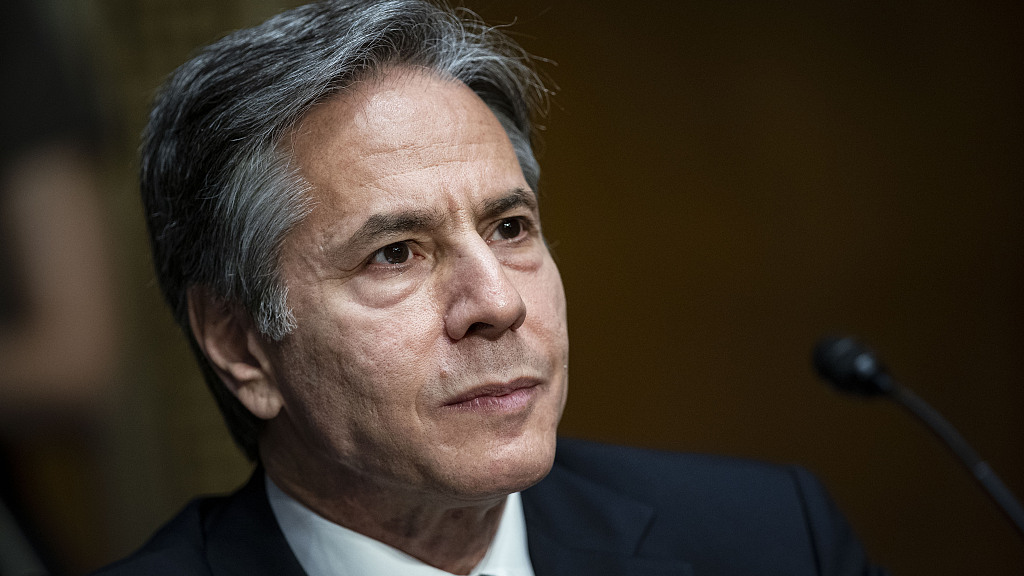
U.S. Secretary of State Antony Blinken raised plenty of eyebrows a few days ago. Commenting on the appearance of Russian military troops in Kazakhstan, where protests had roiled the nation for several days, Blinken said, “One lesson of recent history is that once Russians are in your house, it’s sometimes very difficult to get them to leave.” 

Perhaps Blinken should have taken a closer look at Germany, Italy, South Korea, Japan and other countries before he made his unfortunate comment. Why? Because the U.S. is the undisputed global leader in establishing military bases in foreign countries and then refusing to abandon them. The reality is once the U.S. sets up shop somewhere around the world, it will not leave. 

The U.S. maintains dozens of military facilities around the globe, a figure that does not include other properties the U.S. military also owns. If those data were considered, then the military’s presence would be even larger than it is. Of course, the issue is not only the base but how long the U.S. military has been there. 

ADVERTISEMENT

Consider just a couple of examples: Ramstein Air Force Base, in Germany, has been “home” to U.S. military personnel for almost 70 years, dating back to 1953. In Japan, the U.S. has maintained the Marine Corps Air Station Futenma since the mid-1940s. And you need to go all the way back to 1903, almost 120 years ago, to trace the history of the U.S. presence at the Guantanamo Bay Naval Base, in Cuba. 

Which country never leaves?

Al Jazeera examined the data during Donald Trump’s final year in office of the U.S. military presence in the Middle East alone, and the results need to be quoted in full: “There are 200,000 U.S. troops stationed at hundreds of bases in countries and territories outside of the U.S.. Despite President Donald Trump’s promises to remove U.S. troops from the Middle East, the number of troops in the region has increased. Since 9/11, American taxpayers have spent $6.4 trillion on wars and military action in the Middle East and Asia, according to the Watson Institute of International and Public Affairs at Brown University. And according to U.S. central command, there are between 60,000 and 70,000 U.S. troops in the Middle East.”
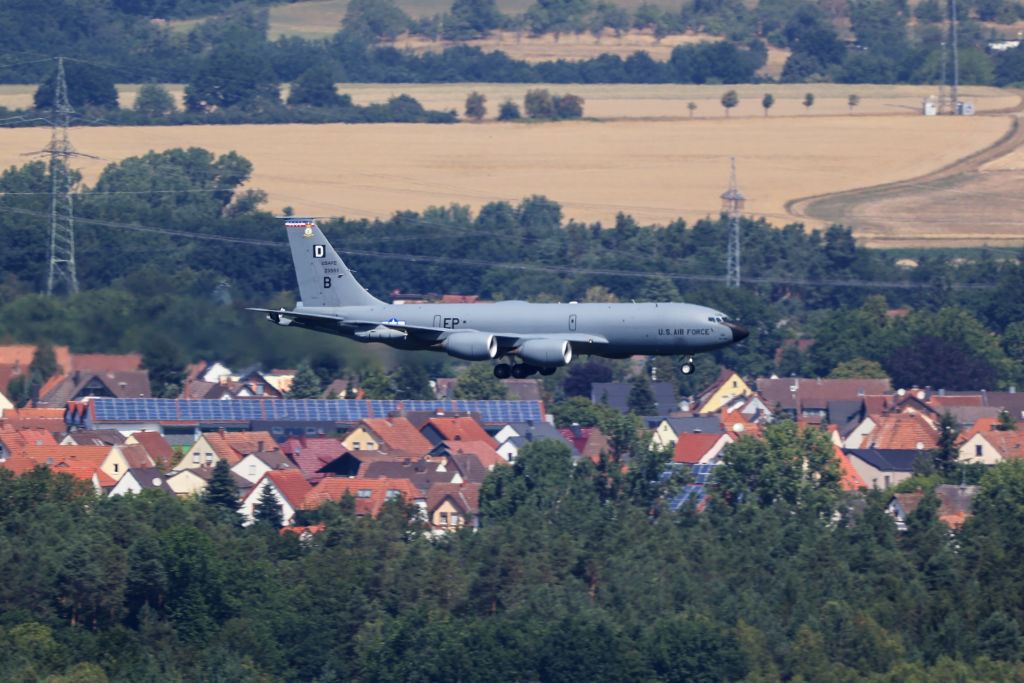
A United States Air Force aircraft comes into land at Ramstein United States Air Force Airbase in Landstuhl, Germany, on Tuesday, July 21, 2020. Four German state leaders whose regions host most U.S. troops based in the country asked lawmakers in Washington to stymie President Donald Trump’s plan to withdraw about 9,500 service members, a newspaper reported. Photographer: Alex Kraus/Bloomberg via Getty Images

The Congressional Budget Office crunched the numbers to determine how much this robust international presence was costing the American taxpayers. In 2016, the estimate was $25 billion, which that year represented only 4 percent of the entire military budget. If we presume that the $25 billion figure has not increased in any year since then, we can then conclude that the government has spent $125 billion over the past five years to sustain these examples of hegemony that also are not popular in many of the countries in which they are located. 

What could $125 billion have bought in that time? The U.S. could have authorized the $41 billion the American Road and Transportation Builders Association reports is required to upgrade every bridge in the country. With the additional $84 billion, the government could have paid the college education expenses of about 750,000 students. 

Imagine: A country where traveling would be safer and thousands upon thousands of young men and women would have enjoyed improved career opportunities because of a college degree. If these efforts had been undertaken, the ever-present claim of American “exceptionalism” would have some validity behind it.

In 1961, Dwight Eisenhower delivered one of the most important speeches any president has ever made. He used his farewell address to the country three days before he left office to warn Americans of the rise of the military-industrial complex. At one point, President Eisenhower said, “We have been compelled to create a permanent armaments industry of vast proportions. Added to this, 3.5 million men and women are directly engaged in the defense establishment. We annually spend on military security alone more than the net income of all United States corporations.” 

All of those planes, weapons, bombs and more are scattered across the globe. They represent America’s commitment to maintaining its rather unique definition of peace. Can anyone examining the data doubt why Russian President Vladimir Putin is just one international leader who questions this definition of peace? And how can any U.S. official look at Putin and with a straight face say that he ought not fear America’s intentions by maintaining such a robust military presence so close to Russia’s borders? 

And, yes, many other nations, China included, also have the right to look askance at U.S. claims about its overzealous commitment to bases and other facilities throughout the world.

There is little question America’s safety would not be threatened by reducing its global military footprint. Such actions also could improve the world opinion about the U.S. But until that decision is made – and neither you nor I should hold our breath – no government official ought to be delivering lectures about how difficult it is to get military forces to leave another country. 

Anthony Moretti is an associate professor at the Department of Communication and Organisational Leadership at Robert Morris University. The article reflects the author’s opinions and not necessarily those of The Southern African Times.

Previous Post

What role should the private sector play in education?

Next Post

Australian Court Reinstates Tennis Star Djokovic’s Visa

SAT Reporter

Related Posts

BREAKING NEWS| South Africa’s Reserve Bank Slashes Interest Rates by 25 Basis Points, Repo Now at 7%
Just In

BREAKING NEWS| South Africa’s Reserve Bank Slashes Interest Rates by 25 Basis Points, Repo Now at 7%

by Times Reporter
July 31, 2025
South Africa Struggles to Keep G20 Poverty Talks on Track Amid Aid Cuts and No-Shows
Just In

South Africa Struggles to Keep G20 Poverty Talks on Track Amid Aid Cuts and No-Shows

by SAT Reporter
February 26, 2025
Former Zimbabwean Vice-President Phelekezela Mphoko Passes Away
Just In

Former Zimbabwean Vice-President Phelekezela Mphoko Passes Away

by Leo Muzivoreva
December 6, 2024
President Ramaphosa to Announce New Cabinet on Sunday Evening
Just In

President Ramaphosa to Announce New Cabinet on Sunday Evening

by SAT Reporter
June 30, 2024
Madagascar’s Ruling Party Loses Parliamentary Majority
Just In

Madagascar’s Ruling Party Loses Parliamentary Majority

by SAT Reporter
June 12, 2024
Next Post
Australian Court Reinstates Tennis Star Djokovic’s Visa

Australian Court Reinstates Tennis Star Djokovic’s Visa

Browse by Category

  • Africa AI
  • African Continental Free Trade Area
  • African Debt
  • African Start ups
  • Agriculture
  • AI Africa
  • Algeria
  • All News
  • Analysis
  • Angola
  • Arts / Culture
  • Asia
  • Botswana
  • BOTSWANA
  • BREAKING NEWS
  • BRICS
  • Burkina Faso
  • Burundi
  • Business
  • Business
  • Business Wire
  • Cameroon
  • Central Africa
  • Chad
  • China
  • Climate Change
  • Climate Changev
  • Community
  • Congo Republic
  • Conservation
  • Côte d’Ivoire
  • COVID 19
  • CRYPTOCURRENCY
  • Culture
  • Democratic Republic of Congo
  • Diplomacy
  • Eastern Africa
  • Economic Development
  • Economy
  • Education
  • Egypt
  • Elections 2024
  • Energy
  • Entertainment
  • Environment
  • Eritrea
  • Ethiopia
  • Europe
  • Fashion
  • Feature
  • Finance
  • Financial Inclusion
  • Food
  • Food and Drink
  • Foods
  • GABON
  • Ghana
  • Global
  • Global Africa
  • Guinea
  • Health
  • Humanitarian Aid
  • Immigration
  • in Southern Africa
  • International news
  • International Relations
  • Investment
  • Ivory Coast
  • Just In
  • Kenya
  • Lesotho
  • Libya
  • Life Style
  • Lifestyle
  • Literature
  • Malawi
  • Malawi
  • Mali
  • Markets
  • Mauritius
  • Middle East
  • Mining in Africa
  • Morocco
  • Mozambique
  • Namibia
  • Niger
  • niger
  • Nigeria
  • North Africa
  • North-Eastern Africa
  • Obituaries
  • Obituary
  • Opinion
  • PARTNER CONTENT
  • Politics
  • Property
  • Racism
  • Rwanda
  • Rwanda
  • SADC
  • SAT Interviews
  • SAT Investigation
  • SAT Jobs
  • Saudi Arabia
  • Senegal
  • Seychelles
  • Somaliland
  • South Africa
  • South Sudan
  • Sports
  • Startup Africa
  • STOCK EXCHANGE
  • Sudan
  • Sustainability
  • Sustainablity
  • Tanzania
  • Technology
  • Telecommunications
  • The Editorial Board
  • The Power Of She
  • Togo
  • Trade
  • Travel
  • Travel
  • Tunisia
  • Uganda
  • Uncategorized
  • Wealth
  • West Africa
  • World
  • World
  • ZAMBIA
  • Zambia
  • Zimbabwe
  • ZIMBABWE

Browse by Tags

#NewsUpdate #SouthAfrica #SouthernAfricanTimes #TheSouthernAfricanTimes AfCFTA africa African Continental Free Trade Area African development African Development Bank African economies African economy African Union Agriculture Angola Botswana China Climate change critical minerals Cyril Ramaphosa Economic Development economic growth energy transition governance industrialisation Inflation Infrastructure Infrastructure Development International relations Investment Kenya Mozambique Namibia news Nigeria Regional Integration renewable energy Rwanda SADC South Africa Southern Africa sustainable development Tanzania United States Zambia Zimbabwe
ADVERTISEMENT

WHO WE ARE

The Southern African Times is a regional bloc digital newspaper that covers Southern African and world news. The paper also gives a nuanced analysis on news and covers a wide range of reporting which include sports, entertainment, foreign affairs, arts and culture.

Welcome Back!

Login to your account below

Forgotten Password?

Retrieve your password

Please enter your username or email address to reset your password.

Log In
  • Home
  • Southern Africa
  • Business
    • African Start ups
    • African Continental Free Trade Area
  • Technology
    • Lifestyle
      • Health
      • Culture
      • Food and Drink
      • Entertainment
  • Opinion
  • Sports
  • SAT Jobs
    • Events
  • About Us
    • Advertise with Us
    • Contact Us
Not enough quota to unlock this post
Unlock left : 0
Are you sure want to cancel subscription?