

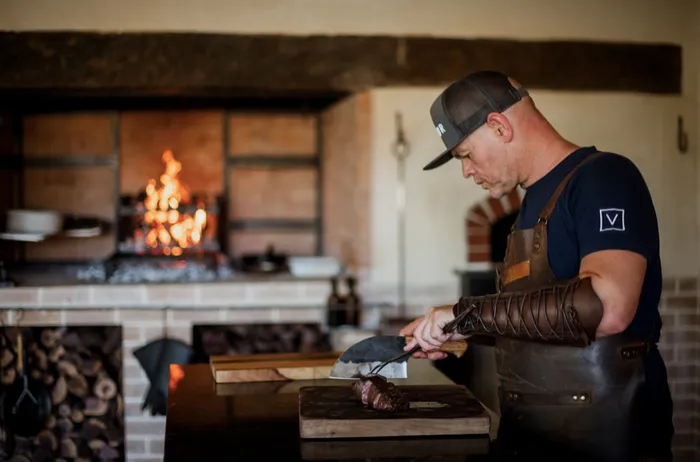
South Africa’s evolving culinary landscape continues to produce distinctive narratives that resist singular interpretation, with chefs drawing on layered personal histories, regional ecologies, and communal traditions. One such example is Shaun Scrooby, a Stellenbosch based chef whose route into fine dining did not follow conventional pathways. Before establishing VUUR restaurant at Remhoogte Wine Estate, Scrooby spent nearly two decades working as a safari guide, an experience that informs both the ethos and structure of his culinary practice.
Raised on a farm in South Africa, Scrooby’s early exposure to land based living and food production is evident in his approach to sourcing and preparation. His transition from guiding to cooking reflects a broader pattern within parts of southern Africa, where storytelling, environment, and hospitality intersect. In public interviews, Scrooby has noted that guiding shaped his understanding of how narratives are communicated across generations, particularly within African contexts where oral traditions remain central to knowledge transmission.
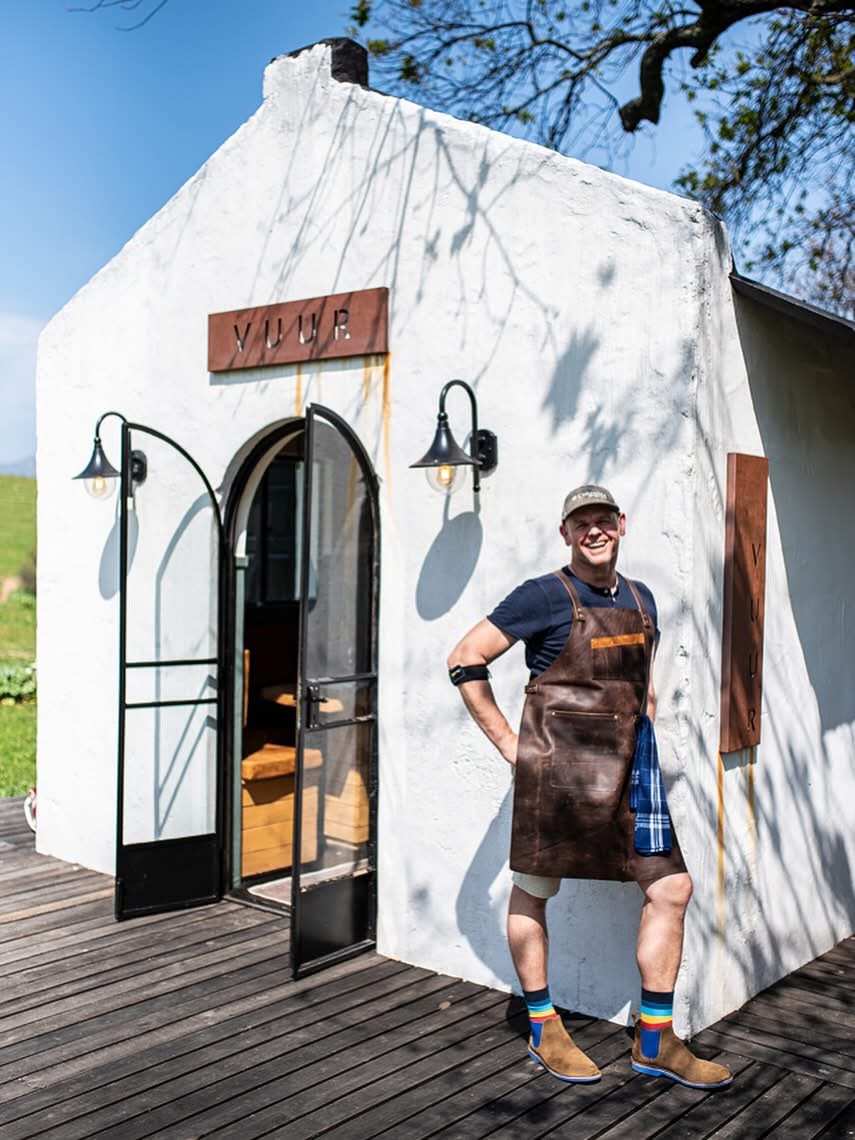




VUUR, which opened in 2022, occupies a converted stable on the Remhoogte estate in Stellenbosch, a region widely recognised for its wine production and increasingly for its culinary innovation. The restaurant has since been included in the World’s 101 Best Steak Restaurants rankings for multiple consecutive years, reflecting a degree of international recognition while remaining rooted in local practice.
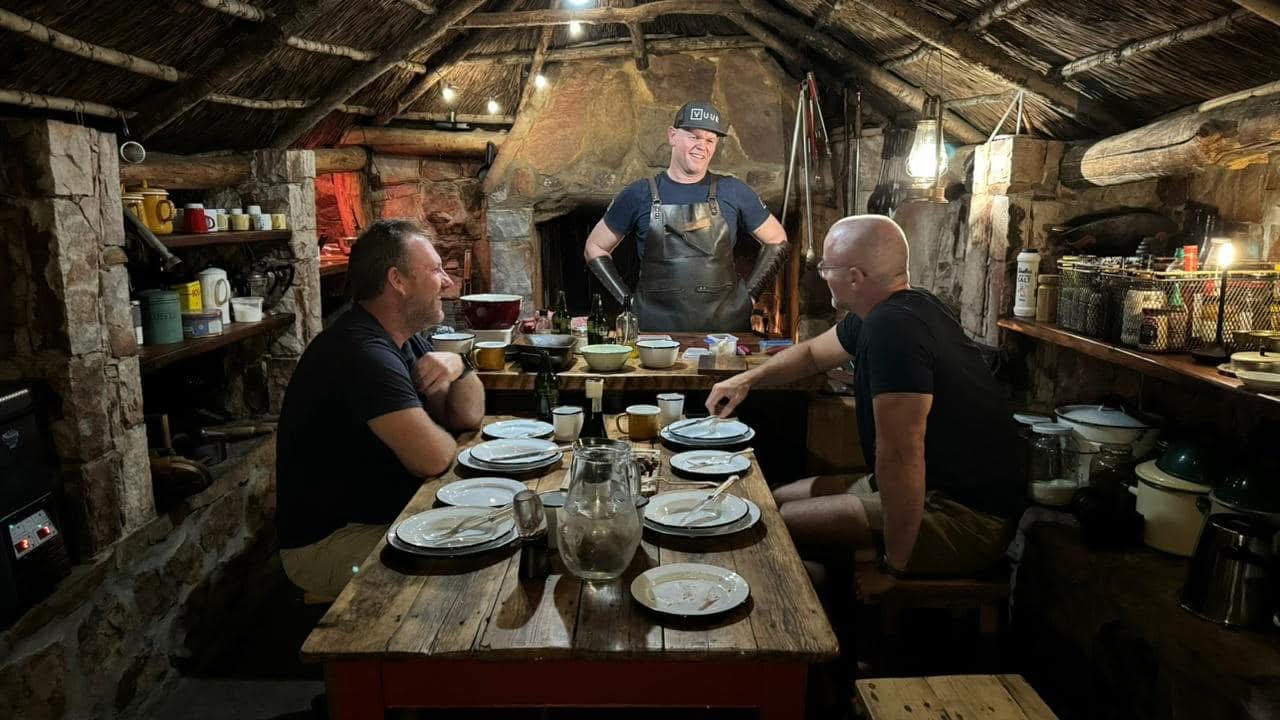
The restaurant operates on an intentionally limited scale, hosting a single table per service. This structure facilitates sustained interaction between diners and the kitchen, aligning with Scrooby’s stated intention to foreground connection rather than throughput. In this sense, the dining experience is positioned less as a transactional encounter and more as a shared social space, echoing forms of hospitality that are prevalent across many African settings.
Central to VUUR’s identity is its exclusive use of wood fire. Unlike conventional kitchens that rely on gas or electricity, all cooking is conducted over open flame, with different types of wood selected for their specific burning properties and flavour profiles. Hardwoods such as mopane and kameeldoring are used for meat preparation due to their ability to produce sustained heat and distinctive aromas, while lighter woods are used earlier in the cooking sequence for more delicate ingredients such as fish.
This method reflects a broader engagement with materiality, where fuel itself becomes part of the ingredient system rather than merely a means of heat generation. It also situates the restaurant within a wider African culinary lineage, where fire based cooking remains both practical and symbolic across diverse regions.
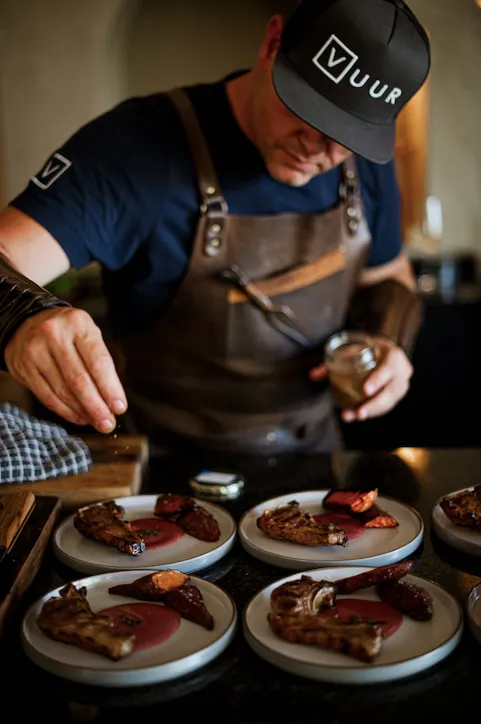
The menu at VUUR is not fixed. Instead, it is shaped by seasonal availability and relationships with local farmers, foragers, and suppliers. This adaptive approach resists standardisation and aligns with ecological rhythms, incorporating elements from land, sea, and cultivated gardens. While meat remains central, the structure of the meal reflects a broader balance of ingredients.
Importantly, the restaurant’s growing international profile does not appear to have displaced its local orientation. Rather, it highlights ongoing negotiations within African gastronomy between global recognition and place based specificity. In this context, VUUR can be understood not simply as a fine dining destination, but as part of a wider conversation about how African culinary practices are represented, adapted, and valued.
As the continent’s food narratives continue to gain visibility, establishments such as VUUR illustrate the possibility of maintaining grounded, context aware approaches while engaging with global platforms. The result is not a singular story of success, but a more layered account of how identity, environment, and craft intersect within contemporary African cuisine.


