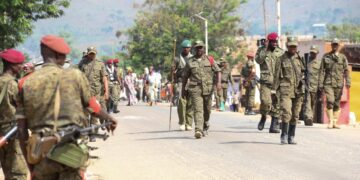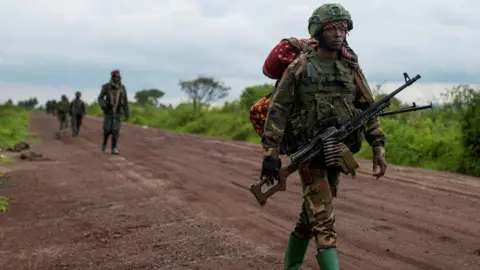
The Democratic Republic of Congo’s eastern region is once again engulfed in turmoil, with the escalation of the M23 insurgency marking a critical juncture in the country’s decades-long struggle for stability. The conflict, rooted in complex ethnic, political, and economic dynamics, has intensified dramatically since the beginning of 2025. M23 rebels, a Tutsi-led group, have captured significant swathes of territory and are closing in on Goma, the largest city in the region. This escalating violence raises concerns about a broader conflict reminiscent of the catastrophic wars that devastated the Great Lakes region between 1996 and 2003.
At its core, the March 23 Movement (M23) derives its name from a 2009 peace accord that ended a previous Tutsi-led rebellion in eastern Congo. The group accuses the Congolese government of failing to fulfil the agreement’s promises, particularly regarding the integration of Congolese Tutsis into the nation’s military and political frameworks. Additionally, M23 positions itself as a defender of Tutsi interests against ethnic Hutu militias such as the Democratic Forces for the Liberation of Rwanda (FDLR). The FDLR, founded by Hutus who fled Rwanda after the 1994 genocide, has long been a destabilizing force in the region, accused of targeting Tutsi communities in both Rwanda and Congo.
The resurgence of M23 has not only displaced hundreds of thousands of civilians but has also brought economic dimensions to the forefront of the conflict. The rebels control the lucrative coltan-mining region of Rubaya, generating an estimated $800,000 per month through a production tax. Coltan, a vital component in the manufacturing of smartphones and other electronics, represents a significant source of revenue that bolsters M23’s capacity to expand its operations. Recent territorial gains further enhance the group’s access to mineral wealth, potentially funding a protracted insurgency.



Compounding the crisis is the alleged involvement of Rwanda, a neighbouring country with a contentious history of military intervention in Congo. The Congolese government, alongside United Nations officials and Western powers, has accused Rwanda of providing direct support to M23. A 2022 report by the UN Group of Experts substantiated these claims, presenting evidence of Rwandan troops fighting alongside M23. While Rwanda denies these allegations, it justifies its actions as defensive measures, accusing Congo of collaborating with the FDLR. The historical animosity between the two nations, rooted in the aftermath of the Rwandan genocide and subsequent cross-border conflicts, adds a layer of complexity to the current crisis.
The international response to the M23 rebellion has been multi-faceted but fraught with challenges. The United Nations Organization Stabilization Mission in the Democratic Republic of the Congo (MONUSCO), which includes nearly 11,000 peacekeepers, has been instrumental in supporting Congolese forces. However, the deteriorating security situation has delayed the mission’s planned withdrawal. The Southern African Development Community (SADC) has also extended its military presence, with troops from South Africa, Malawi, and Uruguay joining efforts to counter M23. Tragically, these interventions have come at a significant human cost, with numerous peacekeepers losing their lives in recent months.

The escalating conflict in eastern Congo underscores the urgent need for a comprehensive and collaborative approach to address the underlying causes of instability. The international community must navigate the delicate interplay of local grievances, regional dynamics, and economic interests to foster sustainable peace. This includes holding all actors accountable, ensuring the equitable distribution of resources, and addressing the humanitarian crisis that continues to unfold.
As the situation develops, the prospect of an all-out conflict looms, with potentially devastating consequences for the Great Lakes region. Resolving the M23 insurgency is not only critical for the Democratic Republic of Congo but also for the broader stability of Central and Southern Africa.