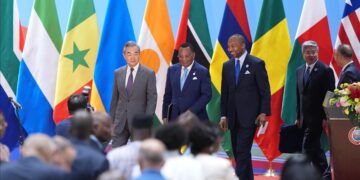
The United States has officially withdrawn from the Just Energy Transition Partnership (JETP), a global climate financing initiative designed to assist developing nations in transitioning from coal-dependent energy systems to renewable sources. This decision significantly impacts countries such as South Africa, Indonesia, and Vietnam, which were primary beneficiaries of the programme.
The JETP, established in 2021, aimed to provide a blend of loans, grants, and private investments totalling $45 billion to support these nations in reducing their reliance on fossil fuels. The United States, under the previous administration, had committed substantial financial resources to this initiative. However, the current administration under President Donald Trump, who has previously referred to climate change as a “hoax,” has reversed this commitment. In a recent executive order titled “Putting America First in International Environmental Agreements,” President Trump directed the cessation of U.S. involvement in the JETP and other international climate accords.
The repercussions of this withdrawal are particularly pronounced for South Africa. The nation was slated to receive $13.8 billion in funding to facilitate its shift from coal to renewable energy sources. With the U.S. retracting its $1.056 billion contribution, South Africa now faces a funding gap that could hinder its energy transition efforts. Joanne Yawitch, head of South Africa’s JETP unit, acknowledged the setback but affirmed that other international partners remain committed to supporting the country’s transition.



Indonesia, another major recipient under the JETP, was poised to receive $20 billion to support its energy transition. The U.S. withdrawal undermines the credibility of the programme, raising concerns about the fulfilment of financial pledges and the implementation of planned projects. An individual familiar with Indonesia’s participation expressed that the U.S. exit means “the credibility [of the JETPs] is lost.
This development occurs amidst broader global tensions regarding climate finance. At the recent COP29 summit in Baku, developing nations criticised wealthier countries for inadequate support in addressing climate change. The U.S. withdrawal from the JETP exacerbates these concerns, potentially hindering global efforts to reduce greenhouse gas emissions and combat climate change.

Despite the U.S. exit, other coalition members, including the European Union, United Kingdom, and Japan, have reiterated their commitment to the JETP. Germany has stepped up to co-lead Indonesia’s programme alongside Japan, aiming to mitigate the impact of the U.S. withdrawal and ensure the continuity of support for developing nations transitioning to sustainable energy sources.
The U.S. administration’s decision to withdraw from the JETP reflects a broader trend of retreating from international climate commitments. In January 2025, President Trump signed an executive order directing the U.S. withdrawal from the Paris Agreement for a second time, further distancing the nation from global climate initiatives.
The long-term implications of the U.S. withdrawal from the JETP remain uncertain. However, the steadfast commitment of other international partners offers a glimmer of hope for the continuation of global efforts to support developing nations in their pursuit of sustainable energy solutions.