Saturday, May 2, 2026
  • Login
The Southern African Times
  • Home
  • Southern Africa
  • Business
    • African Start ups
    • African Continental Free Trade Area
  • Technology
    • Lifestyle
      • Health
      • Culture
      • Food and Drink
      • Entertainment
  • Opinion
  • Sports
  • SAT Jobs
    • Events
  • About Us
    • Advertise with Us
    • Contact Us
No Result
View All Result
  • Home
  • Southern Africa
  • Business
    • African Start ups
    • African Continental Free Trade Area
  • Technology
    • Lifestyle
      • Health
      • Culture
      • Food and Drink
      • Entertainment
  • Opinion
  • Sports
  • SAT Jobs
    • Events
  • About Us
    • Advertise with Us
    • Contact Us
No Result
View All Result
The Southern African Times
No Result
View All Result
Home International Relations

Trump Administration Reinstates Global Tariffs as Deadline Passes, Leaving Key U.S. Trade Partners Without Agreements

by Times Reporter
July 31, 2025
in International Relations
0
U.S. Withdraws from Just Energy Transition Partnership

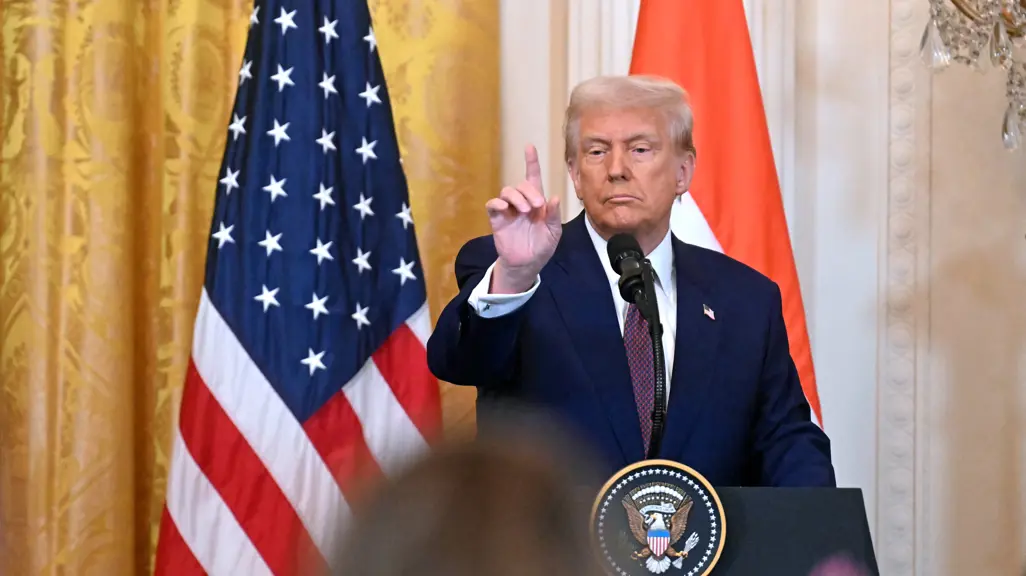
With the expiration of a four-month suspension on elevated U.S. tariff rates, the administration of President Donald Trump has formally reinstated its “reciprocal” tariff regime. As of 1 August 2025, only eight trade agreements have been finalised with key allies, while several major economies—including Canada, India, and Australia—remain without settlements and are now subject to elevated trade duties.

The United Kingdom was the first to conclude an agreement with Washington, introducing a 10% baseline tariff on British goods exported to the U.S., while securing limited exemptions for high-value sectors such as aerospace and automobiles. Unresolved issues, however, persist concerning U.S. tariffs on British steel and aluminium, as well as the UK’s digital services tax, which the Trump administration is pressuring to eliminate.

Vietnam reached a deal on 2 July, reducing its tariff rate from 46% to 20%. The agreement includes full U.S. market access and a 40% tariff on goods transshipped through Vietnam—an effort to curtail circumvention of existing levies on Chinese goods. However, reports indicate that Vietnamese officials were surprised by the final 20% rate, having anticipated a significantly lower figure of 11%.


ADVERTISEMENT

Indonesia’s agreement followed on 15 July, with tariffs cut from 32% to 19%. Jakarta also committed to eliminating barriers on more than 99% of American exports, including agricultural and energy products. The two countries pledged to address non-tariff barriers, although the mechanisms for enforcement remain vague.

On 22 July, the Philippines secured a marginal tariff reduction—from 20% to 19%—and the U.S. agreed to exempt Philippine exports from any new tariffs. President Trump praised the Philippines for what he described as adopting an “open market” approach. The agreement also alludes to increased military cooperation, though without concrete commitments. The two nations are longstanding defence partners under a 1951 mutual treaty.

Japan’s deal, finalised on 23 July, reduced tariffs to 15% and included a preferential rate for its automobile sector. Japan pledged to invest $550 billion in the United States, a claim framed by Trump as one of the largest trade-linked investment deals to date. However, the agreement emerged only after weeks of tense negotiations, during which the U.S. administration accused Tokyo of resisting agricultural imports, particularly rice.

The European Union reached its accord shortly before the 1 August deadline. The 27-member bloc negotiated a 15% baseline tariff—down from the initially proposed 30%—alongside reductions on automobile duties and the restoration of earlier rates on products such as aircraft components and pharmaceuticals. Despite the compromise, European political leaders expressed dissatisfaction, with French Prime Minister François Bayrou calling the deal “an act of submission,” in contrast to EU Trade Commissioner Maroš Šefčovič, who defended it as the best possible outcome under current constraints.

South Korea finalised a similar agreement, including a 15% blanket tariff on all exports and reductions on automobile tariffs. Trump announced a $350 billion investment pledge from Seoul to the U.S., with 90% of returns allegedly designated for American citizens. South Korean President Lee Jae-myung confirmed that the fund would facilitate entry for Korean companies into American sectors such as semiconductors and shipbuilding.

Conversely, trade talks with China remain incomplete. Initial tariffs set at 34% in April escalated to 145% following a series of retaliatory measures. A temporary truce in May lowered those figures to 30% for Chinese goods and 10% for U.S. goods, effective through 12 August. Negotiations have since stalled following inconclusive discussions in Stockholm.

India now faces a 25% tariff, with an unspecified penalty introduced in response to what the Trump administration described as “unfair trade practices” and continued military purchases from Russia. The U.S. president claimed that India maintains some of the highest tariff rates in the world and said these measures were necessary to redress structural imbalances.

Canada, a major U.S. trading partner, is now subject to a 35% tariff, a figure that may rise further if Ottawa responds with countermeasures. Ongoing talks have failed to yield a resolution. Trump has cited pharmaceutical exports and border-related issues as justifications for the tariff regime. Canadian Prime Minister Mark Carney noted that discussions have entered an “intense phase,” but acknowledged that a no-tariff agreement is unlikely.

Mexico, likewise, has seen no progress on a trade deal. A 30% tariff is being imposed on Mexican goods, with Washington threatening even steeper penalties if retaliatory measures are adopted. The Trump administration has pointed to drug trafficking and migration enforcement failures as underlying motivations for the levies.

Australia, which currently runs a trade deficit with the United States, has so far avoided punitive measures. It is subject to a 10% baseline tariff under existing terms, though this rate could rise to 15% or 20% if the U.S. amends its baseline levels across the board. Although Australia has not been publicly engaged in trade talks with the U.S., it recently eased restrictions on American beef imports, a move interpreted by the U.S. trade representative as a result of Trump administration diplomacy—an interpretation disputed by Australian Prime Minister Anthony Albanese.

With the tariff suspension officially lifted, the global trade environment is entering a phase marked by heightened uncertainty, potential supply chain disruptions, and new pressures on diplomatic relations. Countries that have not secured individual agreements face baseline tariffs of 15% to 20%, with the possibility of higher “reciprocal” rates for those running significant trade surpluses with the United States. The broader implications for global markets, emerging economies, and institutions like the World Trade Organization are likely to unfold in the months ahead.

Tags: Diplomacyeconomic policyglobal economicsGlobal MarketsInternational relationsInternational TradeprotectionismSouth Africa tradetrade agreementsTrump administrationUS tariffsWTO
Previous Post

United Nations to Establish Three New Global Offices in Kenya by 2026

Next Post

Rwanda’s Lawmakers Approve Peace Accord with DRC in Bid to Strengthen Regional Stability

Times Reporter

Related Posts

UN and AU Urge Faster Implementation of SDGs Across Africa
Diplomacy

UN and AU Urge Faster Implementation of SDGs Across Africa

by SAT Reporter
April 29, 2026
Zimbabwe warns nationals in South Africa after reports of anti-foreigner unrest
Diplomacy

Zimbabwe warns nationals in South Africa after reports of anti-foreigner unrest

by SAT Reporter
April 29, 2026
Russia and Rwanda Deepen Cooperation on Nuclear Energy and Trade
Diplomacy

Russia and Rwanda Deepen Cooperation on Nuclear Energy and Trade

by SAT Reporter
April 21, 2026
LONG READ | Macky Sall’s UN bid tests AU procedure more than African unity
International Relations

LONG READ | Macky Sall’s UN bid tests AU procedure more than African unity

by SAT Reporter
April 10, 2026
Madagascar Balances Russia and France Ties During Transition
International Relations

Madagascar Balances Russia and France Ties During Transition

by SAT Reporter
April 10, 2026
Next Post
Rwanda’s Lawmakers Approve Peace Accord with DRC in Bid to Strengthen Regional Stability

Rwanda’s Lawmakers Approve Peace Accord with DRC in Bid to Strengthen Regional Stability

Browse by Category

  • Africa AI
  • African Continental Free Trade Area
  • African Debt
  • African Start ups
  • Agriculture
  • AI Africa
  • Algeria
  • All News
  • Analysis
  • Angola
  • Arts / Culture
  • Asia
  • Botswana
  • BOTSWANA
  • BREAKING NEWS
  • BRICS
  • Burkina Faso
  • Burundi
  • Business
  • Business
  • Business Wire
  • Cameroon
  • Central Africa
  • Chad
  • China
  • Climate Change
  • Climate Changev
  • Community
  • Congo Republic
  • Conservation
  • Côte d’Ivoire
  • COVID 19
  • CRYPTOCURRENCY
  • Culture
  • Democratic Republic of Congo
  • Diplomacy
  • Eastern Africa
  • Economic Development
  • Economy
  • Education
  • Egypt
  • Elections 2024
  • Energy
  • Entertainment
  • Environment
  • Eritrea
  • Ethiopia
  • Europe
  • Fashion
  • Feature
  • Finance
  • Financial Inclusion
  • Food
  • Food and Drink
  • Foods
  • GABON
  • Ghana
  • Global
  • Global Africa
  • Guinea
  • Health
  • Immigration
  • in Southern Africa
  • International news
  • International Relations
  • Investment
  • Ivory Coast
  • Just In
  • Kenya
  • Lesotho
  • Libya
  • Life Style
  • Lifestyle
  • Literature
  • Malawi
  • Malawi
  • Mali
  • Markets
  • Mauritius
  • Middle East
  • Mining in Africa
  • Morocco
  • Mozambique
  • Namibia
  • Niger
  • niger
  • Nigeria
  • North Africa
  • North-Eastern Africa
  • Obituaries
  • Obituary
  • Opinion
  • PARTNER CONTENT
  • Politics
  • Property
  • Racism
  • Rwanda
  • Rwanda
  • SADC
  • SAT Interviews
  • SAT Investigation
  • SAT Jobs
  • Saudi Arabia
  • Senegal
  • Seychelles
  • Somaliland
  • South Africa
  • South Sudan
  • Sports
  • Startup Africa
  • STOCK EXCHANGE
  • Sudan
  • Sustainability
  • Sustainablity
  • Tanzania
  • Technology
  • Telecommunications
  • The Editorial Board
  • The Power Of She
  • Togo
  • Trade
  • Travel
  • Travel
  • Tunisia
  • Uganda
  • Uncategorized
  • Wealth
  • West Africa
  • World
  • World
  • Zambia
  • ZAMBIA
  • ZIMBABWE
  • Zimbabwe

Browse by Tags

#NewsUpdate #SouthAfrica #SouthernAfricanTimes #TheSouthernAfricanTimes AfCFTA africa African Continental Free Trade Area African development African Development Bank African economies African economy African Union Agriculture Angola Botswana Business China Climate change Cyril Ramaphosa Economic Development economic growth energy transition fiscal policy industrialisation Inflation Infrastructure Infrastructure Development International relations Investment Kenya Mozambique Namibia news Nigeria Regional Integration renewable energy Rwanda SADC South Africa Southern Africa sustainable development Tanzania United States Zambia Zimbabwe
ADVERTISEMENT

WHO WE ARE

The Southern African Times is a regional bloc digital newspaper that covers Southern African and world news. The paper also gives a nuanced analysis on news and covers a wide range of reporting which include sports, entertainment, foreign affairs, arts and culture.

Welcome Back!

Login to your account below

Forgotten Password?

Retrieve your password

Please enter your username or email address to reset your password.

Log In

  • Home
  • Southern Africa
  • Business
    • African Start ups
    • African Continental Free Trade Area
  • Technology
    • Lifestyle
      • Health
      • Culture
      • Food and Drink
      • Entertainment
  • Opinion
  • Sports
  • SAT Jobs
    • Events
  • About Us
    • Advertise with Us
    • Contact Us
Are you sure want to unlock this post?
Unlock left : 0
Are you sure want to cancel subscription?