

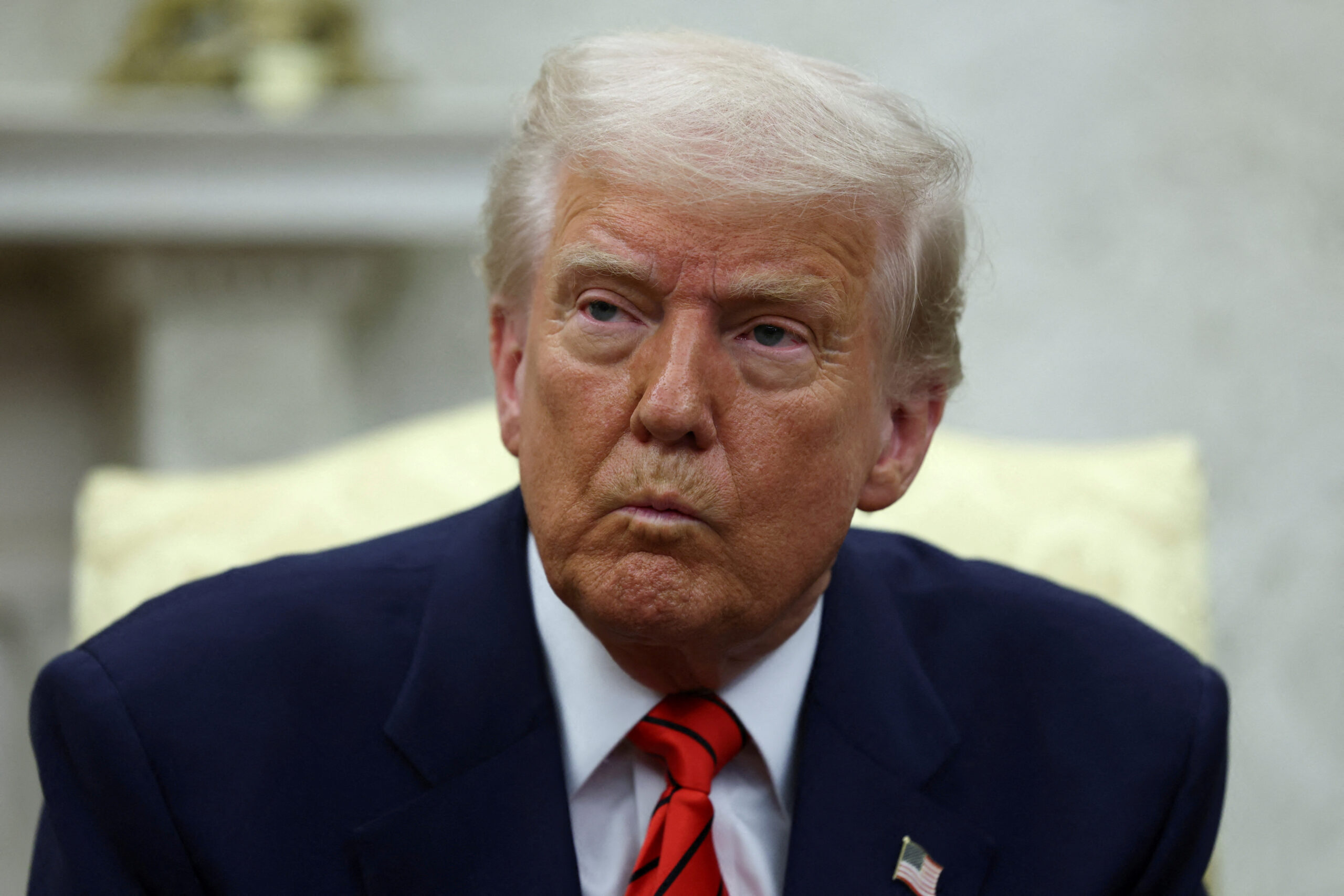
The United States has announced an expansion of its travel restrictions regime following the signing of a new presidential proclamation by President Donald J Trump. The measures extend both full and partial entry limitations on nationals from a range of countries, including several across Africa, and are framed by the administration as a response to national security and public safety concerns linked to screening, vetting and information sharing capacities.
According to the White House, the proclamation builds on earlier executive actions and follows a review conducted under Executive Order 14161 and Proclamation 10949, which was reinstated in June 2025. The administration states that the policy is designed to restrict entry where the United States lacks sufficient information to assess potential risks posed by foreign nationals seeking admission. The full text of the proclamation and its stated rationale are outlined by the White House at https://www.whitehouse.gov.
Under the revised framework, full entry restrictions remain in place for nationals of countries previously designated as high risk, including Afghanistan, Eritrea, Libya, Somalia, Sudan and Yemen. Five additional countries have been added to the full suspension list, namely Burkina Faso, Mali, Niger, South Sudan and Syria. Laos and Sierra Leone, which were previously subject to partial restrictions, have been moved to full suspension.



The proclamation also introduces restrictions on individuals travelling on Palestinian Authority issued or endorsed travel documents. The administration cites the security situation in the West Bank and Gaza Strip and limitations on current vetting mechanisms as the basis for this decision.
Partial restrictions have been expanded to include a further group of countries, many of them in Africa. These include Angola, Benin, Côte d’Ivoire, Gabon, The Gambia, Malawi, Mauritania, Nigeria, Senegal, Tanzania, Zambia and Zimbabwe. The measures apply to certain immigrant visas as well as selected non immigrant categories such as business, tourism, student and exchange visas.
The justification for these designations relies heavily on data from the United States Department of Homeland Security Entry and Exit Overstay Reports for fiscal years 2023 and 2024, available at https://www.dhs.gov/immigration-statistics. The administration points to visa overstay rates, cooperation on repatriation of removable nationals, the integrity of civil documentation systems and broader security conditions as relevant indicators.
However, the relationship between immigration compliance data and national security risk remains contested. Academic research and US government assessments have consistently shown that visa overstays are predominantly non violent and do not in themselves constitute indicators of terrorism or serious criminal threat. DHS data over multiple years also demonstrates that a significant proportion of overstays originate from countries that are not subject to travel restrictions, including long standing US partners.

Critics further note that the policy applies restrictions collectively by nationality rather than through individualised risk assessment, despite the United States possessing extensive biometric and intelligence led screening tools. This approach has been upheld as lawful. In Trump v Hawaii, the US Supreme Court ruled that such restrictions fall within presidential authority under immigration law, emphasising the executive’s discretion in matters of entry and national security. The judgment is available at https://www.supremecourt.gov.
From an African perspective, the expanded restrictions sit within a wider global context in which mobility is unevenly distributed and closely linked to state capacity, geopolitical influence and historical inequality. Many of the structural challenges cited by US authorities, including incomplete civil registries and limited administrative reach, reflect broader development constraints rather than deliberate non cooperation. These constraints are themselves shaped by legacies of colonial extraction, conflict and unequal access to global capital and technology.
Notably, South Africa does not appear on either the full or partial restriction lists, despite a period of visible diplomatic strain between Pretoria and Washington over foreign policy positions and multilateral alignment. Media reports and diplomatic commentary have highlighted tensions surrounding South Africa’s global positioning and its relationship with Western partners, although the United States has not formally excluded South Africa from international travel regimes or multilateral processes. This distinction underscores the selective nature of the proclamation and suggests that mobility controls are not applied uniformly as instruments of diplomatic pressure.
The timing of the policy has also drawn attention in light of the United States’ role as co host of the 2026 FIFA World Cup alongside Canada and Mexico. The tournament, overseen by FIFA at https://www.fifa.com, is expected to involve extensive international travel by teams, officials, media and supporters. While the proclamation provides exemptions for athletes, diplomats and individuals whose entry is deemed to serve US national interests, broader concerns persist regarding perceptions of accessibility and inclusion for fans and cultural participants from the Global South.
The administration maintains that lawful permanent residents, existing visa holders and certain professional categories remain exempt, and that case by case waivers are available. Supporters argue that the policy incentivises cooperation from foreign governments and improvements in documentation and information sharing systems.
For African states and citizens, the implications of the expanded restrictions extend beyond immediate travel outcomes. They highlight the extent to which global mobility is shaped by asymmetries of power and narrative framing, where administrative data can be elevated to justify broad exclusions while deeper structural contexts remain under examined. An African centred reading of the policy situates individual travellers not as abstract risk profiles but as students, professionals, families and entrepreneurs navigating a global system in which access remains profoundly unequal.

In this sense, the proclamation represents not a definitive judgement on African societies, but a reflection of how security, sovereignty and mobility are currently negotiated within an international order that continues to privilege some forms of movement while constraining others.


