Wednesday, April 29, 2026
  • Login
The Southern African Times
  • Home
  • Southern Africa
  • Business
    • African Start ups
    • African Continental Free Trade Area
  • Technology
    • Lifestyle
      • Health
      • Culture
      • Food and Drink
      • Entertainment
  • Opinion
  • Sports
  • SAT Jobs
    • Events
  • About Us
    • Advertise with Us
    • Contact Us
No Result
View All Result
  • Home
  • Southern Africa
  • Business
    • African Start ups
    • African Continental Free Trade Area
  • Technology
    • Lifestyle
      • Health
      • Culture
      • Food and Drink
      • Entertainment
  • Opinion
  • Sports
  • SAT Jobs
    • Events
  • About Us
    • Advertise with Us
    • Contact Us
No Result
View All Result
The Southern African Times
No Result
View All Result
Home World Travel

The Last Great Bulls: Botswana’s Complex Balancing Act Over Its Elephants

by SAT Reporter
December 8, 2025
in Travel
0
The Last Great Bulls: Botswana’s Complex Balancing Act Over Its Elephants

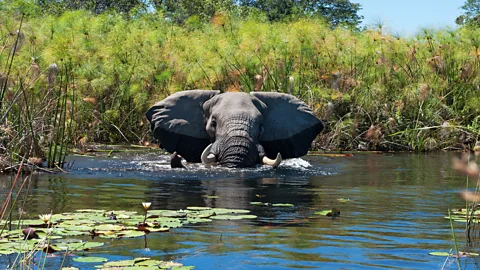
When Dr Mike Chase, founder of Elephants Without Borders (EWB), steers his small aircraft over Botswana’s northern woodlands, the view from above tells a story that is at once majestic and troubling. Scattered carcasses mark the earth where elephants once roamed, silent indicators of drought, poaching and hunting pressures. Beyond them, herds cast long shadows across the floodplains of Chobe, a region often described as the beating heart of southern Africa’s elephant stronghold.

The latest EWB report co-authored by Chase and conservation scientist Scott Schlossberg challenges prevailing narratives that Botswana is overburdened by elephants. Contrary to official claims of growth, aerial surveys conducted between 2010 and 2022 reveal that northern Botswana’s elephant population has remained stable at around 130,000. These figures contradict long-standing assertions that elephant numbers are increasing and overwhelming local ecosystems.

According to Chase, Botswana’s predicament is not one of excess but of understanding. “We do not have an elephant problem,” he explains. “We have an information problem. Too few rely on evidence, and the science that could guide us is too often left unused.”


ADVERTISEMENT

Scientific analysis indicates that while population size has remained stable, mortality indicators such as carcass ratios have been rising. Between late 2023 and mid-2025, EWB recorded at least 120 confirmed cases of elephant poaching, the majority involving mature males. The pattern mirrors earlier waves of killings in 2017 and 2018, suggesting a sustained targeting of large bulls prized for their ivory.

Botswana reinstated trophy hunting in 2019, citing rural livelihoods and conflict mitigation as justification. Supporters argue that the annual quota of roughly 430 elephants—around 0.3 percent of the national population—is negligible. Yet the scientific consensus is more nuanced. The removal of older bulls, which constitute only one to three percent of the total population, has disproportionate ecological and genetic effects. These bulls are key breeders, social teachers for younger males, and custodians of migratory knowledge crucial to survival during drought.

Modelling by EWB suggests that continued hunting at current levels could reduce the number of bulls aged 50 and above by half, while diminishing the 30-plus age cohort by a quarter compared with scenarios without hunting. When drought and poaching are factored in, the population pressures intensify further.

Northern Botswana faces increasing climatic stress, with projections indicating that severe drought could occur in up to 40 percent of years by 2080, according to regional climate studies by the Southern African Science Service Centre for Climate Change and Adaptive Land Management (SASSCAL). Drought not only depletes forage and water sources but also heightens human-wildlife tensions as elephants compete with communities for scarce resources. In such years, calf and female mortality increases, narrowing the age pyramid and reducing the number of males that will eventually mature into the large-tusked bulls favoured by both hunters and photographers.

EWB’s findings further suggest that many hunting concessions function as ecological “sink” areas—zones where elephants die faster than they can be naturally replaced. These zones depend on the dispersal of males from protected regions such as Chobe National Park and the Moremi Game Reserve. Yet recent surveys have documented shifts in elephant distribution, implying that herds may increasingly avoid such hunting areas. If this avoidance continues, the population of mature bulls could decline irrespective of official quotas.

The scientific foundations of Botswana’s hunting policy have also come under scrutiny. EWB’s review found that the government’s quota model, last updated in 2011, relied on outdated assumptions of steady population growth and unverified rates of cross-border elephant movement. These factors, alongside the absence of recent field data, make the model inadequate for present-day decision-making. Requests by researchers for access to quota data, including tusk measurements and the age and sex of hunted elephants, have reportedly gone unanswered.

Botswana’s government continues to frame hunting as a tool for reducing human-elephant conflict and providing rural income. Some community representatives endorse this view, noting that hunting revenues help finance local development projects. Others, however, argue that photographic tourism offers more sustainable long-term benefits. The tourism sector contributes approximately 12 percent of Botswana’s GDP and sustains over 100,000 jobs, with photographic safaris often centred on encounters with large, recognisable bulls.

Chase cautions that increasing hunting quotas or expanding concession areas risks depleting the very wildlife assets upon which both hunting and tourism depend. “Expanding extraction will not fix our economic or ecological challenges,” he warns. “It accelerates the loss of the resources that communities and industries alike rely upon.”

As the debate intensifies, Botswana finds itself navigating a delicate balance between community welfare, ecological sustainability, and economic resilience. The country hosts roughly one third of Africa’s remaining savannah elephants, positioning it at the centre of the continent’s broader conservation discourse. The question now confronting policymakers is how to align national policy with ecological realities without sacrificing the integrity of either livelihoods or landscapes.

Whether Botswana can reconcile these competing priorities may determine not only the fate of its elephants but also the future of African conservation models that seek to move beyond binary narratives of protection versus utilisation.

Tags: BotswanaChobe National ParkClimate changeconservation.elephantsElephants Without BorderspoachingSouthern Africasustainable developmenttourismtrophy huntingwildlife management
Previous Post

Tanzania Bars New Protests as Fears of Renewed Unrest Rise

Next Post

Gold’s Enduring Allure: Why Africa and the Global South May Benefit from the Metal’s Renewed Strength

SAT Reporter

Related Posts

China’s May Day Travel Turns Inward as African Tourism Feels Impact
Travel

China’s May Day Travel Turns Inward as African Tourism Feels Impact

by SAT Reporter
April 29, 2026
Rwanda Tourism Revenue Reaches 685 Million US Dollars as Sector Expands in 2025
Travel

Rwanda Tourism Revenue Reaches 685 Million US Dollars as Sector Expands in 2025

by SAT Reporter
April 29, 2026
South Africa and Angola Advance Regional Integration Through Tourism
Travel

South Africa and Angola Advance Regional Integration Through Tourism

by SAT Reporter
April 5, 2026
Morocco Records Steady Tourism Growth in Early 2026
Travel

Morocco Records Steady Tourism Growth in Early 2026

by SAT Reporter
April 4, 2026
Marriott Bonvoy expands African aviation ties through Ethiopian Airlines partnership
Travel

Marriott Bonvoy expands African aviation ties through Ethiopian Airlines partnership

by SAT Reporter
March 25, 2026
Next Post
Gold’s Enduring Allure: Why Africa and the Global South May Benefit from the Metal’s Renewed Strength

Gold’s Enduring Allure: Why Africa and the Global South May Benefit from the Metal’s Renewed Strength

Browse by Category

  • Africa AI
  • African Continental Free Trade Area
  • African Debt
  • African Start ups
  • Agriculture
  • AI Africa
  • Algeria
  • All News
  • Analysis
  • Angola
  • Arts / Culture
  • Asia
  • Botswana
  • BOTSWANA
  • BREAKING NEWS
  • BRICS
  • Burkina Faso
  • Burundi
  • Business
  • Business
  • Business Wire
  • Cameroon
  • Central Africa
  • Chad
  • China
  • Climate Change
  • Climate Changev
  • Community
  • Congo Republic
  • Conservation
  • Côte d’Ivoire
  • COVID 19
  • CRYPTOCURRENCY
  • Culture
  • Democratic Republic of Congo
  • Diplomacy
  • Eastern Africa
  • Economic Development
  • Economy
  • Education
  • Egypt
  • Elections 2024
  • Energy
  • Entertainment
  • Environment
  • Eritrea
  • Ethiopia
  • Europe
  • Fashion
  • Feature
  • Finance
  • Financial Inclusion
  • Food
  • Food and Drink
  • Foods
  • GABON
  • Ghana
  • Global
  • Global Africa
  • Guinea
  • Health
  • Immigration
  • in Southern Africa
  • International news
  • International Relations
  • Investment
  • Ivory Coast
  • Just In
  • Kenya
  • Lesotho
  • Libya
  • Life Style
  • Lifestyle
  • Literature
  • Malawi
  • Malawi
  • Mali
  • Markets
  • Mauritius
  • Middle East
  • Mining in Africa
  • Morocco
  • Mozambique
  • Namibia
  • niger
  • Niger
  • Nigeria
  • North Africa
  • North-Eastern Africa
  • Obituaries
  • Obituary
  • Opinion
  • PARTNER CONTENT
  • Politics
  • Property
  • Racism
  • Rwanda
  • Rwanda
  • SADC
  • SAT Interviews
  • SAT Investigation
  • SAT Jobs
  • Saudi Arabia
  • Senegal
  • Seychelles
  • Somaliland
  • South Africa
  • South Sudan
  • Sports
  • Startup Africa
  • STOCK EXCHANGE
  • Sudan
  • Sustainability
  • Sustainablity
  • Tanzania
  • Technology
  • Telecommunications
  • The Editorial Board
  • The Power Of She
  • Togo
  • Trade
  • Travel
  • Travel
  • Tunisia
  • Uganda
  • Uncategorized
  • Wealth
  • West Africa
  • World
  • World
  • ZAMBIA
  • Zambia
  • ZIMBABWE
  • Zimbabwe

Browse by Tags

#NewsUpdate #SouthAfrica #SouthernAfricanTimes #TheSouthernAfricanTimes AfCFTA africa African Continental Free Trade Area African development African Development Bank African economies African economy African Union Agriculture Angola Botswana Business China Climate change Cyril Ramaphosa Economic Development economic growth energy transition fiscal policy industrialisation Inflation Infrastructure Infrastructure Development International relations Investment Kenya Mozambique Namibia news Nigeria Regional Integration renewable energy Rwanda SADC South Africa Southern Africa sustainable development Tanzania United States Zambia Zimbabwe
ADVERTISEMENT

WHO WE ARE

The Southern African Times is a regional bloc digital newspaper that covers Southern African and world news. The paper also gives a nuanced analysis on news and covers a wide range of reporting which include sports, entertainment, foreign affairs, arts and culture.

Welcome Back!

Login to your account below

Forgotten Password?

Retrieve your password

Please enter your username or email address to reset your password.

Log In

  • Home
  • Southern Africa
  • Business
    • African Start ups
    • African Continental Free Trade Area
  • Technology
    • Lifestyle
      • Health
      • Culture
      • Food and Drink
      • Entertainment
  • Opinion
  • Sports
  • SAT Jobs
    • Events
  • About Us
    • Advertise with Us
    • Contact Us
Are you sure want to unlock this post?
Unlock left : 0
Are you sure want to cancel subscription?