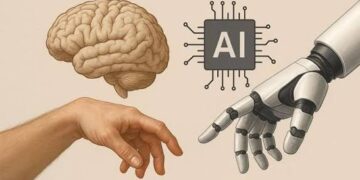
Trevor Ncube’s warning about artificial intelligence and the disruption heading toward banking, insurance, law, accounting and property should not be dismissed as alarmism. It is the sober reflection of someone who witnessed the internet dismantle an entire industry before the full force of its consequences became undeniable. What happened to print media did not occur overnight. It began quietly, accelerated unexpectedly, and eventually reshaped the landscape completely. Africa would be mistaken to assume that healthcare is insulated from a similar transformation. If anything, medicine across the continent may be more exposed than we realise.
Across Africa — from Lagos to Nairobi, from Johannesburg to Harare — healthcare systems are under pressure. The continent carries a disproportionate share of the global disease burden while specialist numbers remain critically limited. Chronic diseases are rising. Populations are growing. Infrastructure gaps persist. In some countries in Sub-Saharan Africa, there are fewer than one radiologist per 100,000 people. At the same time, mobile penetration is expanding rapidly and digital platforms are increasingly embedded in daily life. Artificial intelligence does not require a local supercomputer laboratory to disrupt a sector. It requires connectivity. And connectivity, even if uneven, is spreading across the continent. The same digital channels that imported global social media platforms will import AI driven healthcare tools.
Much of modern medicine, whether in London or Lusaka, is structured knowledge work. Radiologists interpret images. Pathologists examine patterns. Clinicians follow diagnostic pathways. Pharmacists review drug interactions. Medical insurers process claims. Hospital administrators reconcile data and manage compliance. These are highly intellectual tasks, but they are also pattern based. Artificial intelligence systems are designed precisely for pattern recognition, predictive modelling, and rule based processing. The question is not whether machines can think like doctors; it is whether machines can perform specific, repeatable cognitive tasks more quickly, consistently and at scale. Increasingly, the answer is yes.



Already, AI systems can detect abnormalities on chest X rays with impressive accuracy. Algorithms screen for diabetic retinopathy. Digital scribes generate clinical notes and reduce documentation burden. Predictive tools identify patients at risk of deterioration. Across the Global North, hospitals are integrating AI into triage systems, diagnostics and workflow management. Elements of this are already emerging in parts of Africa, particularly in tuberculosis screening and digital logistics. These systems will not remain confined to wealthy nations. They will travel through cloud services, software platforms and cross border partnerships into African healthcare environments. The disruption will not necessarily be dramatic. It may begin with administrative automation, decision support tools or remote diagnostic platforms. But its cumulative impact will be profound.
There is a comforting belief within medicine that Africa is protected by its infrastructural constraints. Many hospitals remain paper based. Specialist shortages are real. Broadband access is uneven. Yet this very assumption carries danger. The history of technological disruption teaches us that perceived lag can suddenly become leapfrog. Africa skipped extensive landline infrastructure and moved directly to mobile telephony. Mobile money transformed financial access. It is conceivable that we may adopt AI enabled healthcare in ways that bypass older legacy systems altogether. The issue is not whether AI will come. It is whether we will shape its integration or simply absorb it without preparation.
Zimbabwe offers a microcosm of the continental challenge. Our public hospitals operate under resource constraints. Rural communities face access barriers. Specialist distribution is uneven and brain drain has thinned subspecialty capacity. At the same time, Zimbabweans are digitally aware, entrepreneurial and increasingly connected. A patient with a smartphone can already access global medical information and AI powered health applications. Expectations are shifting quietly. When alternatives emerge, standards change. Healthcare systems must adapt accordingly.
But medicine is not banking, and it is not media. When automation transforms journalism, circulation declines and business models shift. When automation transforms finance, roles evolve and efficiencies emerge. When automation transforms healthcare, lives and trust are at stake. This moral weight demands a different level of responsibility. Artificial intelligence in African healthcare must not simply be about efficiency gains. It must be about improving outcomes, protecting equity and strengthening fragile systems.
There is real opportunity here. Africa faces severe shortages of specialists in radiology, pathology and subspecialty medicine. AI supported diagnostic tools could extend expertise into underserved regions. Predictive analytics could improve disease surveillance, particularly for communicable outbreaks. Decision support systems could assist overstretched clinicians and reduce avoidable errors. Intelligent triage platforms could reduce congestion in emergency settings. Used wisely, AI could amplify scarce human capacity rather than replace it.
Yet risk sits alongside opportunity. Data bias is not a theoretical concern. Many global AI models are trained on datasets that underrepresent African populations. Without careful validation and governance, imported algorithms may misclassify, misdiagnose or underperform in our contexts. Privacy frameworks are uneven across the continent. Regulatory capacity is still evolving. Workforce anxiety is real. If AI adoption is vendor driven, fragmented or poorly governed, it could widen inequality rather than reduce it.
This is where leadership becomes decisive. African ministries of health, professional bodies and academic institutions must begin treating AI not as a distant technological curiosity but as a present strategic issue. We need coherent national and regional strategies that address digital infrastructure, ethical governance, data protection, local validation of algorithms and workforce preparation. Medical curricula must evolve beyond memorisation toward critical reasoning, digital literacy and interdisciplinary collaboration. Clinicians must be involved in shaping AI deployment, not merely responding to it after implementation.
Zimbabwe, and indeed Africa, has an opportunity to engage proactively rather than reactively. We are not burdened by deeply entrenched legacy systems to the same degree as some advanced economies. That creates room for thoughtful design. If AI is introduced deliberately with transparency, regulatory clarity and professional oversight, it can reduce administrative burden, improve diagnostic accuracy and enhance rural access. But if introduced carelessly, it can erode trust and deepen disparities.

The broader continental conversation must therefore move beyond fear or blind optimism. Artificial intelligence is neither a saviour nor a villain. It is a powerful tool whose impact will depend on governance, context and values. Africa must decide whether it will consume imported systems passively or participate actively in shaping how those systems function within our health ecosystems.
The tsunami metaphor is apt, but incomplete. A tsunami is destructive because it strikes without preparation. Technology, by contrast, gives us warning. The signs are visible. The transformation is already underway. We cannot stop the tide of artificial intelligence in medicine. What we can do is prepare, regulate and lead with intention. If we anchor innovation in ethics, equity and compassion, Africa can harness AI to strengthen healthcare rather than destabilise it. Zimbabwe has both the responsibility and the opportunity to contribute meaningfully to that leadership.

Dr Brighton Chireka is a Zimbabwean UK based primary healthcare physician, AI in Healthcare Strategy and Ethical Implementation Advisor, and medical leadership trainer and coach, serving as a bridge between engineers and clinicians to shape ethical, human centred healthcare in the age of artificial intelligence.
Disclaimer: The views expressed in this article are those of the author and do not necessarily reflect the editorial position of The Southern African Times.