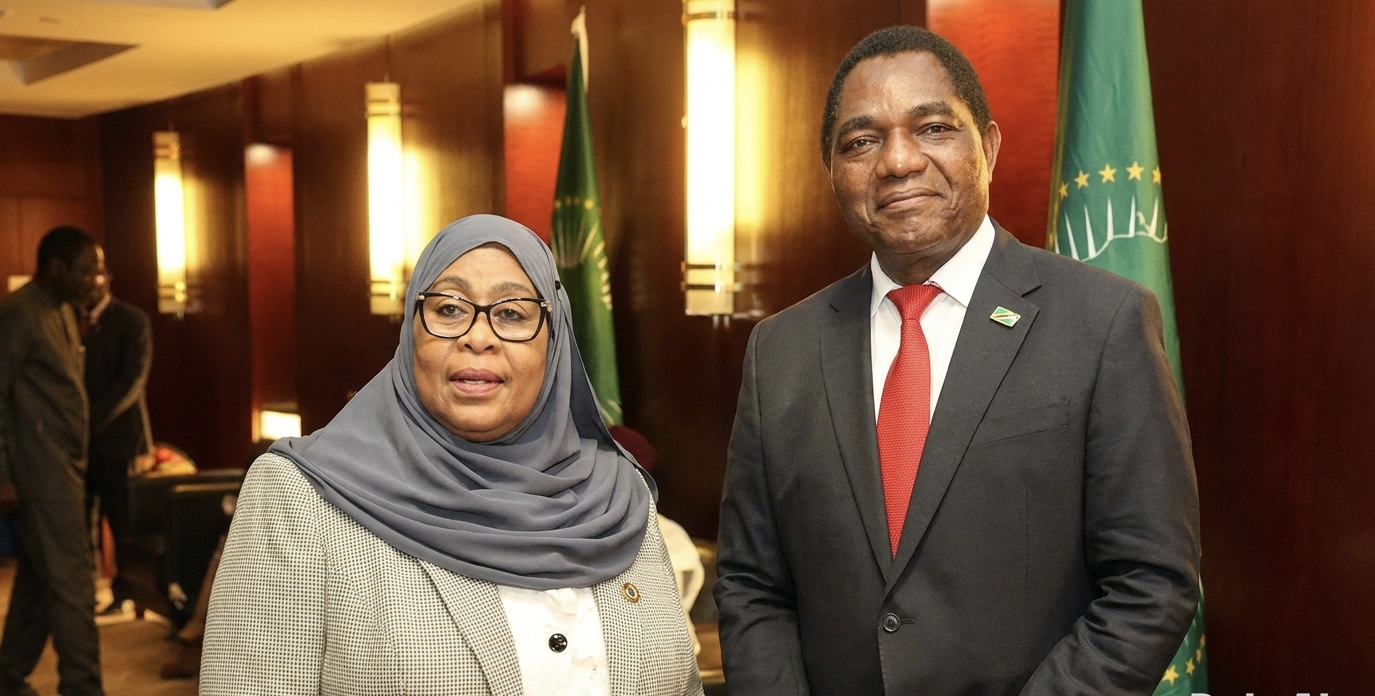
Tanzania and Zambia have agreed to intensify efforts to remove trade barriers as part of broader initiatives to strengthen bilateral economic cooperation, regional trade and cross border investment within Southern Africa.
The agreement was reached during a Joint Trade Committee ministerial meeting held in Tunduma, a strategic border town linking Tanzania and Zambia through the Tunduma Nakonde One Stop Border Post. Ministers and senior government officials from both countries reviewed the implementation of previous resolutions while assessing ongoing constraints affecting trade flows along one of the region’s most significant transport corridors.
According to Tanzanian Deputy Minister for Industry and Trade Dennis Londo, approximately 20 trade related challenges were discussed during the meeting, with seven issues resolved through bilateral engagement and technical coordination between the two governments.



Among the measures agreed upon was the harmonisation of fuel measurement standards through mutual recognition arrangements between relevant regulatory authorities. Officials also confirmed the removal of restrictions on night time cargo transportation in Zambia, allowing freight movement on a continuous 24 hour basis along key regional routes.
The meeting further addressed customs and border management systems. Authorities from both countries confirmed progress in the first phase of a customs information exchange system and announced the commencement of the second phase of systems integration designed to improve cargo clearance processes and reduce delays for transport operators and traders.
The Tunduma Nakonde crossing forms part of the broader Dar es Salaam Corridor, which connects the port of Dar es Salaam to several land linked countries in Southern and Central Africa, including Zambia, the Democratic Republic of Congo and Malawi. The corridor remains a vital route for regional supply chains, industrial goods, fuel distribution and agricultural trade.
Officials from both countries stated that improving operational efficiency at the border would contribute to faster cargo movement, stronger regional value chains and increased commercial activity between communities on both sides of the frontier.
Trade between Tanzania and Zambia has shown continued growth in recent years. Tanzanian government figures presented during the meeting indicated that bilateral trade increased from approximately 312 million US dollars in 2024 to 349 million US dollars in 2025.

The latest discussions reflect wider continental efforts to strengthen intra African trade under frameworks such as the African Continental Free Trade Area, which seeks to expand economic cooperation across African markets by reducing non tariff barriers and improving connectivity between states.
Across Southern Africa, governments have increasingly prioritised transport infrastructure, customs modernisation and cross border coordination as part of long term strategies aimed at supporting industrialisation, regional production networks and economic resilience.

For many traders, transport operators and border communities, the practical implementation of such agreements carries implications beyond statistics and trade volumes. More efficient border systems can reduce transport costs, improve market access for small and medium enterprises and strengthen economic participation for communities historically affected by logistical bottlenecks and fragmented trade procedures.
The discussions in Tunduma also underscore the growing recognition among African states that regional integration is shaped not only through large scale policy commitments but through sustained cooperation on operational challenges that directly affect the movement of goods, services and people across the continent.