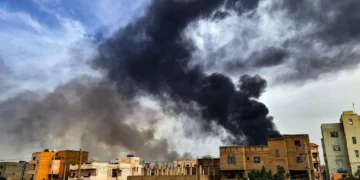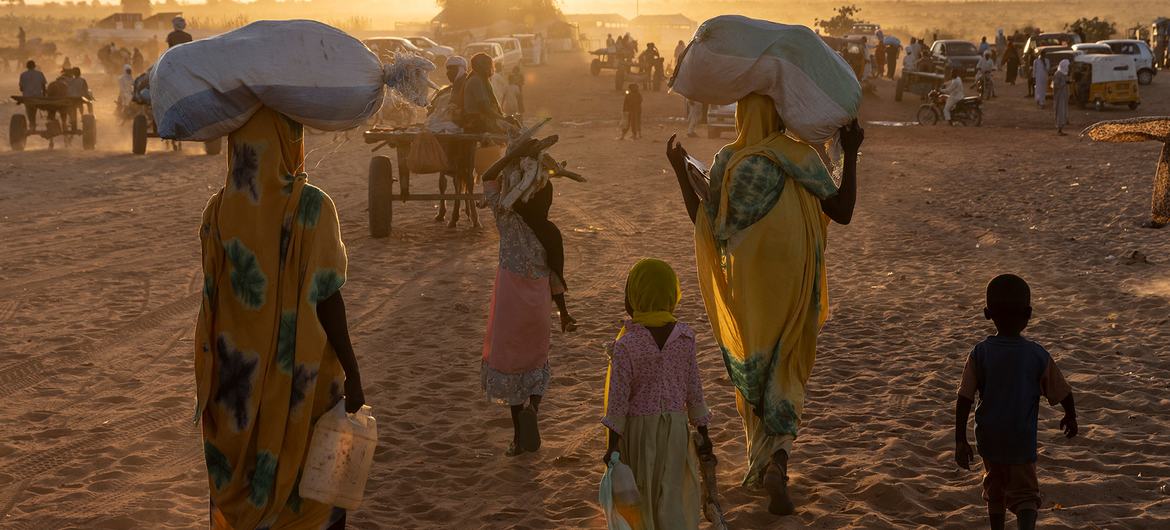
Two years into a devastating civil conflict, Sudan’s healthcare system is approaching collapse, with international health organisations and national authorities warning of unprecedented disruptions across all levels of medical service delivery. Amid ongoing clashes between the Sudanese Armed Forces (SAF) and the Rapid Support Forces (RSF), the nation is witnessing the disintegration of its fragile health infrastructure, compounding what the United Nations describes as one of the most severe humanitarian crises globally.
According to Sudan’s Ministry of Health, approximately 70 percent of hospitals in conflict-affected states, including Khartoum, Darfur, and Kordofan, have ceased operations entirely. In some areas, the figure is even more alarming. The International Committee of the Red Cross (ICRC) estimates that 70 to 80 percent of medical facilities are non-functional, rendering access to medical care unattainable for two-thirds of the population in those regions.
Nationwide, over 250 hospitals have shuttered, with more than 60 percent of pharmacies and medical supply warehouses looted or destroyed, according to the Health Ministry. The remaining operational facilities are severely strained, lacking essential drugs, medical equipment, and adequately trained personnel. As the violence rages on, these centres are overwhelmed by an influx of displaced civilians, many of whom are suffering from preventable and treatable conditions that are becoming fatal in the absence of care.



The World Health Organization (WHO) has described the situation as a catastrophic failure of public health provision. In a recent statement, WHO Regional Director for the Eastern Mediterranean, Dr Hanan Balkhy, stated: “Hospitals have run out of supplies; health workers are under threat and disease is spreading in areas we can barely reach.”
Communicable diseases are proliferating due to disrupted immunisation programmes and the collapse of basic sanitation systems. Médecins Sans Frontières (Doctors Without Borders) has identified active outbreaks of measles, cholera, and diphtheria, and the Ministry of Health also reports surging cases of malaria and dengue fever, particularly in overcrowded displacement camps and urban peripheries where health access is negligible.
The disruption of public health services has resulted in a surge of acute malnutrition, particularly among children under the age of five. Sudan, a nation of 50 million people, now has 60 percent of its population in urgent need of humanitarian aid, according to MSF and the United Nations Office for the Coordination of Humanitarian Affairs (UNOCHA). The WHO has raised the alarm on food insecurity, linking it directly to the deterioration in health outcomes.
Even in relatively stable areas such as parts of Omdurman, health facilities are under extraordinary pressure. Al-Nao Hospital, one of the few functioning centres in the city, is reportedly near exhaustion. “The burden is overwhelming,” said Dr Tasneem Al-Yasa, the hospital’s medical director, in an interview with The Southern African Times. “We are serving a massive population with depleted resources.”
Displacement has become an additional barrier to healthcare. Patients are risking their lives to reach operational medical centres. Ibrahim Mahmoud, a kidney patient from East Nile, recounted his perilous journey to a dialysis centre in Omdurman. “Travelling is dangerous,” he told Xinhua News Agency, “but we hope things will change.”
The scale of destruction in the healthcare sector is staggering. The Sudanese Health Ministry estimates total economic losses to the health system at approximately 11.04 billion U.S. dollars, encompassing damaged infrastructure, lost medical equipment, and obliterated supply chains. This estimate reflects the depth of the crisis, but experts caution that the real cost—measured in lives and human suffering—may never be fully accounted for.

The conflict itself erupted on 15 April 2023, rooted in tensions surrounding a proposed political transition and security sector reform. Initially a power struggle between General Abdel Fattah al-Burhan’s SAF and the RSF led by General Mohamed Hamdan Dagalo, the violence has since spiralled into a full-blown civil war. Tens of thousands have been killed, over 15 million displaced, and entire regions rendered inaccessible to humanitarian agencies.
In its latest assessment, the United Nations declared Sudan a “famine-risk” country, with a healthcare system “functionally collapsed.” Aid agencies face mounting challenges in delivering assistance due to security concerns, logistical breakdowns, and restricted access. Accurate mortality figures remain elusive, though satellite imagery and third-party analyses confirm that the humanitarian toll is immense.

While diplomatic efforts to broker a ceasefire have continued, notably under the auspices of the African Union and international stakeholders, no durable resolution has emerged. In the interim, Sudan’s civilian population remains exposed to disease, injury, and starvation—often without the means to seek or receive aid.
The devastation of Sudan’s healthcare infrastructure underlines the urgent need for an immediate cessation of hostilities, unimpeded humanitarian access, and the restoration of essential services. Without coordinated international support and a political solution, Sudan’s health crisis may deepen into an irreversible national catastrophe.