Wednesday, April 15, 2026
  • Login
The Southern African Times
  • Home
  • Southern Africa
  • Business
    • African Start ups
    • African Continental Free Trade Area
  • Technology
    • Lifestyle
      • Health
      • Culture
      • Food and Drink
      • Entertainment
  • Opinion
  • Sports
  • SAT Jobs
    • Events
  • About Us
    • Advertise with Us
    • Contact Us
No Result
View All Result
  • Home
  • Southern Africa
  • Business
    • African Start ups
    • African Continental Free Trade Area
  • Technology
    • Lifestyle
      • Health
      • Culture
      • Food and Drink
      • Entertainment
  • Opinion
  • Sports
  • SAT Jobs
    • Events
  • About Us
    • Advertise with Us
    • Contact Us
No Result
View All Result
The Southern African Times
No Result
View All Result
Home Finance

Sub Saharan Africa Growth Outlook Holds at 4.1 Per Cent as Global Pressures Persist

by SAT Reporter
April 9, 2026
in Finance
0
Sub Saharan Africa Growth Outlook Holds at 4.1 Per Cent as Global Pressures Persist

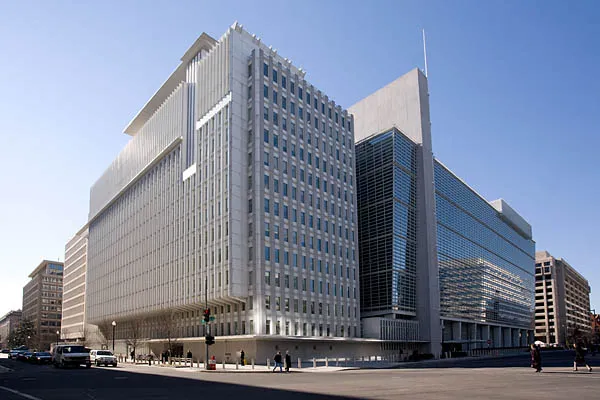
Sub Saharan Africa’s economic outlook for 2026 has been modestly revised downward, reflecting mounting global uncertainties that continue to shape the region’s recovery trajectory. According to the latest Africa Economic Updatepublished by the World Bank, growth is now projected to remain at 4.1 per cent, representing a reduction of 0.3 percentage points from earlier forecasts issued in October 2025.

The adjustment comes at a moment when many African economies are navigating the cumulative effects of successive global disruptions, including pandemic aftershocks, shifting trade dynamics, and evolving geopolitical tensions. While the projected growth rate suggests a degree of resilience across the region, the report notes that the broader recovery is showing signs of deceleration rather than acceleration.

Inflationary pressures remain a central concern. The World Bank projects that inflation across sub Saharan Africa will rise to approximately 4.8 per cent in 2026, influenced in part by global commodity price volatility linked to ongoing tensions in the Middle East. For many households across the continent, particularly those in low income brackets, rising costs of food, fuel, and agricultural inputs such as fertiliser continue to exert disproportionate pressure on livelihoods. These dynamics are especially significant in contexts where household expenditure is heavily weighted towards essential goods.


ADVERTISEMENT

The report further highlights tightening financial conditions as an additional constraint. Reduced access to affordable external financing, coupled with a decline in development assistance flows, is placing increasing strain on public finances in several low income economies. This evolving fiscal landscape may limit the capacity of governments to sustain social spending and invest in long term development priorities.

Despite these headwinds, the regional outlook is not uniform. Growth trajectories vary considerably across countries, shaped by domestic policy environments, resource endowments, and levels of economic diversification. Some economies continue to demonstrate adaptive capacity through structural reforms, regional trade integration, and investment in key sectors such as agriculture, energy, and digital infrastructure.

From a pan African perspective, the findings underscore the importance of strengthening intra continental economic linkages and reinforcing resilience through locally grounded strategies. The African Continental Free Trade Area and other regional frameworks remain central to these efforts, offering pathways to deepen value chains and reduce exposure to external shocks.

The World Bank’s assessment presents a measured view of the region’s prospects. It neither suggests a reversal of progress nor assumes a linear path to sustained growth. Instead, it points to a complex economic landscape in which global developments intersect with local realities, requiring nuanced and context specific responses from policymakers and institutions across the continent.

As sub Saharan Africa continues to navigate this period of uncertainty, the emphasis remains on balancing macroeconomic stability with inclusive growth, ensuring that economic adjustments do not disproportionately affect those already facing structural vulnerabilities.

Tags: African economiesAfrican growth outlook 2026development financeeconomic resilience Africageopolitical risks Africainflation AfricaSub Saharan Africa economyWorld Bank Africa Economic Update
Previous Post

COMESA Advances Coordinated Strategy to Strengthen AfCFTA Implementation

Next Post

Ethiopia Advances Nationwide Electric Vehicle Charging Network

SAT Reporter

Related Posts

National Building Society celebrates 10 year anniversary of banking prowess
Finance

National Building Society celebrates 10 year anniversary of banking prowess

by SAT Reporter
April 13, 2026
Africa Pushes for Fairer Sovereign Credit Ratings
Finance

Africa Pushes for Fairer Sovereign Credit Ratings

by SAT Reporter
April 6, 2026
Flutterwave Secures Nigerian Banking Licence
Finance

Flutterwave Secures Nigerian Banking Licence

by SAT Reporter
April 5, 2026
Mozambique Clears IMF Debt, Resets Financial Standing
Finance

Mozambique Clears IMF Debt, Resets Financial Standing

by SAT Reporter
April 5, 2026
CBZ deposits reach 1.1 billion dollars amid liquidity constraints
Finance

CBZ deposits reach 1.1 billion dollars amid liquidity constraints

by SAT Reporter
April 3, 2026
Next Post
Ethiopia Advances Nationwide Electric Vehicle Charging Network

Ethiopia Advances Nationwide Electric Vehicle Charging Network

Browse by Category

  • Africa AI
  • African Continental Free Trade Area
  • African Debt
  • African Start ups
  • Agriculture
  • AI Africa
  • Algeria
  • All News
  • Analysis
  • Angola
  • Arts / Culture
  • Asia
  • Botswana
  • BOTSWANA
  • BREAKING NEWS
  • BRICS
  • Burkina Faso
  • Burundi
  • Business
  • Business
  • Business Wire
  • Cameroon
  • Central Africa
  • Chad
  • China
  • Climate Change
  • Climate Changev
  • Community
  • Congo Republic
  • Conservation
  • Côte d’Ivoire
  • COVID 19
  • CRYPTOCURRENCY
  • Culture
  • Democratic Republic of Congo
  • Diplomacy
  • Eastern Africa
  • Economic Development
  • Economy
  • Education
  • Egypt
  • Elections 2024
  • Energy
  • Entertainment
  • Environment
  • Eritrea
  • Ethiopia
  • Europe
  • Fashion
  • Feature
  • Finance
  • Financial Inclusion
  • Food
  • Food and Drink
  • Foods
  • GABON
  • Ghana
  • Global
  • Global Africa
  • Guinea
  • Health
  • Immigration
  • in Southern Africa
  • International news
  • International Relations
  • Ivory Coast
  • Just In
  • Kenya
  • Lesotho
  • Libya
  • Life Style
  • Lifestyle
  • Literature
  • Malawi
  • Malawi
  • Mali
  • Markets
  • Mauritius
  • Middle East
  • Mining in Africa
  • Morocco
  • Mozambique
  • Namibia
  • niger
  • Niger
  • Nigeria
  • North Africa
  • North-Eastern Africa
  • Obituaries
  • Obituary
  • Opinion
  • PARTNER CONTENT
  • Politics
  • Property
  • Racism
  • Rwanda
  • Rwanda
  • SADC
  • SAT Interviews
  • SAT Investigation
  • SAT Jobs
  • Saudi Arabia
  • Senegal
  • Seychelles
  • South Africa
  • South Sudan
  • Sports
  • Startup Africa
  • STOCK EXCHANGE
  • Sudan
  • Sustainability
  • Sustainablity
  • Tanzania
  • Technology
  • Telecommunications
  • The Editorial Board
  • The Power Of She
  • Togo
  • Trade
  • Travel
  • Travel
  • Tunisia
  • Uganda
  • Uncategorized
  • Wealth
  • West Africa
  • World
  • World
  • ZAMBIA
  • Zambia
  • ZIMBABWE
  • Zimbabwe

Browse by Tags

#NewsUpdate #SouthAfrica #SouthernAfricanTimes #TheSouthernAfricanTimes AfCFTA africa African Continental Free Trade Area African development African Development Bank African economies African economy African Union Agriculture Angola Botswana Business China Climate change Cyril Ramaphosa Economic Development economic growth energy transition fiscal policy food security industrialisation Inflation Infrastructure Development International relations Investment Kenya Mozambique Namibia news Nigeria Regional Integration renewable energy Rwanda SADC South Africa Southern Africa sustainable development Tanzania United States Zambia Zimbabwe
ADVERTISEMENT

WHO WE ARE

The Southern African Times is a regional bloc digital newspaper that covers Southern African and world news. The paper also gives a nuanced analysis on news and covers a wide range of reporting which include sports, entertainment, foreign affairs, arts and culture.

Welcome Back!

Login to your account below

Forgotten Password?

Retrieve your password

Please enter your username or email address to reset your password.

Log In

  • Home
  • Southern Africa
  • Business
    • African Start ups
    • African Continental Free Trade Area
  • Technology
    • Lifestyle
      • Health
      • Culture
      • Food and Drink
      • Entertainment
  • Opinion
  • Sports
  • SAT Jobs
    • Events
  • About Us
    • Advertise with Us
    • Contact Us
Are you sure want to unlock this post?
Unlock left : 0
Are you sure want to cancel subscription?