South Sudan’s fragile peace process has come under severe strain following the detention of First Vice President Riek Machar in the capital, Juba. The move has sparked widespread concern, with the United Nations Mission in South Sudan (UNMISS) urging restraint and warning of potential instability should hostilities escalate.
The detention, which took place on Wednesday night, has raised fears of renewed conflict in a country that has endured years of political turmoil and civil war. Nicholas Haysom, the special representative of the UN Secretary-General to South Sudan and head of UNMISS, issued a statement calling on all parties to uphold the Revitalised Peace Agreement signed in 2018. Haysom cautioned that unilateral actions risk jeopardising the hard-won gains achieved over the past seven years, potentially plunging the country back into war. He stressed that such a development would not only devastate South Sudan but also have significant repercussions across the broader East African region.
Reath Muoch Tang, acting chairperson of the National Committee on Foreign Relations for the Sudan People’s Liberation Movement-in-Opposition (SPLM-IO), strongly condemned the arrest, describing it as a violation of the 2018 peace accord that formed the country’s unity government. According to Tang, the defence minister and the chief of national security were part of the convoy that delivered the arrest warrant, accompanied by more than 20 heavily armed vehicles that entered Machar’s residence. His bodyguards were reportedly disarmed before Machar was presented with an arrest order on charges that remain unclear. Attempts are allegedly underway to relocate him.



Tang characterised the incident as a blatant violation of South Sudan’s constitution and the Revitalised Peace Agreement, pointing out that no legal procedures, such as lifting Machar’s immunity, were followed. The SPLM-IO, which Machar leads, has played a crucial role in maintaining the delicate balance of power in the country since the signing of the peace deal, making his detention particularly alarming.
The UN has expressed concern that tensions could escalate further, citing recent clashes between government forces—the South Sudan People’s Defence Forces (SSPDF)—and Machar’s SPLM/A-IO near Juba. UNMISS has urged both President Salva Kiir and Machar to engage in immediate dialogue to de-escalate tensions, prevent further violence, and reassure the population of their shared commitment to peace. Haysom emphasised the urgent need for South Sudan’s leaders to prioritise stability, warning that the country stands at a crossroads between relapsing into conflict and moving forward towards democracy and recovery.
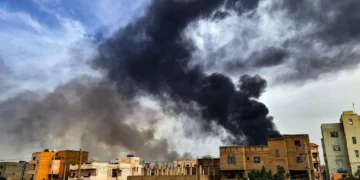
Meanwhile, in Upper Nile State, the situation remains volatile amid reports of armed mobilisation and aerial bombardments of civilian areas. UNMISS has documented claims that incendiary devices containing highly flammable liquid have been used, causing significant casualties and severe injuries. The ongoing violence underscores the fragile security environment and highlights the urgent need for diplomatic intervention to prevent further deterioration.
South Sudan, the world’s youngest nation, gained independence from Sudan in 2011. However, its early years of sovereignty were marred by a brutal civil war that erupted in 2013 between forces loyal to President Kiir and those aligned with Machar. The conflict claimed nearly 400,000 lives before the signing of the 2018 peace agreement, which sought to establish a power-sharing government. Despite the accord, relations between Kiir and Machar have remained fraught, and political tensions continue to unsettle both South Sudanese citizens and the international community.
The recent developments have led to intensified diplomatic efforts to broker a peaceful resolution. UNMISS has reiterated the importance of adhering to the agreements set forth in 2018, warning that any deviation risks undermining the country’s fragile peace. With South Sudan still recovering from the effects of its protracted civil war, stability remains imperative not just for the country but for the entire region.
As the international community watches closely, the actions of South Sudan’s leaders in the coming days will be critical in determining whether the country steps back from the brink of renewed conflict or moves forward in its pursuit of lasting peace.

Read more on South Sudan’s political landscape