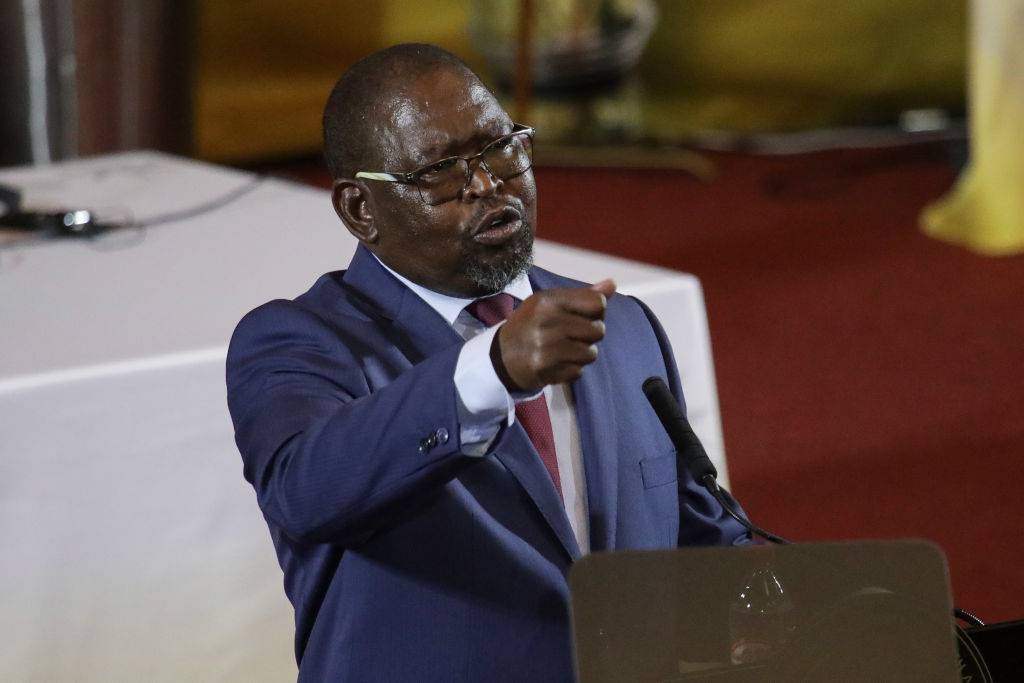
South Africa’s Finance Minister, Enoch Godongwana has introduced a revised budget proposing a staggered increase in the value-added tax (VAT) rate. The plan outlines an initial 0.5 percentage point rise from the current 15% on 1 April 2025, followed by another 0.5 percentage point increment in the subsequent financial year, ultimately bringing VAT to 16% by 2026.
This proposal marks a departure from the initial plan to implement a 2 percentage point VAT increase, which faced strong opposition within the coalition government. The African National Congress (ANC) encountered resistance from its partners, particularly the Democratic Alliance (DA), leading to the postponement of the budget presentation. The DA argued that such a significant tax hike would further burden consumers and intensify the cost-of-living crisis.
Beyond VAT adjustments, the revised budget proposes freezing personal income tax brackets, rebates, and medical tax credits at their current levels, effectively foregoing inflationary relief. This measure is expected to generate an additional R28 billion in the 2025/26 fiscal year and R14.5 billion in 2026/27, helping to bridge a growing fiscal deficit. The government is facing a R60 billion budget shortfall, worsened by the termination of U.S. funding for HIV/AIDS programmes under the Trump administration.



While the revised VAT proposal ensures a more gradual approach, it necessitates expenditure reductions in key social programmes. For instance, the older persons grant will increase by R130 per month instead of the originally proposed R150, while the child support grant will rise by R30 instead of R50.
Amid these fiscal constraints, the government has allocated an additional R46.7 billion for critical infrastructure projects, R35.2 billion to extend the social relief of distress grant for another year, and R8.2 billion to adjust social grants in line with inflation. Furthermore, R23.4 billion has been earmarked to fund public service wage increases, with a three-year agreement ensuring a 5.5% increase in 2025, followed by inflation-adjusted increments thereafter.

The National Treasury projects that the tax-to-GDP ratio will rise from 24.7% in 2024/25 to 25.4% in 2027/28. Meanwhile, economic growth forecasts remain unchanged at 1.9% for 2025, reflecting cautious optimism.
The proposed VAT increase remains a contentious issue, with the DA reiterating its opposition due to concerns over consumer impact and economic strain. With the ANC lacking an outright majority, support from its coalition partners will be crucial for budget approval, making upcoming parliamentary deliberations pivotal.
As the budget process unfolds, the government must navigate the precarious balance between fiscal consolidation and economic stimulation while mitigating the impact on vulnerable communities. The outcome of this process will significantly shape South Africa’s economic landscape in the years ahead.