South Africa has indicated that it will no longer participate in the upcoming Group of Seven summit scheduled to take place in Évian les Bains, France, in June, following what it describes as the withdrawal of an earlier invitation extended by the French government.
According to the South African presidency, the decision was communicated after sustained diplomatic pressure from the United States, which reportedly signalled its intention to boycott the summit should South Africa be included. The claim was conveyed by presidential spokesperson Vincent Magwenya, who stated that Pretoria had been informed of the development through diplomatic channels.
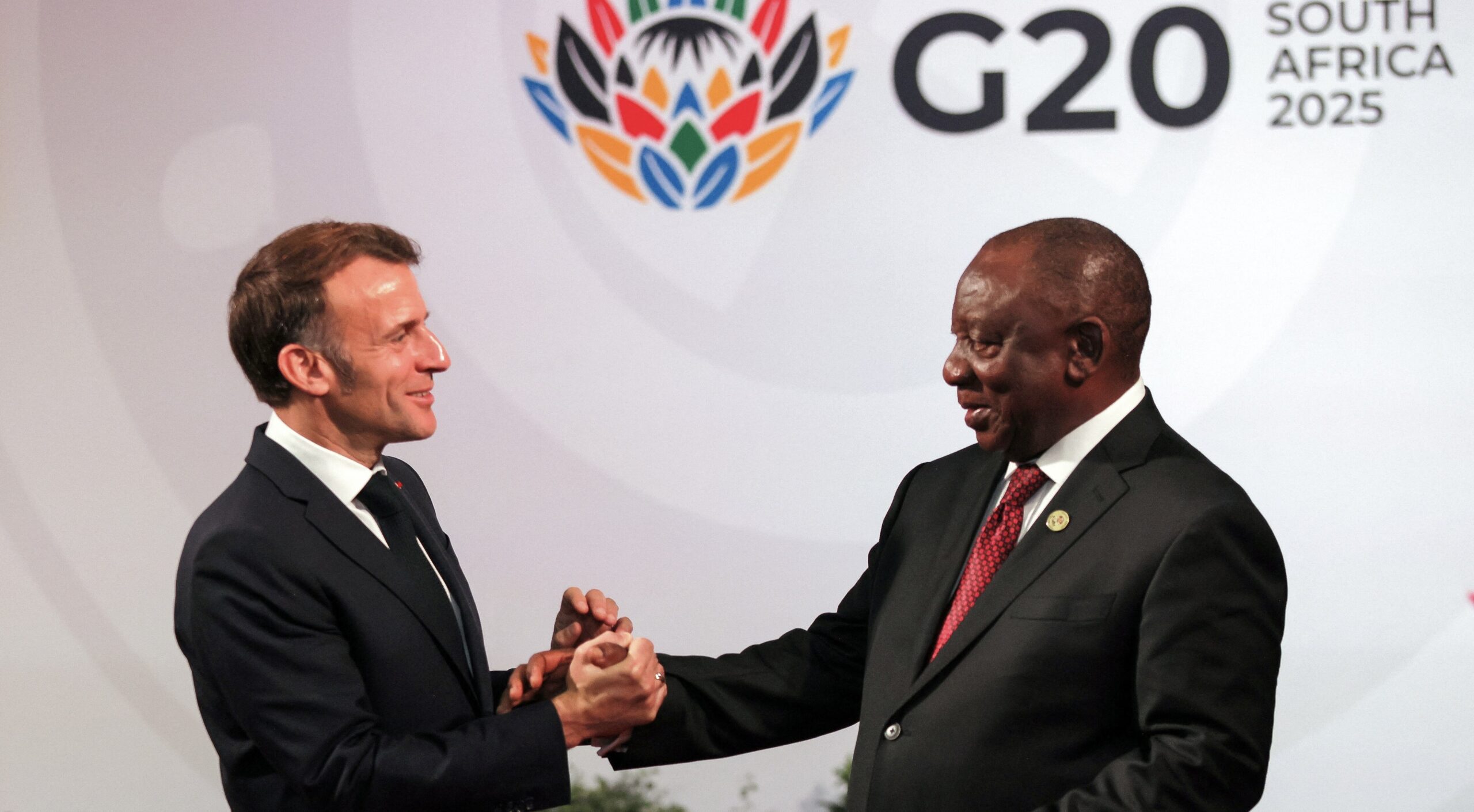
The French presidency has not publicly detailed the circumstances surrounding the reported withdrawal. However, it is understood that President Emmanuel Macron had previously extended a personal invitation to President Cyril Ramaphosa during the Group of Twenty summit hosted in South Africa in November 2025. Such invitations to non member states are not uncommon in G7 processes, where host nations often include strategic partners from the Global South to broaden dialogue on global economic governance and development.



The reported reversal comes against the backdrop of increasingly strained relations between South Africa and the United States. Since President Donald Trump’s return to office in 2025, bilateral tensions have surfaced across a range of issues, including Washington’s criticism of South Africa’s domestic transformation policies and Pretoria’s foreign policy positions.
The United States administration has publicly challenged South Africa’s Black economic empowerment framework and has also expressed opposition to Pretoria’s legal case at the International Court of Justice concerning Israel’s conduct in Gaza. In addition, statements by President Trump alleging systemic violence against white South Africans have been widely disputed by researchers, civil society organisations, and official crime statistics available through Statistics South Africa.
South Africa’s diplomatic posture has consistently emphasised multilateralism and adherence to international legal frameworks, including its engagement at the International Court of Justice. Its participation in platforms such as BRICS and the African Union reflects a broader effort to position African perspectives within global governance debates.

Analysts say the reported exclusion carries implications that extend beyond diplomatic symbolism. Dr Thandiwe Mokoena, a Johannesburg based political economist, notes that South Africa remains one of the continent’s most integrated economies within global capital markets, serving as a key gateway for portfolio investment into Africa. She argues that episodes of geopolitical friction involving Pretoria and major Western economies have historically influenced investor sentiment, particularly in currency volatility, sovereign risk perception, and capital flows.
While no immediate market dislocation has been formally attributed to the current development, analysts note that diplomatic tensions with the United States can affect trade frameworks such as the African Growth and Opportunity Act, which underpins preferential access for several African exports to US markets. Any uncertainty around such arrangements can have second order effects across regional value chains, particularly in manufacturing and agriculture sectors linked to South Africa’s export ecosystem.
In Washington, policy discussions appear to reflect a more strategic framing of the issue. Michael Harrington, a congressional foreign policy adviser, suggests that tensions with South Africa are being interpreted within a broader recalibration of United States engagement with countries perceived to be pursuing more independent or non aligned foreign policies. He indicates that debates within Congress increasingly link trade, diplomacy, and geopolitical alignment.
At the same time, analysts observe that the situation may reinforce ongoing shifts in Africa’s economic partnerships. South Africa’s alignment within BRICS, alongside expanding intra African trade under the African Continental Free Trade Area, signals a gradual diversification away from traditional North Atlantic centred economic relationships. This diversification has been accompanied by increased engagement with Asian, Middle Eastern, and Latin American markets, reshaping trade corridors and investment flows across the continent.
For regional economies, South Africa’s diplomatic positioning often has spillover effects. As a financial and logistics hub, developments affecting its external relations can influence broader Southern African Development Community trade dynamics, cross border banking systems, and infrastructure financing pipelines. However, policymakers across the continent have increasingly emphasised resilience through regional integration and domestic market development as buffers against external geopolitical shocks.
Despite the reported G7 development, Pretoria has sought to maintain a measured tone. Magwenya noted that the decision would not diminish bilateral relations with France, describing ties between the two countries as strong and longstanding. He further emphasised South Africa’s intention to continue constructive engagement with the United States, suggesting that current tensions should be viewed within a longer historical trajectory of diplomatic relations.
For many observers across the continent, the episode underscores ongoing questions about the inclusivity and representativeness of global decision making forums. While the G7 remains an influential grouping of advanced economies, its engagement with African states often occurs through invitation rather than membership, raising broader considerations about voice, agency, and structural reform in international institutions.
From a pan African perspective, South Africa’s experience reflects a wider pattern in which African states navigate complex geopolitical alignments while asserting independent policy positions. The evolving situation may therefore be read not only as a bilateral issue but also as part of a broader conversation about Africa’s role in shaping global governance on its own terms, while simultaneously recalibrating its economic partnerships in an increasingly multipolar world.
As preparations for the summit continue, it remains to be seen whether further clarification will emerge from Paris or Washington regarding the circumstances of the reported disinvitation. For now, South Africa’s position signals both a commitment to diplomatic engagement and a reaffirmation of its strategic autonomy within an increasingly contested international landscape.