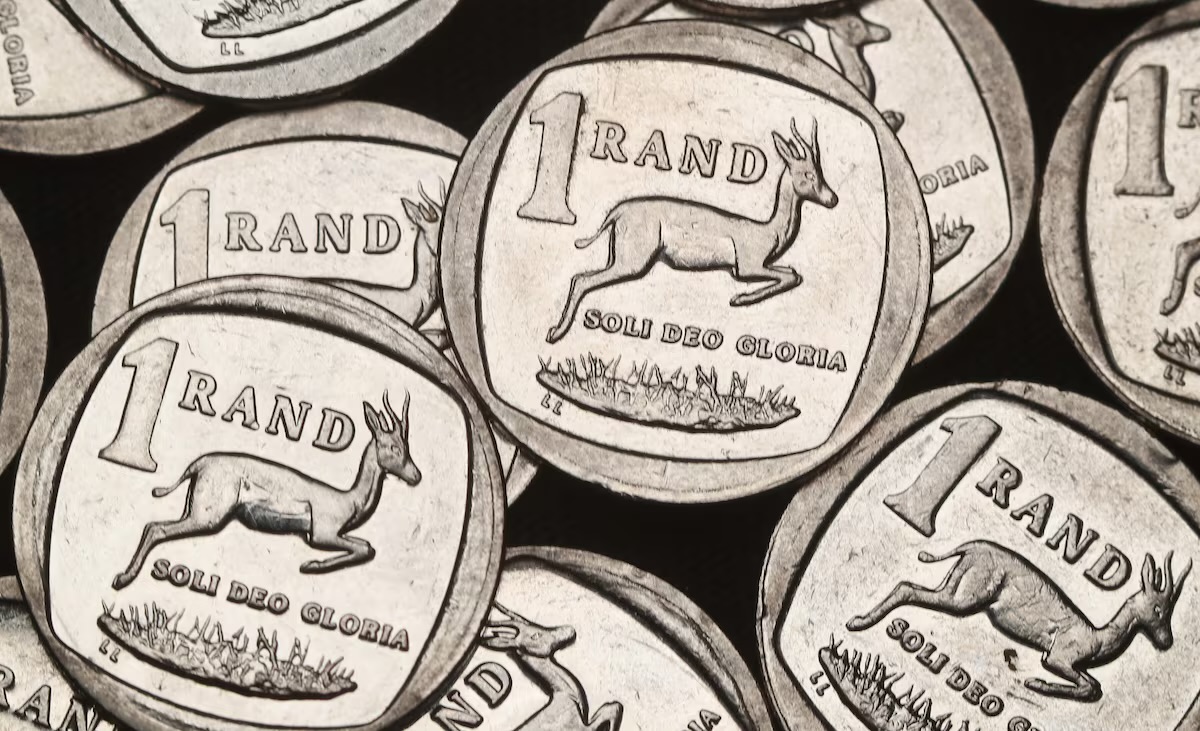
South Africa’s rand weakened in early trading on Tuesday as markets awaited the country’s fourth-quarter GDP figures and assessed the impact of U.S. President Donald Trump’s latest tariff measures.
By 07:15 GMT, the rand had slipped 0.3% to trade at 18.64 against the U.S. dollar. This decline came despite the dollar trading slightly weaker against a basket of global currencies.
Trump announced on Monday that 25% tariffs on Canadian and Mexican imports would take effect on Tuesday, with reciprocal tariffs from those countries set to begin on April 2. The news has rattled global markets, with investors weighing potential spillover effects on emerging economies like South Africa.



Locally, all eyes were on the fourth-quarter GDP figures, due at 09:30 GMT, which could provide insights into the health of Africa’s most industrialized economy. TreasuryONE currency strategist Andre Cilliers noted that a strong GDP reading could offer some support for the rand. However, he cautioned that ongoing uncertainty surrounding South Africa’s national budget remains a significant risk factor, as divisions within the ruling coalition led to the budget’s postponement last month.

On the Johannesburg Stock Exchange, the blue-chip Top-40 index was down about 0.7% in early trading, reflecting cautious investor sentiment. Meanwhile, South Africa’s benchmark 2030 government bond remained relatively stable, with the yield hovering at 9.085%.
With economic and geopolitical risks mounting, traders and analysts will be watching both local and international developments closely to gauge the rand’s next move.