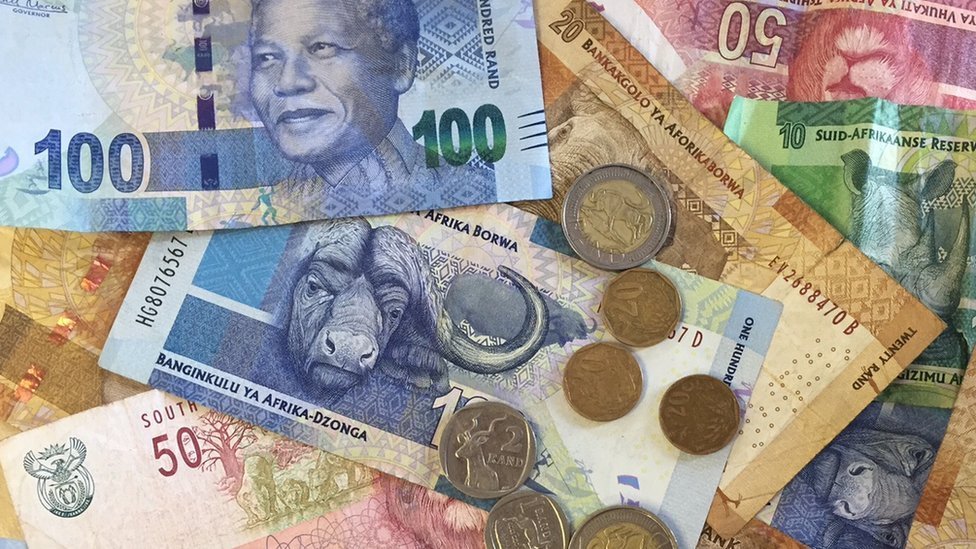
The South African rand remained largely unchanged in early trade on Friday, reflecting a cautious sentiment among investors ahead of next week’s inflation figures which are expected to offer deeper insight into the country’s economic direction and potential monetary policy shifts.
At 0823 GMT, the rand traded at 16.3775 against the US dollar, marking a marginal 0.2 percent depreciation from the previous day’s close. Market participants appeared to adopt a wait-and-see stance, anticipating December’s consumer inflation report to help gauge the broader economic environment and the trajectory of interest rate decisions by the South African Reserve Bank (SARB).
In November, inflation eased to 3.5 percent, the first deceleration in three months, remaining well within the SARB’s targeted 3 to 6 percent range and just one percentage point above the 3 percent anchor. This downward movement in price pressure offered support to the central bank’s recent decision to lower its benchmark lending rate by 25 basis points to 6.75 percent. The decision was unanimous and framed as a shift toward a less restrictive monetary stance, enabled by a stabilising inflation outlook.




South Africa’s central bank has previously indicated a willingness to support the economy through policy accommodation, provided inflation remains contained and external shocks limited. The upcoming inflation print is thus being closely watched for its potential to reinforce or recalibrate this monetary narrative.
On the international front, the rand, like many risk-sensitive currencies, continues to be influenced by broader geopolitical and macroeconomic currents. Although the US dollar remained flat against a basket of major currencies, global markets were attentive to policy signals from the United States. Investors were particularly attuned to developments involving US President Donald Trump’s diplomatic posture on Iran and statements regarding Federal Reserve Chair Jerome Powell.
While recent protests in Iran appeared to have subsided, with reports from within the country suggesting a temporary calm, the global outlook remains uncertain. President Trump adopted a comparatively measured tone concerning the possibility of military engagement and addressed ongoing investigations involving Powell without committing to immediate action. This somewhat tempered rhetoric contributed to a subdued reaction in foreign exchange markets, where uncertainty is often magnified by geopolitical volatility.
Back home, equity markets reflected a modest correction. The Johannesburg Stock Exchange’s Top-40 Index was slightly down by 0.1 percent in early trade, consistent with the restrained mood across markets. Meanwhile, the yield on South Africa’s benchmark 2035 government bond increased by 3.5 basis points, reaching 8.32 percent, indicating slight upward pressure on long-term borrowing costs.
Across the continent, investors and analysts continue to assess the interplay between local economic fundamentals and global market trends. The recent performance of the S&P Africa 40 Index, marginally lower by 0.02 percent, and other indicators such as the Dow Jones South Africa Index and JSE Limited, both showing slight upticks, demonstrate the mixed signals characterising regional investment sentiment.
The rand’s current path reflects the complexities of navigating a global economic landscape while balancing domestic imperatives. With inflation and interest rate policy acting as key focal points, South Africa’s policymakers face the challenge of fostering stability in a world where external influences remain potent. As African markets strive for resilience, it remains vital that reporting and analysis continue to centre local perspectives and resist simplistic global narratives that overlook the nuances of Africa’s economic story.