In a bid to mitigate the ongoing challenges arising from unreliable power supply, the National Treasury of South Africa has introduced the *Energy Bounce Back Loan Guarantee Scheme (EBB)*. This strategic initiative, a response to President Cyril Ramaphosa’s pledge in the 2023 State of the Nation Address, aims to provide relief to small businesses and households grappling with erratic power availability.
With the persistent issue of load shedding affecting the nation’s economic stability, the EBB is poised to usher in an era of increased power generation capacity, further bolstering the resilience of micro and informal businesses. Through the installation of solar equipment, this scheme endeavors to add approximately $52.84 million (1,000 MW) of supplementary power, while also furnishing a robust buffer against load shedding.
Minister of Finance, Enoch Godongwana, elaborated on the modifications to the existing Bounce-Back Loan Scheme, noting that the EBB is designed to foster energy self-sufficiency and empower entities affected by power instability. Notably, applicants are eligible to apply for both tax incentives and the EBB measures, enhancing the economic relief offered.



The EBB operates within the framework of the 2023 Budget Speech’s tax measures and envisions a maximum loan pricing set at the repo rate plus 6%. This competitive pricing is intended to stimulate demand among both households and Small and Medium Enterprises (SMEs), thus paving the way for a swift and robust recovery.
Households and SMEs have the flexibility to approach any participating bank, Development Finance Institutions (DFIs), or non-bank SME finance providers. This competition among financial institutions ensures the best possible terms and conditions for loan applicants while adhering to the established pricing cap.
Running until August 30, 2024, the EBB is underpinned by a government guarantee managed by the South African Reserve Bank. This guarantee safeguards initial losses, with the remaining risk shouldered by finance providers. SMEs and households intending to invest in rooftop photovoltaic solar installations will benefit from this risk-sharing mechanism.
The scheme operates through three distinct mechanisms:

1. Loan Guarantee for Rooftop Solar for SMEs and Households’ Investment
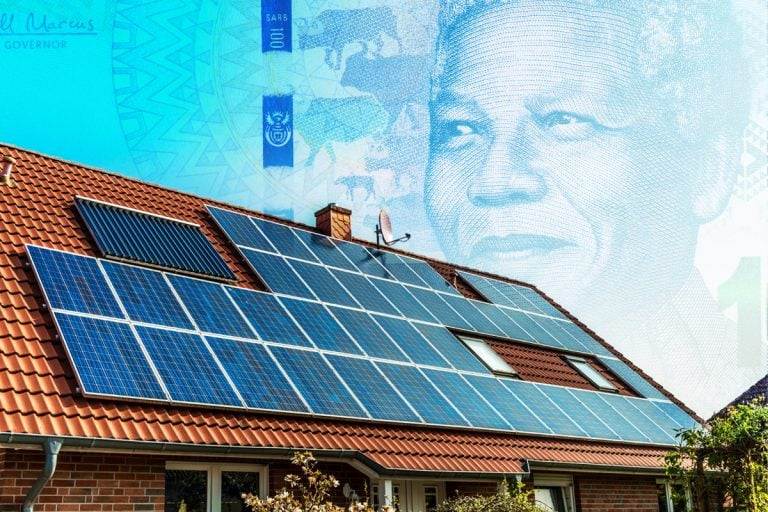
This channel facilitates loans for investments in solar panels, batteries, inverters, and related installation expenses, providing a much-needed boost to the adoption of solar energy.
2. Loan Guarantee for Rooftop Solar for Energy Service Companies
ESCOs offering leasing, instalment sale, and power purchase contracts to SMEs and households will be empowered to expand their services. This model allows entities to access cleaner energy without incurring upfront costs.
3. Working Capital Loans for Rooftop Solar Supply Chain Businesses
To meet burgeoning demand, businesses within the rooftop solar supply chain, including importers, investors, and installers, can secure working capital loans of up to approximately $5.29 million to streamline operations and reduce wait times.
Participation in the EBB is facilitated through commercial banks, with stringent yet reasonable requirements, including tax compliance and adherence to legal and regulatory standards. Businesses and households are subject to turnover thresholds, with eligible businesses having a maximum turnover of approximately $15.85 million.
The Energy Bounce Back Loan Guarantee Scheme represents a promising avenue for South Africa to navigate its power supply challenges and stimulate economic growth. By fostering a more resilient and sustainable energy ecosystem, this initiative holds the potential to transform the energy landscape for small businesses and households alike.